
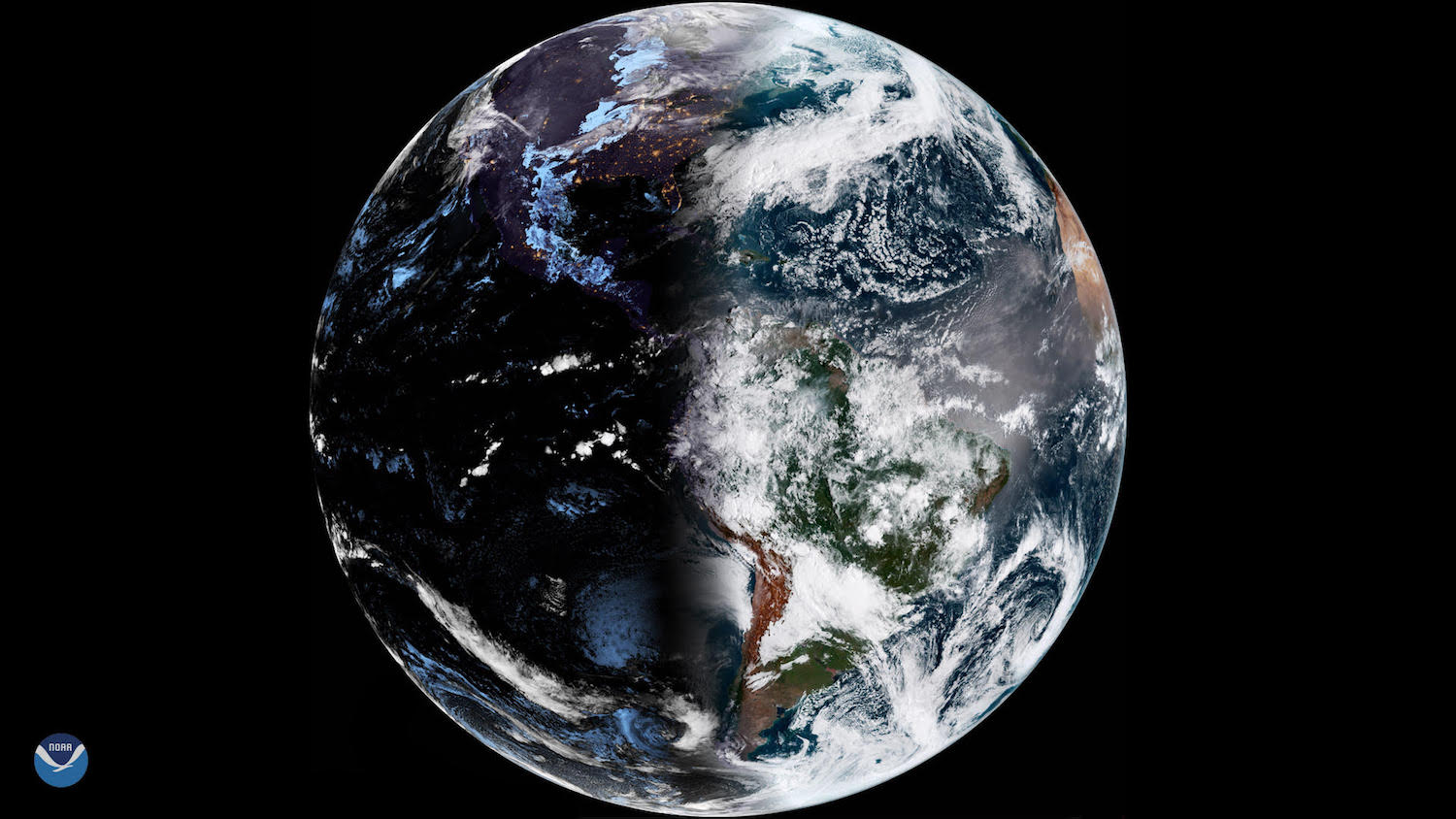
Today (March 20) at 10:46 a.m. Eastern Daylight Time (7:46 a.m. Pacific Daylight Time) the vernal or spring equinox occurs. At that moment, the sun comes to one of two places where its rays shine directly down on the equator. It will then shine equally on both halves of the Earth. More precisely, at that moment, the sun will be shining directly down on the equator at a point over the Atlantic Ocean, roughly 790 miles (1,280 kilometers) east of Macapá, Brazil.
When most of us were growing up, it always seemed that the first day of spring was on March 21, not March 20. But now, for North Americans, spring begins on March 20. In fact, during the 20th century, March 21 was the exception rather than the rule, with the equinox landing on that day only 36 times.