Get all your news in one place.
100's of premium titles.
One app.
Start reading
The Economic Times
The Economic Times
Muskan Singh and ET Science Desk

A New York City marsh was disappearing for decades; scientists added 20 inches of sand and watched what happened next

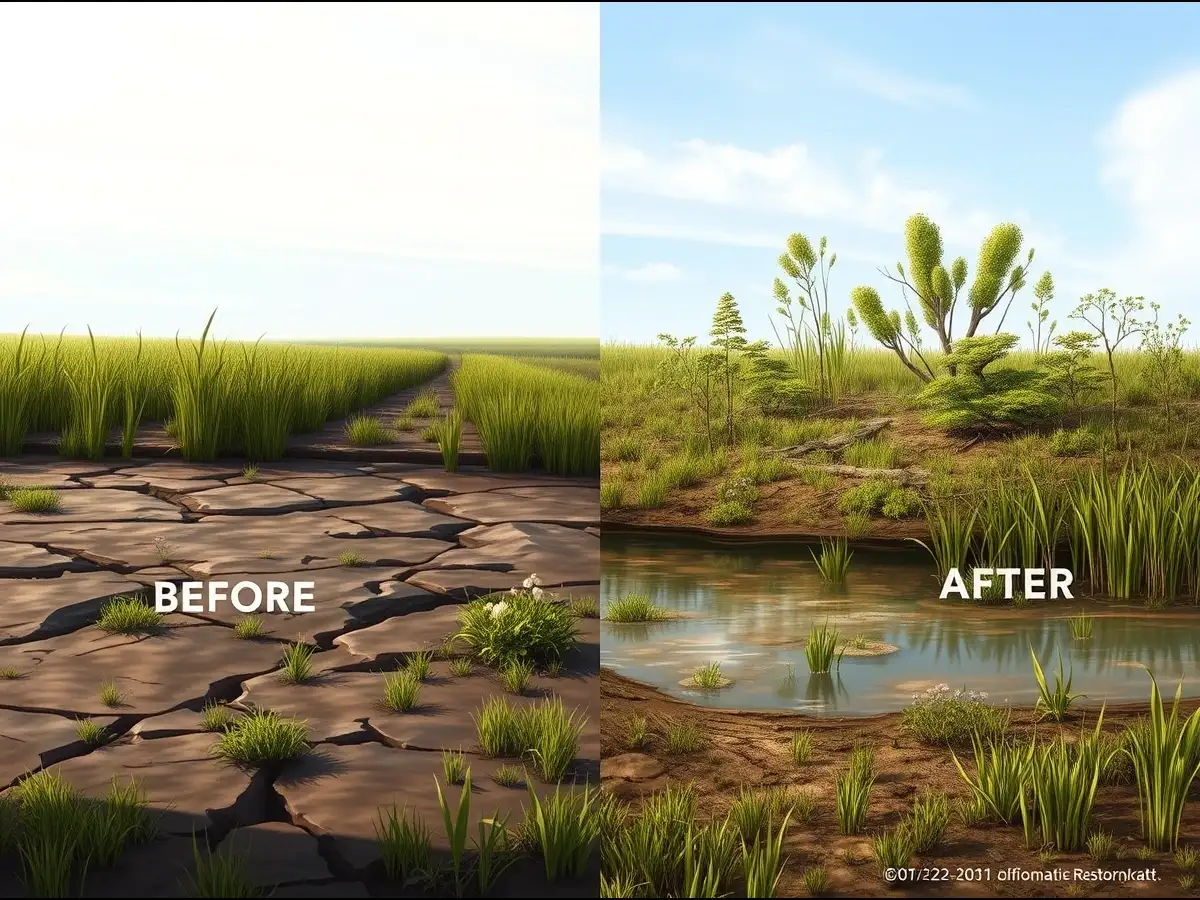
For decades, salt marshes across New York City’s Jamaica Bay had been disappearing. At Big Egg Marsh, scientists decided to try something that could reveal whether one damaged piece of marsh could be given a better chance to survive. The solution was surprisingly simple, to raise the marsh.

Clean sand was dredged from a nearby creek and spread across part of the marsh. Then hundreds of volunteers planted thousands of young smooth cordgrass seedlings. But putting the pieces in place was only the beginning.

Scientists would have to wait years to learn whether the experiment could actually work.

Nearly two decades after restoration began, Dr. George W. Frame returned to Big Egg Marsh in 2021. The old monitoring markers had been battered by tides, ice and years of exposure. Eight-inch nails had disappeared into the peat or rusted away. White plastic pipes had been broken by moving ice.

Yet the scientists were determined to find the old plots and continue a story that had started almost 20 years earlier.

READ ALSO: Conservationist Matt Conn bought 67 acres of damaged Louisiana land. For a decade, he personally rebuilt it; the restored wetland had recovered diverse native vegetation and multiple ecosystems

Why was Big Egg Marsh in trouble?

Big Egg Marsh is one of only 13 salt marshes remaining in New York City’s Jamaica Bay. It is part of Gateway National Recreation Area, but its future was becoming increasingly uncertain.

The salt marshes of Jamaica Bay had been disappearing rapidly since 1924. The problem was not limited to one cause. Jamaica Bay had a long history of contaminated waters and urbanization, while accelerating sea level rise created another threat.

For a salt marsh, elevation is critical.

Dr. George W. Frame, one of the primary researchers involved in the Big Egg experiment, explained that marshes exist at the boundary between land and water. They are constantly exposed to tides, meaning that a marsh surface must remain high enough above the water to support its vegetation and wildlife.

If the marsh surface becomes too low, it can eventually drown.

In 2000, residents of Broad Channel Village raised concerns about the marsh losses they had watched for years. When the New York State Department of Environmental Conservation used GIS technology to examine Jamaica Bay’s history, the data confirmed what residents had observed.

Gateway National Recreation Area decided that restoration was worth attempting. Planning began in 2001, and the experiment was underway by 2002.

READ ALSO: In 1851, Brooklyn released 100 house sparrows from England; 175 years later, the birds are found across nearly all of North America

How did scientists try to save the marsh?

The restoration focused on one fundamental problem: elevation.

In August 2003, clean sand dredged from a nearby creek was sprayed over a one-hectare section of Big Egg Marsh as a sand slurry. The material raised the surface by as much as 20 inches.

But raising the marsh was only part of the experiment. Scientists also needed vegetation capable of surviving in the highly saline environment and helping the marsh maintain its new elevation.

In October 2003, National Park Service scientists and 100 volunteers planted 20,000 smooth cordgrass seedlings across the restored area.

Smooth cordgrass, or Spartina alterniflora, is particularly important in salt marshes because it can tolerate high salinity. Its roots trap sediment. Over time, that sediment accumulates and contributes to the formation of nutrient-rich peat, creating a foundation that can support additional plant growth.

The experiment had now become a test of whether the marsh could begin rebuilding itself.

READ ALSO: In 2002, crews removed rats from California’s Anacapa Island; 10 years later, rare seabirds were returning and the island’s ecosystem was recovering

What happened after the restoration?

The researchers did not simply return years later and look at the landscape. They established a detailed monitoring system so they could measure changes over time.

Scientists divided the marsh into transects running east to west from a north-to-south baseline. Along those transects, they established one-meter-by-one-meter plots at regular and random locations.

Eight-inch galvanized nails marked the corners of the plots, while long white plastic pipes helped researchers locate the transects.

Every time scientists returned, they could collect comparable information from the same locations. They measured elevation, counted plants, examined soil materials and recorded wildlife.

Monitoring began in 2004, with scientists returning multiple times each year through 2008.

The early years brought setbacks.

Geese ate many of the newly planted cordgrass seedlings. Tides washed some away, while marine debris, including straw, large logs, bottles and plastic bags, sometimes covered and suffocated plants.

But the marsh responded too.

New cordgrass seedlings began appearing naturally, and saltmeadow cordgrass, or salt hay, also started growing in the restored area.

Two years into the restoration, more than 80% of the experimental site was vegetated and healthy.

That did not end the experiment. Monitoring became less frequent after 2008, but the long-term consequences remained important.

READ ALSO: In the 1940s, a few snakes arrived in Guam hidden in military cargo; decades later, nine of the island’s 11 native forest bird species were gone

What did scientists find when they returned in 2021?

In 2021, nearly two decades after restoration began, Frame returned to Big Egg Marsh with two Student Conservation Association interns.

Their task was deceptively difficult: find the monitoring plots established back in 2003.

The marsh had spent nearly 20 years changing beneath the researchers' feet.

The original eight-inch nails had not fared well. Many had disappeared completely, probably washed away by high tides, buried deeper into the peat or rusted beyond detection. Some surviving nails had deteriorated until they were barely recognizable.

The white transect pipes had suffered too. Many had been frozen into the marsh surface during winter and then sheared off when moving ice passed through. Some were reduced to tiny white stubs only a few inches high.

Still, the remnants were enough.

Where nails could be found, the interns placed red flags. Where they were missing, the researchers reconstructed where the corners should have been. The surviving pipes provided another way to relocate the plots.

Once the locations were established, the scientists could continue collecting vegetation and soil data from the same experimental landscape.

Why does this experiment matter?

Big Egg Marsh represents something larger than a single restoration project.

The experiment began with a basic question: could scientists raise a disappearing salt marsh and give it the conditions it needed to survive?

The answer could not be determined after one season, or even a few years. Salt marshes exist in a constantly shifting environment shaped by tides, vegetation, sediment and elevation. The early monitoring showed both damage and recovery, while the 2021 return demonstrated why long-term observation matters.

The story also shows why restoration does not necessarily mean simply planting more vegetation. At Big Egg, scientists first addressed elevation by adding clean sand. Then they introduced smooth cordgrass and watched to see whether the plants could establish themselves, trap sediment and contribute to the marsh's own development.

The project began after residents saw their marsh disappearing and scientific analysis confirmed the scale of the problem. Nearly 20 years later, scientists were still returning to the same plots, sometimes relying on rusted fragments of old equipment to find the places where the experiment began.

That long-term commitment is important because the future of Jamaica Bay’s remaining salt marshes remains tied to the same pressures that prompted the experiment in the first place: urbanization, contaminated waters and rising sea levels.

Big Egg Marsh was never simply a place where scientists planted 20,000 seedlings and walked away. It became a living experiment in whether a damaged coastal ecosystem could be given enough elevation, vegetation and time to sustain itself.

And almost two decades after the restoration began, researchers were still measuring what happened next.

Source : National Park Service, Gateway National Recreation Area, Jamaica Bay Natural Resource Challenge Network, Big Egg Marsh restoration monitoring material.

FAQs

  1. What was the Big Egg Marsh experiment?

    Scientists raised part of the marsh with clean sand and planted 20,000 smooth cordgrass seedlings to test whether the salt marsh could recover and maintain its elevation.

  2. Did the restoration succeed?

    Early monitoring found that more than 80% of the experimental site was vegetated and healthy two years after restoration, while long-term monitoring continued into 2021.

Sign up to read this article
Read news from 100's of titles, curated specifically for you.
Already a member? Sign in here
Related Stories
Top stories on inkl right now
One subscription that gives you access to news from hundreds of sites
Already a member? Sign in here
Our Picks
Fourteen days free
Download the app
One app. One membership.
100+ trusted global sources.