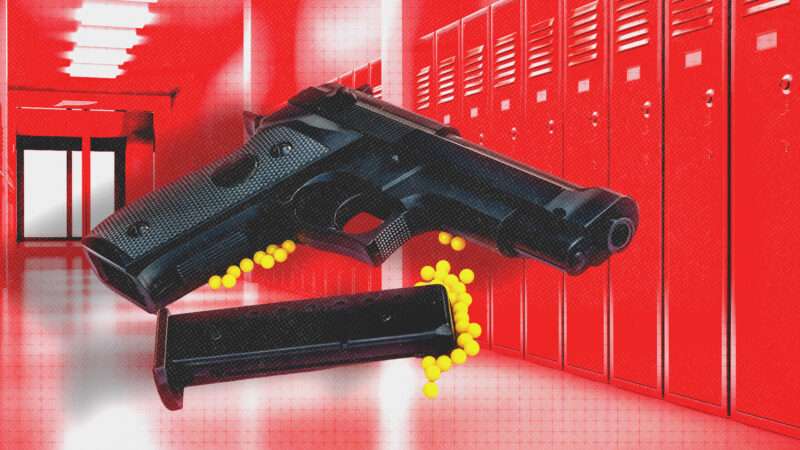
On May 8, a 16-year-old student with an airsoft pistol in his waistband triggered a lockdown at New Brunswick High School in New Jersey. New Brunswick Today's coverage of the incident, which included posting leaked security camera footage on its YouTube page, triggered an even more extreme response: a court order requiring removal of the video and barring descriptions of it. Last week, New Jersey Superior Court Judge Thomas D. McCloskey modified that order, allowing reporting on the lockdown that does not reveal the student's identity. But at the same time, he extended the restrictions to cover every journalist in the United States.
Such prior restraints on freedom of the press are presumptively unconstitutional. McCloskey's injunction is "one of the worst censorship orders we've ever seen," says the Freedom of the Press Foundation (FPF). "Forcing news outlets to delete or withhold information and to submit their work for government approval before they can publish is censorship, full stop," notes Caitlin Vogus, the FPF's senior adviser for advocacy. "The First Amendment could not be clearer: Prior restraints are almost never allowed. Neither judges nor the law can censor the press."