
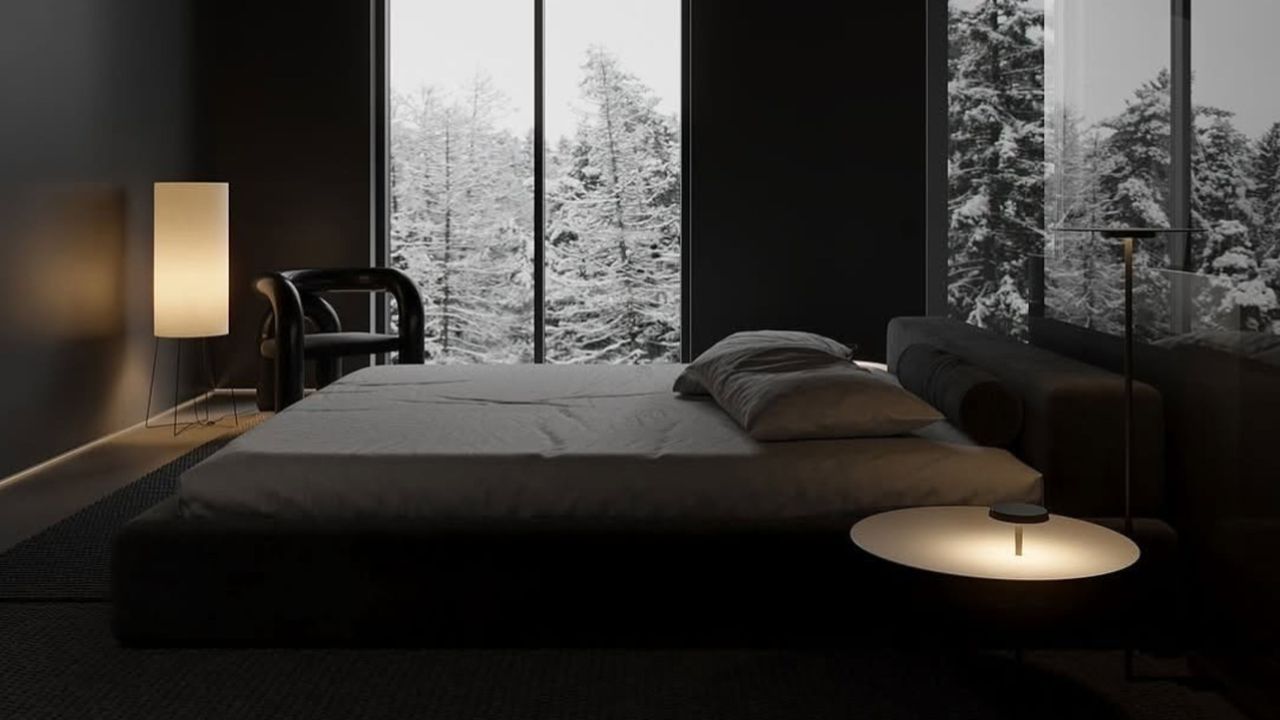
Maybe it's the snowstorm looming over the US, slowly making its way to the UK, or perhaps it's the gothic-romantic aesthetic dominating pop culture as we all patiently await the new "Wuthering Heights" movie with bated breath. Whatever it is, Livingetc's color crush for February is adopting these moody influences. Obsidian Heart introduces a rich, dark-as-night tone to our interior palettes — almost a true black, but with an inky and intriguing base.
If you were around for Sour Lime last month, you may be surprised by the stark change in tone. Where January's crush represented how color trends are heading towards vibrant chartreuse accents, Obsidian Heart is a sharp (but just as saturated) change of pace. I'd argue, though, that a piercing black is a timelessly stylish, if not essential, addition to any home's color scheme.

Don't get me wrong: rich blacks can be an intimidating color to bring into your interior (especially when compared to Pantone's Cloud Dancer), but when done well, the payoff is visually striking and totally unique. From chic accents to daring drenches, here's everything you need to know to embrace Obsidian Heart in your home.
What Color is Obsidian Heart?

The first thing to know about this color is that Obsidian Heart isn't just decorating with any old black. It's rugged, rough, and elemental. "It feels imbued with a deep, primal power," says Livingetc's color expert Amy Moorea Wong. "This is a black that nods to nature, as if it were drawn from ancient rock, charred timber, or cooled lava. It has a depth that feels almost geological, reaching back in time to when oil and coal were first forming."
It's almost 'true' black (call it a near black paint color, if you will), and the difference can be hard to see — so the best way to bring Obsidian Heart into your space is to focus on how it feels. In terms of color theory, there is a warmth to its undertones. "It's not as standoffish and stark as pure black; it's inviting, familiar, and soulful," adds Amy.
"This comes from there most likely being a tiny dash of brown mixed into it, making it more akin to something that's developed out in the wild rather than a 100-percent black, which has a more digital essence," she explains.
Obsidian Heart is like the jet-black stone that's found in nature. Its hue is ultra alluring, but still, there's a comfort in its ruggedness. In interior design, it can be powerful, energetic, and moody.
How to Use Obsidian Heart in Interiors

When it comes to decorating, the power of Obsidian Heart practically begs to be used in a color drench. Whether you use a combination of black marble and black paint to dress a powder room or a contemporary kitchen, a floor-to-ceiling takeover with layered materials and texture will feel considered and luxurious.
However, matching Obsidian Heart's intensity is not the only way to use this color. In fact, strategic accents are an effective way to try this shade while still making a prominent design statement. Think of it as a bold, elevated kitchen cabinet color or even as a rug or accent chair.
Opting for Obsidian Heart as your pop of 'color' creates contrast in design and brings a sophisticated, commanding presence; a reinvigorated take on one of the most classic color combinations.

Once you've got your placement plans sorted, you'll find that Obsidian Heart is actually quite an easy shade to pair, given its neutral nature.
"It works gloriously with chunky, rugged natural materials to bring out its soft side and remind us of the great outdoors," says Amy. "I'm talking Obsidian Heart with stone surfaces or sculptural objects, or hunks of wood for a rough, found-in-a-hidden-cave feel."
For this kind of soft contrast, turn to wools, bouclés, and linens in raw, organic tones. While there are plenty of colors that go with black, for Obsidian Heart to feel calm and ground a space, introduce earth-led tones — clays, rust, ochres — for warmth. Or, add in leafy greens to lean into the primordial forest feel.
Otherwise, you can keep your color palette close to blacks, chalky grays, and whites for the most impact. I'm even imagining Obsidian Heart in striking paint finishes, like a glossy dining room table or leather sofa for a 'look at me' moment.
The choice is yours. I always like to start with decor to get a taste for any new color — here are a few of my Obsidian Heart favorites.
The natural ceramic base highlights the natural influences of Obsidian Heart's pigment.
To make Obsidian Heart less intense, pairing it with colors (like in this geometric rug) helps break up the darkness.
Black is a staple neutral in interiors, but using it as a wood stain on furniture rather than solid paint can help it feel more natural — if that's what you're after.
I think we can expect to see a lot of leather in upcoming design trends. For leather and Obsidian Heart, opt for something dark but with sheen.
Longpi clay ceramics and Obsidian Heart hues feel like design characteristics that are cut from the same cloth. This dinner candle holder is a current Longpi favorite.
The sheen on this metal vase is giving me major Obsidian Heart vibes. This is the kind of vase that is simple yet catches the eye.
With its 'imperfect' blackness, Obsidian Heart "speaks of a monumental natural force, akin to the likes of wind, tectonic movement, or time itself," says Amy. "It's weighty, with a depth and presence that feel like it's evolved rather than been applied — it feels alive in a way that soothes and levels us."
So, will you be trying this daring color in your home? It seems that more obscure colors are the latest way to achieve a 'cool' interior.