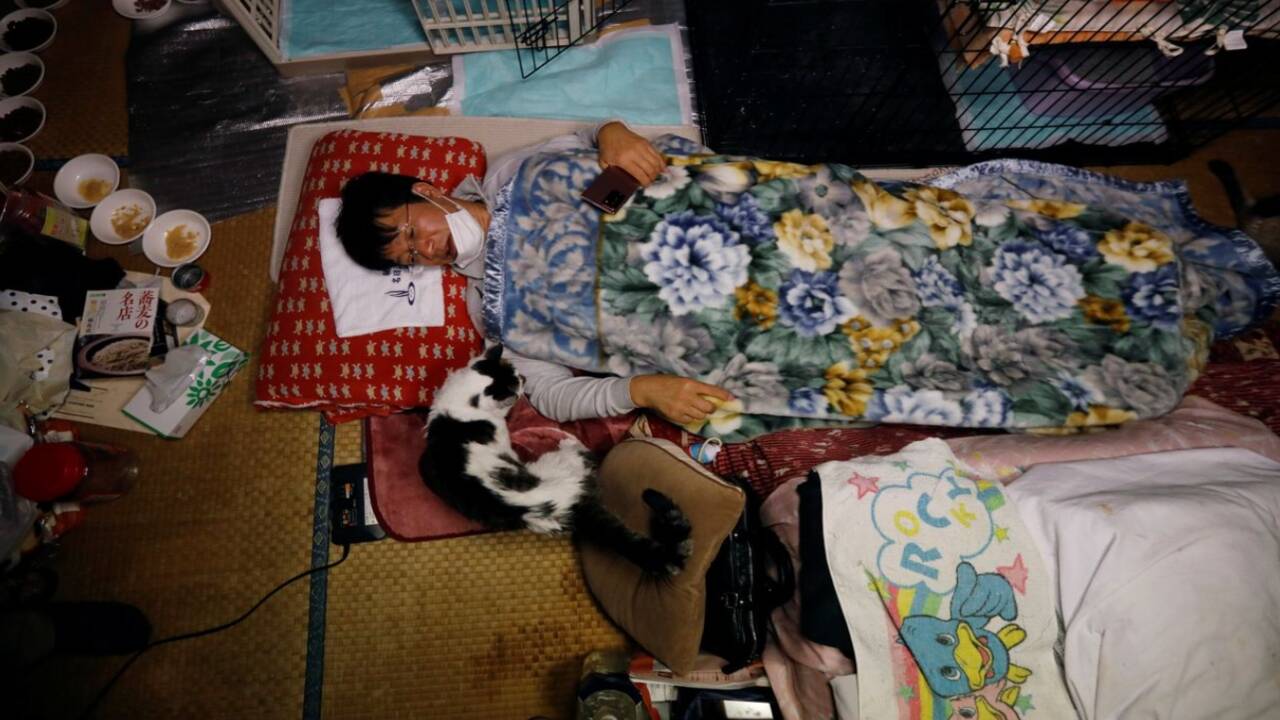
When Japan's 2011 earthquake and tsunami triggered a meltdown at the Fukushima nuclear plant, many evacuated the surrounding area within days. But there was one man named Sakae Kato who did not leave. As per the reports of ABC News , roughly 160,000 people decided to leave the area except Kato. A decade later, he was still living inside the restricted zone and had turned his property into a shelter for cats left behind by evacuees.
Get breaking news anytime, anywhere. Download the TOI app now!

According to Reuters reporting carried by Nippon.com, Kato was a small construction business owner before the disaster, living on land his family had owned for three generations. His decision to stay took shape gradually, driven in part by something he encountered while helping demolish abandoned homes in the evacuated zone. He kept finding dead pets inside houses that families had fled in a hurry, animals left behind in the panic of evacuation with nobody able to come back for them. That discovery, combined with his family's deep roots in the land, was the reason he refused to leave with everyone else.
Turning an abandoned house into a cat shelter
Kato turned his home and a second empty building on his property into a shelter for 41 cats, Reuters reported. The animals had been abandoned by neighbours who evacuated the radiation zone and never returned for them. Kato buried 23 more cats that did not survive, and wild boars roaming the depopulated community have since disturbed the graves in his garden. He heats a storage shed with a paraffin stove to keep the feral cats warm, and he also rescued a dog he named Pochi. Conditions on the property are harsh. With no running water, Kato fills bottles from a nearby mountain spring and drives to public toilets to handle his basic needs. He estimated spending around 7,000 dollars a month caring for the animals, some of that money going toward dog food he leaves out for wild boar that gather near his house at dusk, animals local farmers consider pests and blame for damaging empty homes throughout the area.
A house falling apart, and a man who refuses to leave it
By the time Reuters visited in 2021, Kato's two-storey wooden house was already in poor condition, with rotten floorboards and walls dislodged by a recent tremor that brought back memories of the 2011 disaster. Kato estimated the structure might last only another two or three years before the walls gave out entirely. He is technically allowed to visit the property but not to sleep there overnight, a restriction tied to ongoing radiation concerns in the area. Kato has continued living there anyway. He told Reuters, “I don't want to leave because I like living in these mountains”. He said he wanted to stay until he could care for the last cat before anything happened to him.
A decade defined by cats, boars, and one radioactive home
Kato's story sits within a much larger picture of a landscape still struggling to recover more than a decade after the disaster. Decontamination work has continued near his house, a sign officials hope will eventually allow other former residents to return to the area. Still, most evacuees have chosen not to return, citing lingering fears about the nearby nuclear plant, limited job opportunities, and generally poor infrastructure across the towns that were emptied. A local veterinarian from Tokyo who occasionally assists Kato noted that volunteers help care for the cats when Kato himself cannot, underscoring how much of an informal, improvised operation the shelter still is even a decade in. What started as one man's reaction to finding dead pets in abandoned homes turned into a one-person animal rescue mission inside one of the most dangerous nuclear zones. His story stands out because it runs counter to how most people responded to the same disaster, choosing isolation and hardship inside a contaminated zone over the relative safety and normalcy available just a short drive away, all so that a shrinking population of abandoned cats would have somewhere left to go.