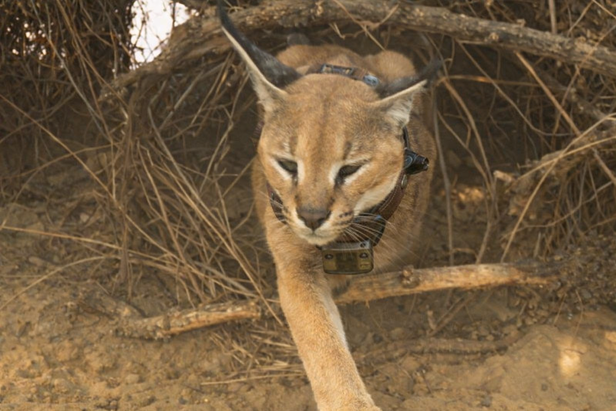
In the vast silence of the Thar Desert, where wind draws patterns on sand and life survives quietly against all odds, a historic moment unfolded. For the first time in India, an endangered caracal has been fitted with a radio collar in Jaisalmer. This single act marks a turning point for wildlife research and conservation in India’s desert ecosystem. The caracal, a creature so elusive that it often feels like a desert myth, is finally being understood beyond fleeting sightings and scattered evidence.
This is not just a scientific milestone. It is an emotional one. For years, the caracal has lived on the edge of visibility, slipping through dunes, scrublands, and human memory. Now, with a collar gently resting around its neck, the desert’s silent hunter has a voice.
Who Is the Caracal and Why It Matters
The caracal is a medium-sized wild cat known for its striking black tufted ears and powerful leaps. Often called the ghost of the desert, it is rarely seen even by seasoned forest officials. In India, the species is critically endangered, with its presence confirmed only in small pockets of Rajasthan and Gujarat.
Unlike tigers or leopards, the caracal does not command attention through size or fame. Its survival story has unfolded quietly, threatened by habitat loss, shrinking prey base, and increasing human activity. Because sightings are rare, conservation efforts have long struggled due to a lack of data. Where does the caracal move? How large is its territory? How close does it come to villages? These questions remained unanswered until now.
The First Collar and What It Represents
The radio collaring of the caracal in Jaisalmer is a first-of-its-kind initiative in India. Forest officials and wildlife experts worked carefully to ensure the animal’s safety throughout the process. From tranquilizing the cat to fitting the lightweight collar and releasing it back into the wild, every step was guided by caution and respect.
This collar is not a restraint. It is a bridge. Through satellite signals and tracking data, officials can now follow the caracal’s movement patterns across the desert landscape. For the first time, the animal’s hidden life will slowly reveal itself. This data will help answer crucial questions. How far does a caracal travel in a single night? Does it avoid human settlements or pass close to them unnoticed? Which areas are critical for its hunting and breeding? Each signal sent by the collar carries a piece of the puzzle.
Understanding Life in the Desert
The Thar Desert is often seen as empty and harsh, but it is a living ecosystem shaped by balance and adaptation. For predators like the caracal, survival depends on precision. They hunt small mammals and birds, moving swiftly through sparse vegetation and rocky outcrops.
Tracking the caracal’s desert movements will help scientists understand how this species adapts to extreme heat, scarce water, and shifting prey availability. It will also reveal how modern pressures such as roads, tourism, and expanding villages intersect with its natural routes. By understanding these patterns, forest departments can identify critical habitats that need protection. Conservation is not just about saving animals but about safeguarding the invisible paths they depend on.
A Quiet Victory for Forest Officials
For forest officials in Rajasthan, this achievement comes after years of patience. Spotting a caracal itself is rare. Capturing one safely for scientific study requires deep knowledge of terrain, animal behavior, and timing. This success reflects a shift in conservation approach. Instead of reacting to crises after populations collapse, officials are now investing in proactive research. Tracking before disappearance. Understanding before loss. It also signals growing recognition that lesser-known species deserve as much attention as iconic animals. Conservation cannot survive on charisma alone.
Human Presence and Shared Landscapes
One of the most important outcomes of this tracking project will be understanding how caracals coexist with humans. The Thar Desert is not an untouched wilderness. It is home to villages, livestock, and livelihoods that have existed for generations. Caracals are rarely involved in human-wildlife conflict, largely because they are secretive and avoid attention. However, as habitats shrink, overlap becomes inevitable. Tracking data can help predict potential conflict zones before problems arise. This knowledge allows authorities to work with local communities, create awareness, and design solutions that protect both people and wildlife. Conservation succeeds only when it includes those who share the land.
Why This Moment Matters for Conservation in India
India’s wildlife conservation story is often dominated by big cats like tigers and lions. While their protection is vital, focusing only on flagship species can leave others behind. The caracal represents a different challenge. A species that declines quietly, without headlines. By collaring a caracal, India sends a powerful message. Every species matters. Every life carries ecological value. This project may pave the way for similar studies on other elusive animals living in fragile ecosystems. It also strengthens India’s role in desert conservation, an area that receives far less attention than forests or wetlands despite being equally vulnerable.
The Emotional Weight of Tracking an Invisible Life
There is something deeply moving about tracking an animal that does not want to be seen. Each data point is a reminder that this cat has survived for centuries without our notice. Now, humans are listening, not to control, but to understand. The collar does not make the caracal visible to tourists or crowds. It makes it visible to those who want to protect it. That distinction matters. For conservationists, every signal from the desert is reassurance that the caracal is still there. Still moving. Still hunting. Still choosing survival.
Looking Ahead
This first collared caracal in Jaisalmer is not the end of a story. It is the beginning. The data collected over months and years will shape conservation policies, habitat protection plans, and awareness programs. More importantly, it gives the caracal a chance. A chance to be counted. A chance to be protected before it fades further into obscurity. In a world where wildlife often disappears without notice, this small collar represents hope. Hope that science, empathy, and patience can work together. Hope that the desert’s silent hunter will continue to move through the sands, unseen by most, but no longer unheard.
Celebrate the bond with your pets, explore Health & Nutrition, discover Breeds, master Training Tips, Behavior Decoder, and set out on exciting Travel Tails with Times Pets!