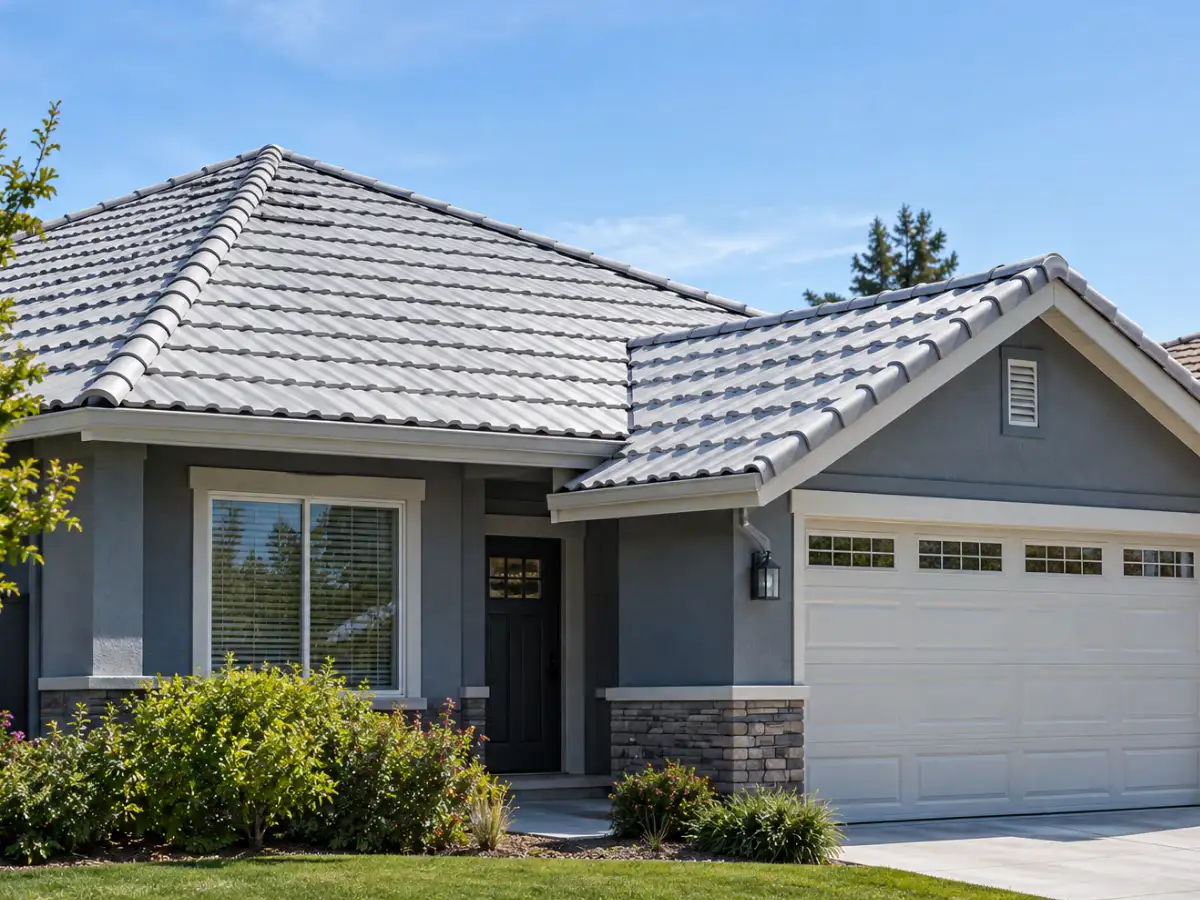
A house in Fresno, California, replaced its standard dark asphalt shingle roof with reflective concrete roof tiles and decreased its annual cooling energy use by 26 percent. Peak-hour cooling demand (the amount of air conditioning used at times of the day when electricity is most expensive) decreased by 37 percent. For homeowners facing higher summer bills, those are notable savings.
It's the result of a year-long field study by the Lawrence Berkeley National Laboratory, a US Department of Energy research center. The scientists there studied two nearly identical single-story houses built side by side in Fresno. One had a standard dark asphalt shingle roof. The other had a lighter, concrete tile roof. Sensors measured temperatures at the roof and in the attic, heat moving into the ceiling and ducts, and the electricity used to power the air conditioning in both homes, zeroing in on the difference the roofs made in each home's cooling energy use.