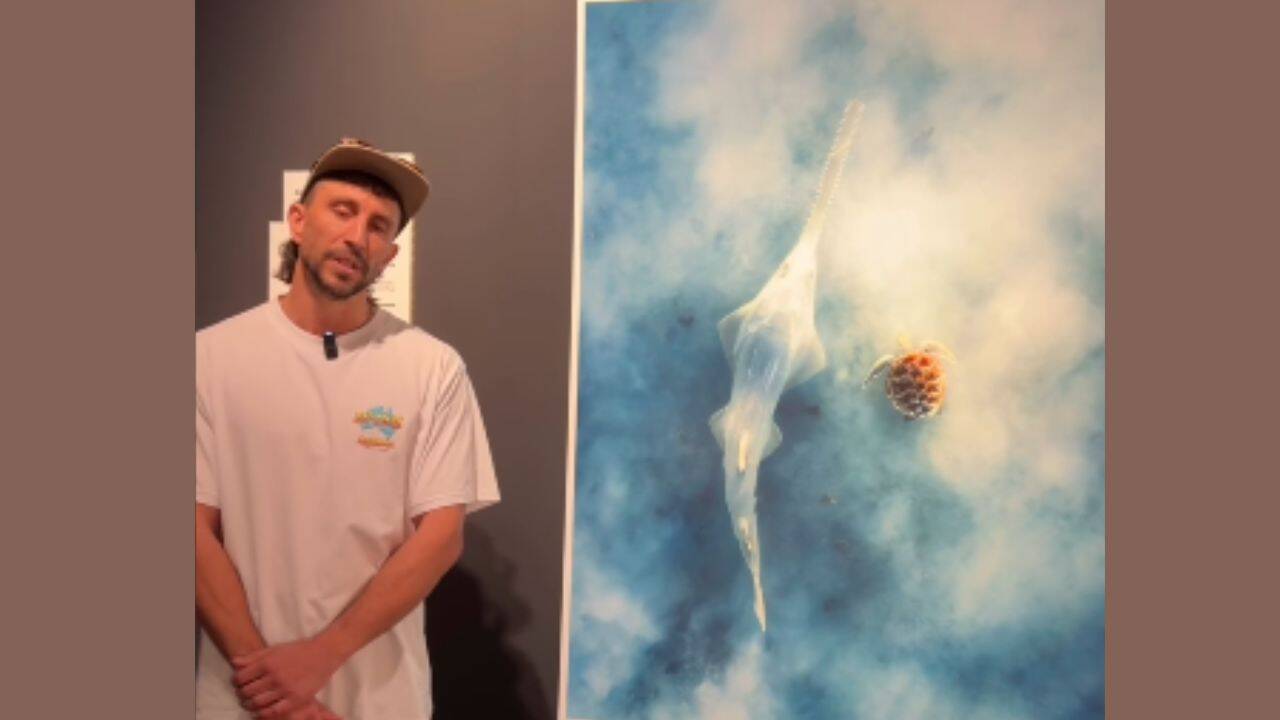
In the sunlit shallows off northern Australia, a rare and ancient creature glided through the water, its long, toothed snout cutting a gentle path beside a pair of sea turtles. The moment lasted only seconds, but it was enough for a drone hovering above to capture an image that would soon captivate a nation.
Get breaking news anytime, anywhere. Download the TOI app now!
That photograph of a critically endangered green sawfish sharing the frame with sea turtles has just won the top prize in the 2026 Australian Geographic Nature Photographer of the Year competition. As reported by People, the shot was taken in the final moments of a tense field session, when the photographer’s drone battery had dropped to just 3 percent, turning an already difficult encounter into a race against time.
A creature from another time
The green sawfish is one of the most distinctive and threatened animals in Australia’s coastal waters. With a torpedo-shaped body and a rostrum, or snout, that can stretch more than a metre and is lined with sharp, tooth-like projections, it looks like a survivor from a much older ocean. These sawfish use their rostra to slash through schools of fish, stirring up prey from the seabed as they patrol shallow bays, estuaries and mangrove lined creeks.
Once relatively common across northern Australia and parts of the Indo-Pacific, green sawfish populations have collapsed over the past century. They are caught accidentally in fishing nets, their fins are targeted for trade, and their coastal habitats have been degraded by development and pollution. The species is now critically endangered, meaning it is facing an extremely high risk of extinction in the wild. Sightings are rare and documented encounters in open, clear water are even rarer. The moment in the shallows The winning photograph was taken in the warm, turquoise waters of a remote coastal region where seagrass meadows meet sandy flats and mangrove channels. The photographer had been flying a drone along the shoreline, looking for signs of marine life that could be photographed from above without disturbing the animals. Sea turtles are relatively common in these waters and they often appear in aerial images as they surface to breathe or cruise between feeding areas. On this particular flight, the drone had already been in the air for some time, scanning the shallows as the afternoon light began to soften. The battery indicator had dropped into the red zone, a warning that there would be little time for anything beyond a quick return to the launch point. Then, in the live feed on the controller, an unusual shape appeared beside a pair of turtles. It was long and slender, with a distinctive snout that left no doubt about what it was, a green sawfish.
Knowing the battery was nearly spent, the photographer made a quick decision to reframe the shot and capture the sawfish alongside the turtles before the drone was forced to land. The resulting image shows the three animals swimming in loose formation, the sawfish’s rostrum clearly visible beneath the surface, the turtles’ flippers tracing slow arcs in the water. The composition is simple but powerful, a snapshot of coexistence in a habitat few people ever see from this angle. A race against a dying battery The detail that adds an extra layer of drama to the story is the state of the drone at the time of the shot. With just 3 percent battery remaining, there was no room for error or multiple attempts. Had the photographer hesitated, or had the animals moved out of frame a few seconds later, the moment would have been lost. The drone might have been forced to land in the water, risking both the equipment and the chance to retrieve the images. This constraint shaped the way the photograph was taken. There was no time to chase the animals or adjust settings extensively. The photographer had to trust the existing framing, rely on the drone’s automatic exposure and focus, and press the capture button at the right instant. The fact that the image came out sharp, well exposed and compositionally balanced is a testament to both preparation and luck.
When the drone finally touched down, the battery died almost immediately, underscoring how close the encounter came to ending without any usable image at all. In the world of wildlife photography, such near misses are common. The difference here is that the one frame that did work turned out to be award-winning.