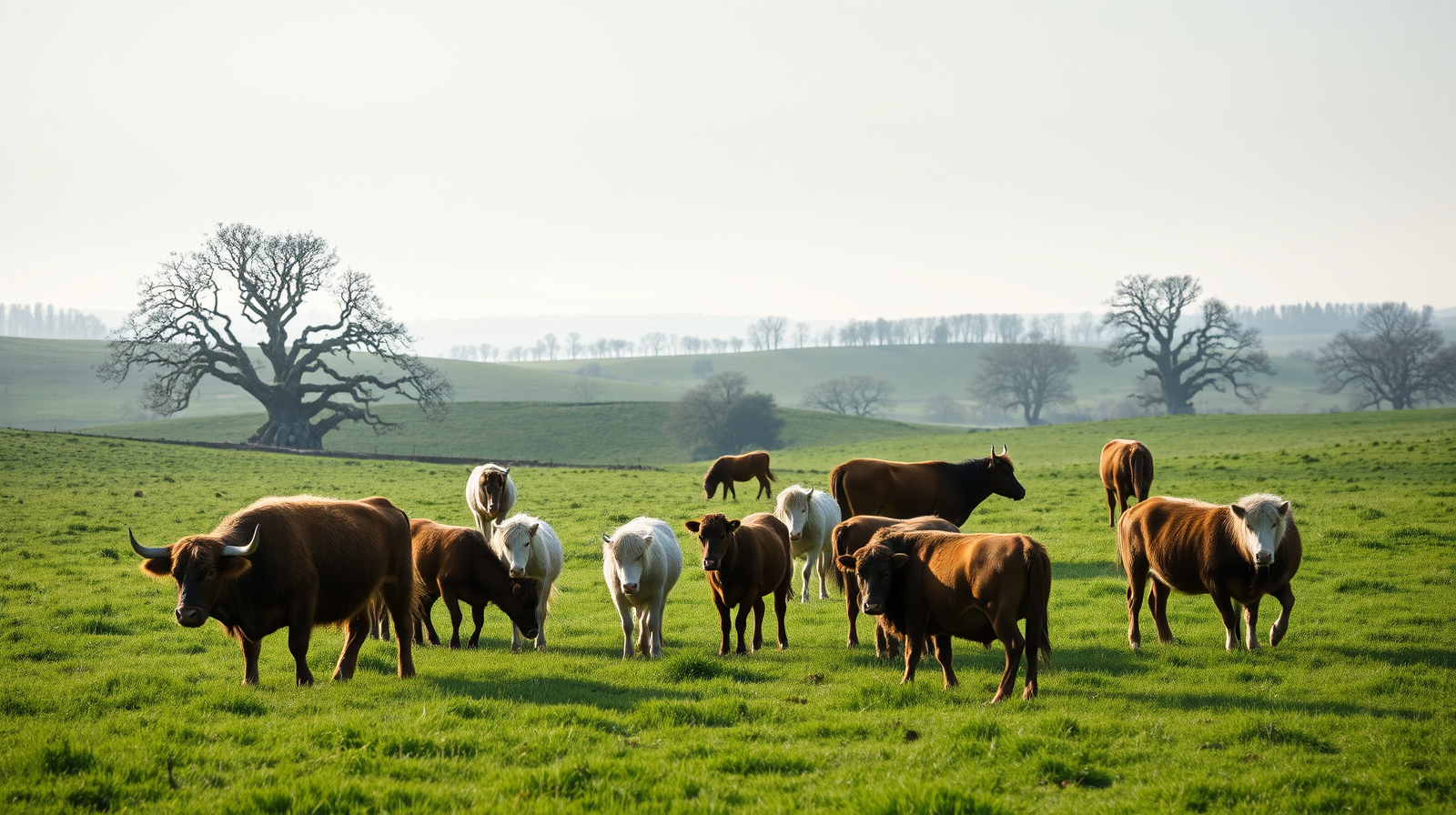
In the early 2000s, Charlie Burrell and his wife Isabella Tree faced a difficult choice. After seventeen years of trying to farm 3,500 acres of heavy clay soil at Knepp Castle Estate in West Sussex, they were roughly 1.5 million pounds in debt, with intensive farming simply failing to turn a profit on land that was never suited to it. Instead of trying yet another farming method, the couple made a radical decision. They pulled down fences, stopped ploughing, and let free-roaming cattle, ponies, pigs and deer take over the land in place of crops and livestock as usual. What followed became Britain's first large-scale lowland rewilding project, and nearly twenty-five years later, Knepp is now held up as proof of how quickly nature can recover once it is simply left alone. What makes Knepp such a compelling case study is that it started from failure, not ambition. Burrell and Tree weren't chasing an environmental vision, they were simply out of options, and letting go turned out to work better than anything they'd tried on purpose.
Get breaking news anytime, anywhere. Download the TOI app now!