
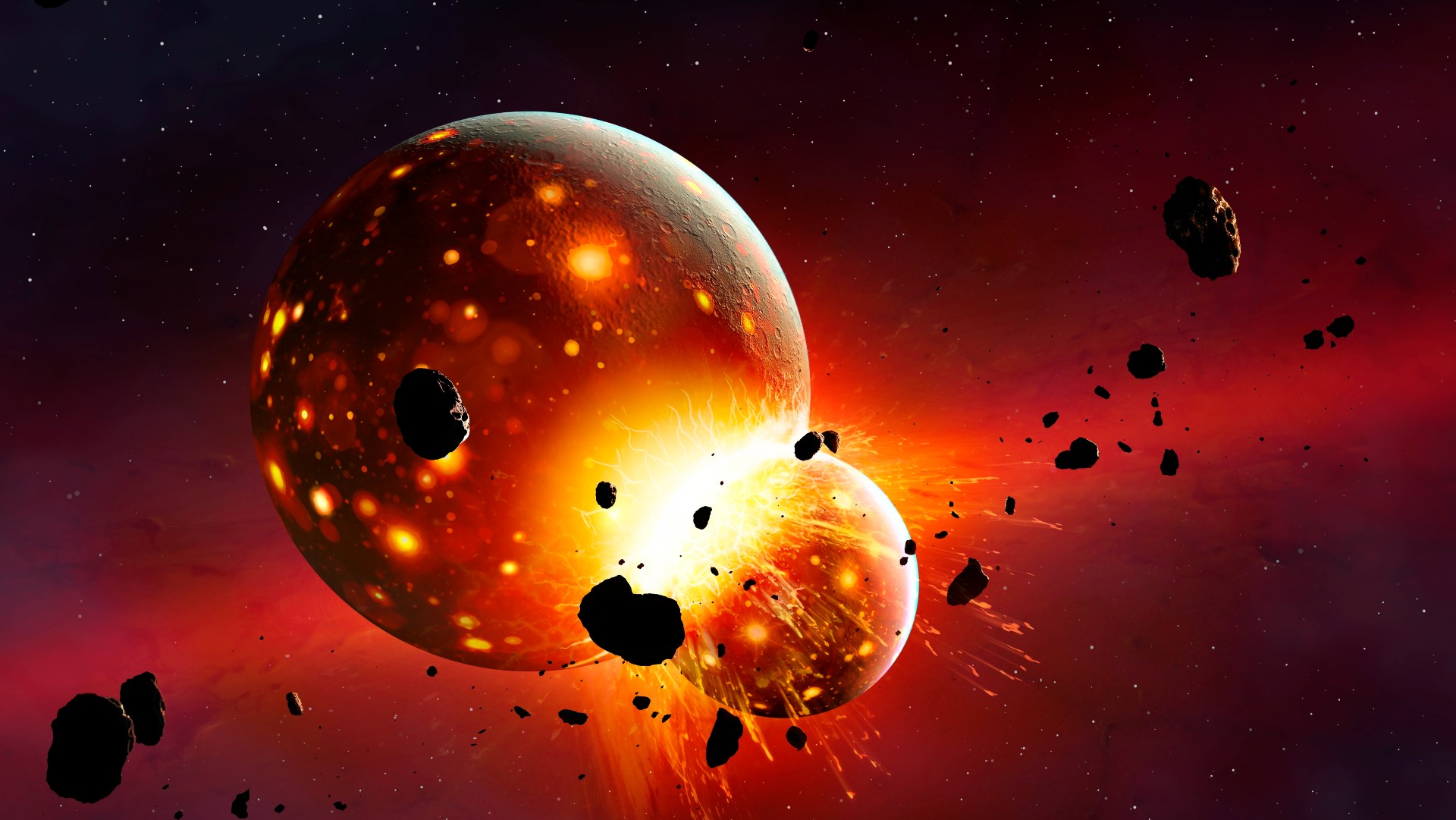
The newborn Earth was struck by a Mars-size rock that helped create the moon, and the impact may have left behind continent-size remnants of the rock near Earth's core, a new study finds.
Scientists think Earth formed about 4.5 billion years ago, and previous research suggested the moon arose a short time later. The leading explanation for the moon's origin is that it resulted from the collision of two protoplanets, or embryonic worlds. One of those was the young proto-Earth, and the other was a Mars-size rock nicknamed Theia, after the mother of the moon in Greek myth.