
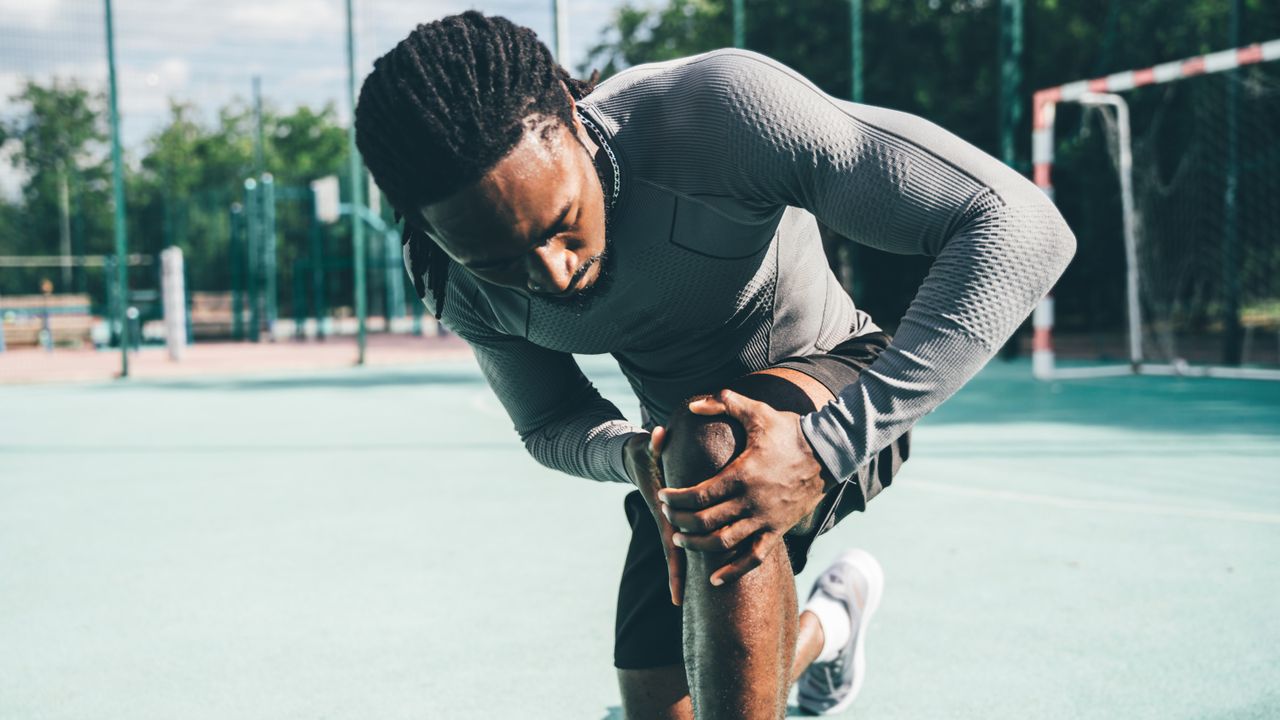
Lately my knees have been playing up when I run or walk too vigorously.
I assumed that was because of general wear and tear in the joint—then I consulted a physical therapist who specializes in treating patients experiencing chronic pain.

“The reason most runners keep getting knee pain—and this is where I want to be clear—is that they treat the knee as the problem,” says Dr Andrew Gorecki of Superior Physical Therapy.
“It usually isn't.”
The knee is where the pain shows up, he tells Fit&Well, “but the actual driver is almost always somewhere else in the chain”.
Common culprits are weak glutes (buttocks), stiff hips, poor ankle mobility or a movement pattern that overloads the knee.
“Fix the knee, symptoms come back. Fix the chain, they don't,” he says.
Gorecki breaks down five interventions with the strongest supporting evidence to prevent runner's knee pain.
Five ways to protect your knees when you walk or run
1. Strengthen your glutes
Weak glutes can cause your knee to slightly collapse inward with every step.
“This mechanism is responsible for most patellofemoral pain and iliotibial [IT] band problems,” says Gorecki.
There are three major muscles in your glutes and strengthening the gluteus medius will help realign and control how your hip and knee track with each stride.
“Single-leg glute bridge, side-lying leg lift and clamshell performed three times a week will make a real difference,” says Gorecki.
2. Restore your ankle mobility
Limited range of motion, particularly dorsiflexion (bending your foot back toward you), in your ankles can force your knee to compensate mid-run.
A simple solution is to perform a half-kneeling ankle rock.
“Daily ankle mobility work helps directly reduce the load on the knee,” says Gorecki.
“With this exercise [above], keep your front knee over your toes and heel down.”
3. Build calf strength
Your calves act as shock absorbers when you run.
“Weak calves mean the knee has to take on more of the load,” explains Gorecki.
An often overlooked exercise for runners and hikers are bent- and straight-knee calf raises.
“Perform 15 reps of each a few times a week, adding load with a weight once that feels easy.”
4. Cross train
Gorecki recommends giving your joints and muscles a break from the repetitive strain of running or walking by switching up your routine.
That could mean including some bike or cross trainer sessions instead, joining a group exercise class or playing a sport like padel or tennis that involves new different movement patterns.
“Adding lateral and rotational movement to your week with exercises like side lunges, single-leg work in three directions, and gentle rotational work helps counter the single-plane repetitive stress of running,” he says.
5. Increase mileage slowly
Lastly—and perhaps most obviously—Gorecki recommends building up your running distances gradually.
“The classic rule is no more than a 10% increase in weekly mileage per week,” he says.
“Most knee issues in runners trace back to a training block where mileage jumped too fast. Even advanced runners fall into this trap.”
Take your time, be patient and you should be able to keep knee pain at bay.
When to see a physical therapist
If knee pain persists after two to three weeks of self-management, Gorecki says you should probably see a physical therapist.
“In most US states you can see a physical therapist directly without a physician referral and a focused evaluation will help identify which part of the chain is driving the problem.”
The upside: it'll save you months of guesswork so you can get back to walking, hiking or running pain-free in the near future.