

Over the past few weeks, people across Iran have been filling the streets in anger — first over the cost of living, and now against an entire system. What began as a local economic protest has spiralled into the largest challenge to Iran’s clerical rule in years.
The Iranian government has called the unrest “under control”. But reports suggest the crackdown is continuing, with hundreds dead and thousands detained. Here’s a breakdown of how things got here — and why people around the world are paying attention.
Why did the Iran protests start?
The current wave of protests began on December 28, 2025, when shopkeepers in Tehran’s Grand Bazaar closed their doors in protest. The trigger? Iran’s currency, the rial, had crashed to a record low of more than 1.4 million to 1 US dollar by late December 2025 — over twice as weak as it had been a year earlier.

That crash has made everyday essentials painfully expensive. Food prices are up roughly 72 per cent on last year, while annual inflation sits around 40 per cent, according to Al Jazeera. Many Iranians are struggling to afford even basic groceries or fuel after new government price hikes.
“If only the government, instead of just focusing on fuel, could bring down the price of other goods,” Tehran taxi driver Majid Ebrahimi told Al Jazeera. “The prices of dairy products have gone up six times this year and other goods more than 10 times.”
The economic strain comes after a 12-day war with Israel in June 2025, the return of UN sanctions in September over Iran’s nuclear program, and the end of long-standing government subsidies on fuel and imported food.
From economic anger to political defiance
As the rallies spread, chants demanding economic relief turned into calls for political change. Some protesters have openly criticised Iran’s Supreme Leader Ayatollah Ali Khamenei, while others have voiced rare support for Reza Pahlavi, the exiled son of Iran’s last shah, who fled during the 1979 revolution.

Historian Maryam Alemzadeh from the University of Oxford told Al Jazeera that “there were chants in his [Pahlavi’s] support on the streets of Iran among other chants in this round of protests”.
But the movement isn’t centred on monarchist nostalgia — it’s about control. Many young Iranians are demanding more freedom, something they’ve been denied for decades.
Those calls have been growing louder since the death of 22-year-old Mahsa Amini in police custody in 2022, after she was detained by Iran’s morality police for allegedly wearing her hijab “incorrectly”, a moment that sparked one of the country’s most significant uprisings in years
Research by the Group for Analysing and Measuring Attitudes in Iran (GAMAAN) found that across provinces, rural and urban areas, age groups and gender in 2024, roughly 70 – 80 per cent of respondents said they would not vote for the Islamic Republic if given the choice
Clashes, crackdowns and a widespread blackout
Iran’s government has responded to the latest protests with military force and a sweeping communications blackout. According to human rights groups, at least 600 people have been killed over the past two weeks, including more than 100 security personnel, with over 10,600 arrests reported.
Because Iran’s internet has been down for four days, it’s difficult to verify the full scale of deaths or detentions. Watchdog group NetBlocks confirmed the blackout, saying it coincides with “a series of escalating digital censorship measures targeting protests across the country”.
“We have not just a simple internet shutdown, we have a mobile network disconnection, even landlines are cut off … it’s a cacophony of chaos,” Skylar Thompson, deputy director of Human Rights Activists in Iran, told the ABC.
Meanwhile, Iran’s foreign minister says that “the situation has come under total control”.
Inside Tehran, locals have described streets emptying at sunset out of fear. One witness told the Associated Press that police even sent text warnings urging families to keep their children indoors, claiming “terrorist groups” were hiding among demonstrators.
Human Rights Activists News Agency (HRANA) reported on Sunday that 585 protests have taken place in 186 cities across all of the country’s 31 provinces.

The international response
Governments across the world have condemned the violence, calling for restraint and accountability. In Australia, Prime Minister Anthony Albanese said during a press conference today he hoped to see “a functioning democratic Iran in which human rights are respected”, while confirming sanctions and the expulsion of Iran’s ambassador — the first diplomat expelled from Australia since World War II.
Foreign Minister Penny Wong added that “a regime that requires the murder of its own people to maintain authority is not a regime with any legitimacy”.
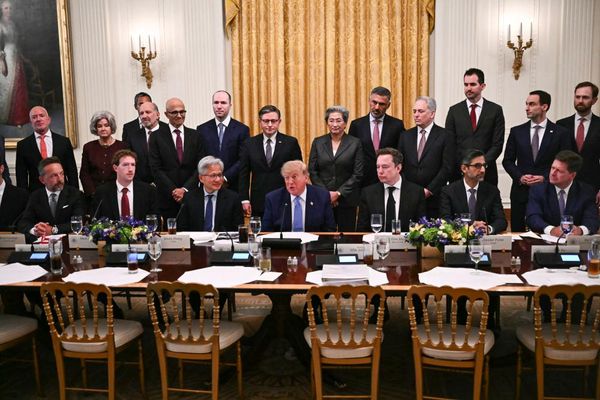
Meanwhile, in the United States, President Donald Trump told reporters his administration was “looking at some very strong options” and claimed Iran “wants to negotiate” amid the unrest. Iran’s Foreign Minister Abbas Araghchi hit back, accusing the US and Israel of fuelling the violence, even claiming the protests turned “bloody to give an excuse” for American intervention.
What happens next?
Experts warn that even if this round of protests is violently suppressed, Iran’s leaders may face more defiance soon.
“Protesters have been faced with repression that is unprecedented in brutality,” said Alemzadeh to Al Jazeera. “The grievances, however, are not going to be quieted this time around.”
For now, life inside Iran remains tense — a country silenced, waiting for the internet to return and the world to see what’s really happening.
Lead image: AP News
The post ‘A Cacophony Of Chaos’: Why Is Iran Protesting? The Deadly Uprising, Explained appeared first on PEDESTRIAN.TV .