Get all your news in one place.
100's of premium titles.
One app.
Start reading
The Economic Times
The Economic Times

A Byzantine royal ship sank off Croatia in the 7th century, 1300 years later it was discovered with 600 grams of gold including a gold ring linked to emperor Heraclius

A 1,300-year-old shipwreck off the Croatian island of Mljet has revealed more than 600 grams of gold, including a signet ring possibly linked to Byzantine Emperor Heraclius, along with gem-encrusted belts and coins bearing the names of four emperors.

The ship sank in the Adriatic Sea during the seventh or eighth century, a period when the Byzantine Empire was facing major political and economic challenges. Archaeologists say the discovery offers a rare glimpse into maritime activity and elite life during an era for which historical records remain limited.

ALSO READ: In 1973, Wisconsin teenager Libby Riddles moved to Alaska. 12 years later, she drove into a storm and became the first woman to win the Iditarod sled-dog race

More than 40 gold objects have been recovered from the wreck, making it the largest known collection of gold found on a shipwreck anywhere in the Mediterranean, according to Igor Miholjek, head of research at Croatia’s Conservation Institute.

Gold linked to a Byzantine emperor

Among the most notable finds is a gold signet ring that may depict Heraclius, who ruled the Byzantine Empire from 610 to 641.

According to the Croatian Conservation Institute, the ring would likely have belonged to a high-ranking official authorised to seal documents in the emperor’s name.

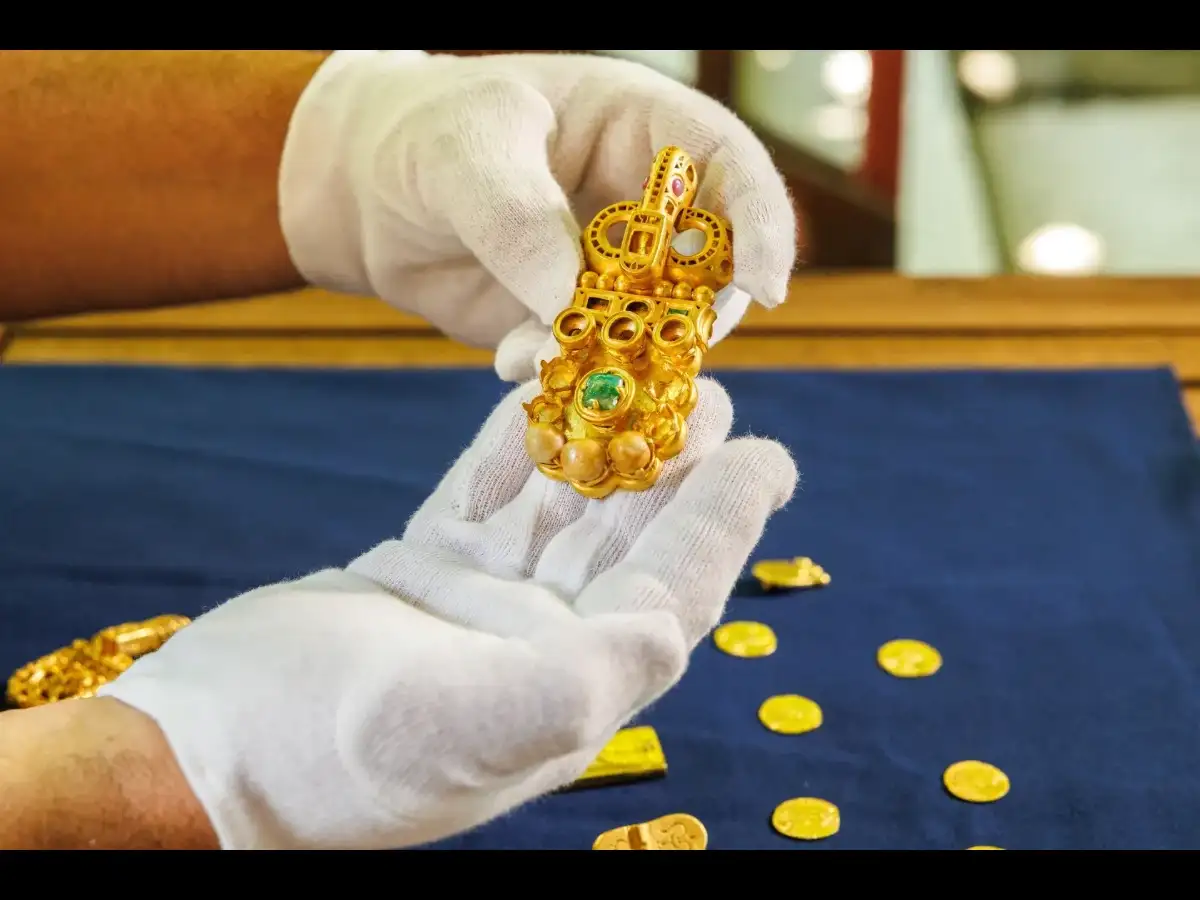
Researchers also recovered four gold belt sets and a pseudo buckle decorated with emeralds, rubies and pearls. Coins minted under four emperors of the Heraclian dynasty were found alongside the jewellery.

ALSO READ: In 1500s, Spanish explorers introduced pigs into North America. Now areas where they roam free have fewer invasive species

The cargo was not limited to precious objects. Amphorae, ceramic vessels, scales, weights, ivory tokens and playing dice were also recovered, pointing to the ship’s links with the wider Byzantine trading network.

Justin Leidwanger, an archaeologist at Stanford University, described the wreck as “the most important shipwreck of its period,” according to Reuters.

A shipwreck from a poorly understood era

The vessel appears to have sunk during the period often referred to as the Dark Ages, when Europe is traditionally described as having experienced cultural and economic decline.

Modern research has challenged that picture, but written records from roughly 500 to 1000 C.E. remain limited. The shipwreck therefore provides physical evidence of activity in a region that some historians once considered an impoverished and poorly connected part of the Byzantine world.

Francesco Borri, a medieval historian at Ca’ Foscari University of Venice who was not involved in the research, described the period as “a blank,” according to National Geographic.

The discovery is particularly significant because the cargo suggests that ships were still carrying valuable goods across the Adriatic despite the empire’s difficulties.

Why was so much gold on the ship?

Researchers have yet to determine the exact purpose of the voyage.

The ship carried gold jewellery, luxury objects and equipment associated with goldsmithing, raising questions about whether it was transporting gifts, valuables or materials for an important mission.

One possibility is that a senior Byzantine official was travelling with a diplomatic delegation carrying gifts for a distant ally. Another is that a wealthy member of the elite was simply travelling aboard a commercial cargo vessel.

For now, archaeologists say the evidence does not conclusively establish either explanation.

“What was going on here, this was no normal trading venture,” Miholjek told National Geographic.

The wreck was first surveyed by the Croatian Conservation Institute in 2015, and researchers plan to continue examining the artefacts and searching the site for additional evidence.

The findings are expected to be presented through a major exhibition and accompanying publication. A documentary about the underwater archaeological work and the heritage of Mljet is also being prepared.

Sign up to read this article
Read news from 100's of titles, curated specifically for you.
Already a member? Sign in here
Related Stories
Top stories on inkl right now
One subscription that gives you access to news from hundreds of sites
Already a member? Sign in here
Our Picks
Fourteen days free
Download the app
One app. One membership.
100+ trusted global sources.