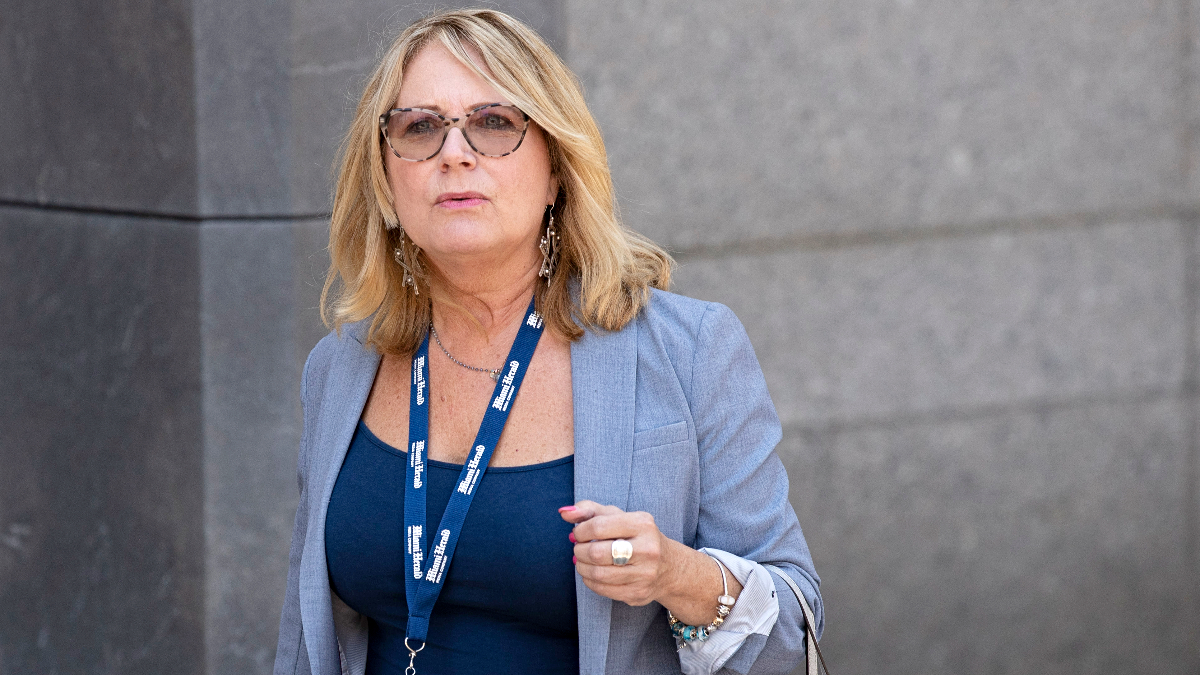
Julie K. Brown, whose reporting forced federal authorities to unravel the Epstein-Maxwell prosecution, has now found herself inside the Epstein files. Quite literally. And there’s no explanation why.
In the DoJ’s December 2025 document dump, journalist Julie K. Brown discovered detailed American Airlines booking records tied to her name from July 2019. This was weeks before Epstein’s arrest. For the journalist who cracked the Epstein story wide open, this wasn’t very pleasant. Her response on X was blunt:

“Does somebody at the DOJ want to tell me why my American Airlines booking information and flights in July 2019 are part of the Epstein files (attached to a grand jury subpoena)? As the flight itinerary includes my maiden name (and I did book this flight), why was the DOJ monitoring me?”
Brown also attached the concerning document to her post, which shows a full itinerary of her travels. This includes flight numbers, dates, and routing attached to a grand jury subpoena from the Southern District of New York. Brown admitted she booked the flights. However, no one from the DOJ ever explained why her personal travel data was included in the Epstein case files.
The obvious problem is that Julie K. Brown wasn’t Epstein’s associate, fixer, or co-conspirator. She was the reporter whose work embarrassed federal prosecutors and exposed the sweetheart deal cut by Alexander Acosta. Her reports reignited public pressure that authorities had spent years avoiding. So, why exactly is her travel history in the incriminating file?
Defenders of the DOJ argued that this could be routine. Grand juries subpoena airline records to reconstruct timelines, map movements, or corroborate witness logistics. And the fact that Brown had helped arrange travel for Epstein accuser Annie Farmer around that period theoretically explains the data capture. But again, according to Brown, she received no heads-up that she would find her own name in the files.
The DoJ never explained the move to Julie K. Brown
On top of it all, while Brown’s flight logs made it into the record, other material didn’t. High-profile names tied to Epstein have been inconsistently disclosed or aggressively pre-labeled as “untrue” by DOJ social media posts. Victims’ identities were rightly protected. But the involvement of powerful people with Epstein was blurred, delayed, or redacted. And that contrast deserves a backlash.
On X, users asked why the DoJ subpoenaed a journalist’s flight logs while Epstein’s associates went years without meaningful scrutiny. Why does transparency seem to flow downward, toward reporters and victims? Meanwhile, those with money, influence, or political utility got their names edited away from the public eye.
While there is no proof that Brown was “spied on,” there is an ethical discomfort in finding one’s personal data in a criminal probe. And there is no clear explanation from the DoJ that resolves that.
Have a tip we should know? [email protected]