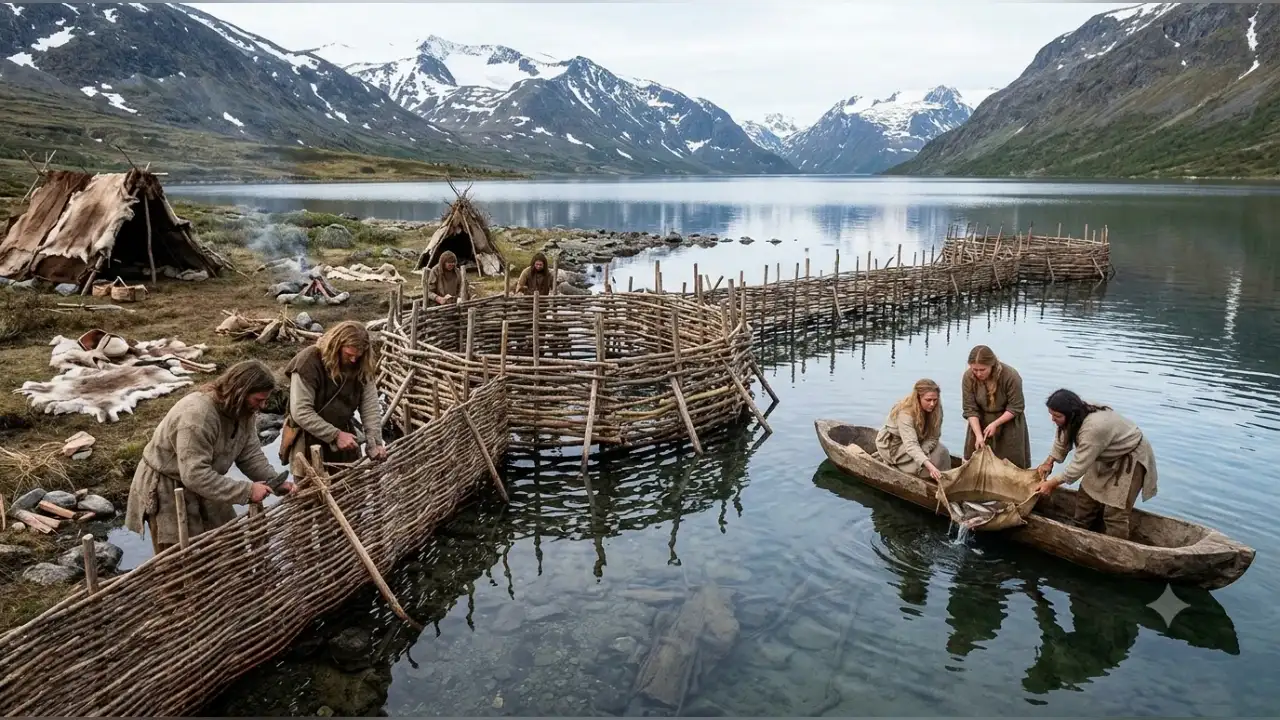
Long before farming reached the region, Stone Age hunter-gatherers in what is now Norway appear to have deliberately introduced live brown trout into the isolated waters of Lake Tesse around 5000 BC, creating a dependable food source.
The evidence comes from wooden fish traps preserved beneath the lakebed. Along with evidence that people repeatedly returned to repair and maintain the traps, the discoveries suggest these communities were doing more than simply catching wild fish. They introduced trout into an isolated lake and repeatedly returned to maintain the fishing system that supported a dependable food source, as per a report.