A 6-year-old boy with autism in Beijing began having sudden, uncontrollable bursts of laughter during a four-week trial of high-dose magnetic brain stimulation. Three months after treatment ended, his mother reported that the laughing had not stopped, though it came less often.
Researchers at Beijing Bo'ai Hospital, part of the China Rehabilitation Research Center, described the boy in a case report in Clinical Case Reports in July 2025. To their knowledge, they wrote, no earlier study had reported repetitive transcranial magnetic stimulation, or rTMS, triggering excessive laughter in children with autism.
The case drew fresh attention this month. In a case series in Frontiers in Psychiatry published Sept. 4, neurologists at Bethune International Peace Hospital in Shijiazhuang, China, described two stroke patients who laughed involuntarily during rTMS. To their knowledge, they wrote, the Beijing boy's report was the only previous description of rTMS-induced excessive laughter.
Giggling at 4 A.M., Then Sudden Bursts of Laughter
The boy was diagnosed with autism at age 5. By 6, he could express physical needs in simple phrases and imitate about 10 words. He showed little interest in most toys but was drawn to rotating objects such as fans and air conditioners.
His parents enrolled him in a four-week clinical trial in July and August 2024. He cooperated well, sitting still through sessions. Whenever the room's electric fan was on during treatment, the report notes, he would always say, "Turn off the fan."
In the third week, his parents said he had been waking at 3 or 4 a.m. for several days, giggling and very excited. By the fourth week, researchers saw him burst into laughter during treatment breaks with no apparent trigger, sometimes after sitting with an unfocused gaze. Each episode typically grew in intensity and lasted about 5 to 10 seconds, and his family could not stop it.
The laughter appeared only during breaks, never while the magnetic pulses were being delivered, and the team saw no other abnormal behavior. At a one-month follow-up, he was still laughing excessively, especially at night.
A Daily Dose Nine Times the Typical Protocol
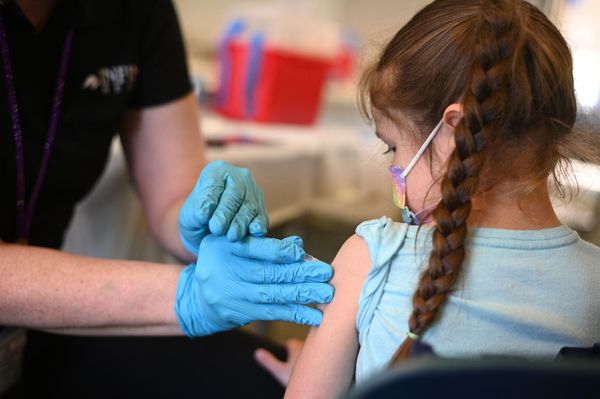
The boy received intermittent theta burst stimulation, a fast, excitatory form of rTMS, aimed at the left dorsolateral prefrontal cortex, a region tied to speech, language, and emotion regulation. Each 10-minute session delivered 1,800 pulses, and he received three sessions a day over 20 treatment days. That added up to 5,400 pulses daily and 108,000 in total.
A typical protocol, the authors note, uses 600 pulses once a day, and 1,800 or more pulses daily is considered high-dose. They argued that low doses may explain limited results in earlier autism studies, which is why the team's pilot trial, a randomized, sham-controlled study, tested a more intensive approach.
There were signs of benefit. His parents reported more spontaneous speech and more interaction with family, and his scores on several autism rating scales improved modestly. On the Childhood Autism Rating Scale, for example, his score dropped from 43 to 40.
Because the family was worried about the laughter, the researchers broke the trial's blinding for him. An electroencephalogram showed no epileptic activity. His salivary oxytocin, a hormone tied to social bonding, rose from 99.08 to 120.45 pg/mL, but the authors suspect that change was unrelated to the laughing.
Two Theories and a Key Missing Evaluation
The authors offered two possible explanations. The first is disinhibition. The prefrontal cortex helps restrain behavior, and brain imaging with functional near-infrared spectroscopy showed weakened connectivity within the stimulated region and between it and most other areas measured. The researchers suggested that intense stimulation may have released laughter-generating circuits from normal control.
They also saw a possible link to language. Earlier studies in epilepsy patients found that electrically stimulating parts of the left frontal lobe near language regions could trigger laughter. In this boy, gains in spontaneous speech arrived alongside stronger connectivity in language areas, including both sides of Broca's area, and the researchers suspect the two changes may be related.
The second explanation is an affective switch, a sudden mood shift similar to reports of stimulation of the same brain region triggering mania-like states in some patients with depression or bipolar disorder. The boy showed no overt signs of mania.
The researchers acknowledged a significant limitation. No neuropsychiatric evaluation was done when the laughter first appeared, so they could not say whether it was truly pathological or part of a broader change in mood or sleep rhythms. As a single case, the report cannot prove the stimulation caused the laughter, although the authors concluded that the timing points to a strong association with treatment.
Why the Case Matters Beyond One Child
rTMS is generally regarded as well tolerated. A meta-analysis of rTMS side effects in autism put the overall rate of reported adverse effects at 25%, mostly headache, facial discomfort, irritability, pain at the stimulation site, and dizziness. Seizures, among the most serious risks, have been reported in 0.62% of children and adolescents in safety research cited by the Beijing team.
The stroke cases add a different wrinkle. Those men received low-frequency stimulation, generally considered lower risk, and their laughter stopped when the coil was moved from the motor cortex to the prefrontal area. The Frontiers authors suspect gelastic seizures, a rare form of epilepsy marked by laughter, but said they could not conclusively prove it.
In the U.S., TMS is not an FDA-cleared treatment for autism. In March 2024, the FDA cleared one TMS system for adolescent depression as an add-on treatment for patients ages 15 to 21.
The Beijing team recommended that clinicians who see excessive laughter during rTMS consider adjusting the protocol, performing psychiatric and emotional assessments, and using brain imaging or electrophysiological monitoring. Parents weighing experimental brain stimulation for a child can ask study teams how they watch for unusual emotional or behavioral changes.
Key Questions Answered
What happened to the boy?
After four weeks of high-dose theta burst stimulation for autism, the 6-year-old developed sudden laughing episodes lasting about 5 to 10 seconds. Three months later, his mother said they continued, though less often.
Did the laughter happen during stimulation?
No. Researchers observed it only during breaks between sessions, not while pulses were being delivered.
How high was the dose?
He received 5,400 pulses per day and 108,000 in total. The authors note that a typical protocol uses 600 pulses once daily.
Did the treatment help his autism symptoms?
His parents reported more spontaneous speech and interaction, and some rating scale scores improved modestly. A single case cannot show whether the treatment works.
Is TMS approved for autism in the U.S.?
No. TMS devices are FDA-cleared for conditions such as depression. Families considering experimental use should discuss risks and monitoring with qualified clinicians.
Published by Medicaldaily.com