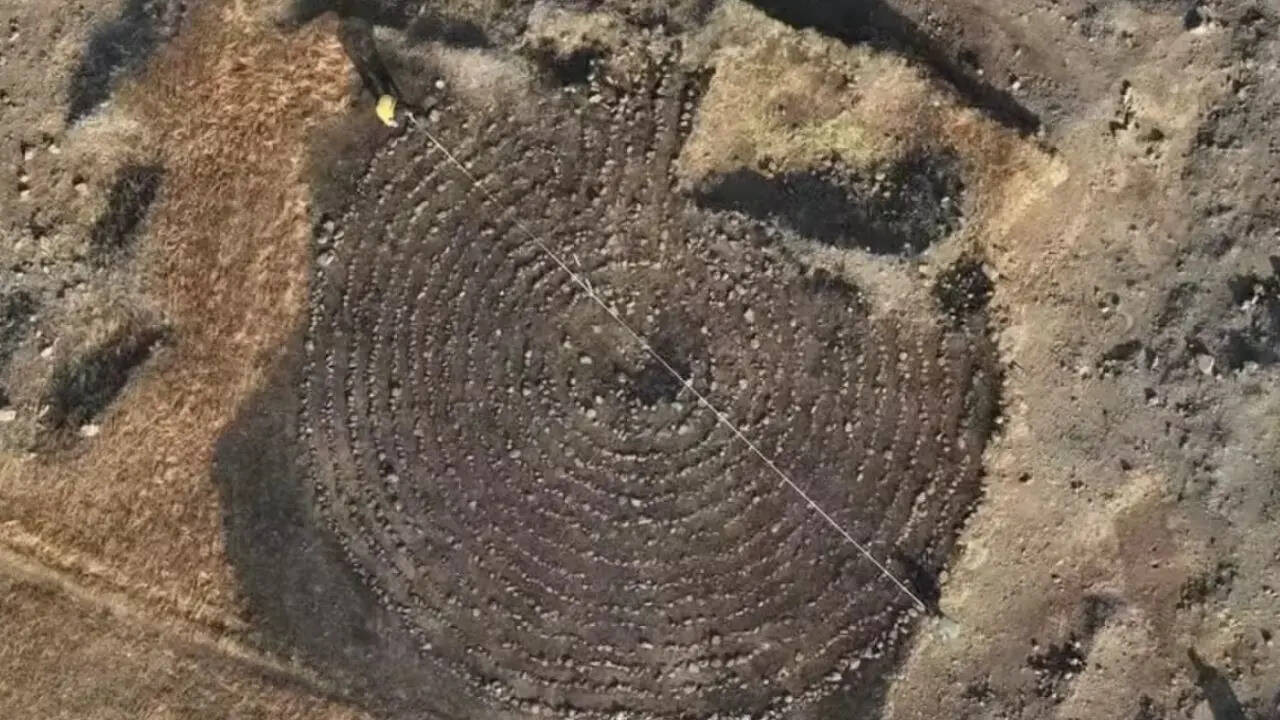
A mysterious circular stone structure discovered in the grasslands of Maharashtra is drawing major attention from archaeologists and historians across the world. Hidden in the Boramani grasslands of Solapur district, the formation is now believed to be India’s largest circular labyrinth, with experts estimating that it could be more than 2,000 years old. The discovery is important not only because of its enormous size but also because of what it might reveal about ancient trade routes connecting India with the Roman world.
The Satavahana dynasty ruled large parts of the Deccan region between approximately 200 BC and 200 AD. During this time, India maintained extensive trade links with Rome and other Mediterranean powers. Earlier excavations in Maharashtra had already uncovered artefacts connected to the Roman world, including bronze mirrors and a statue linked to the Graeco-Roman sea god Poseidon.