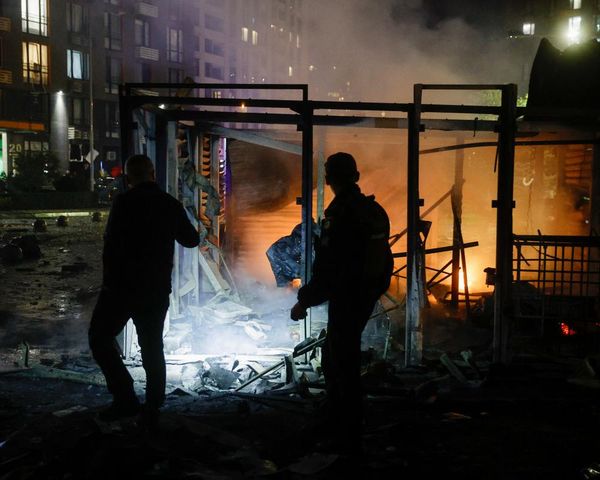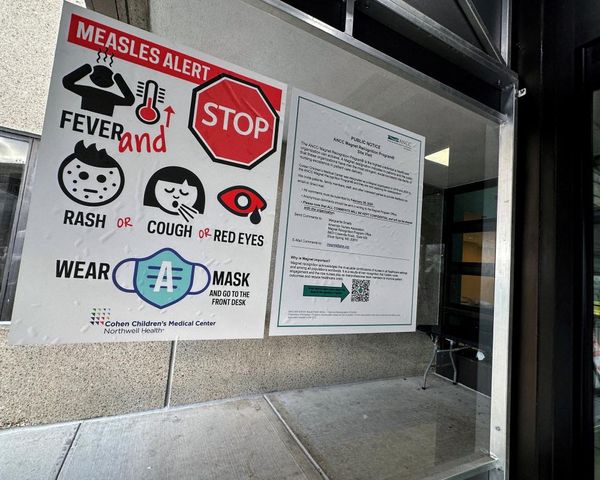
In today’s world, getting the “perfect” picture is practically a sport. Smartphones are doing most of the heavy lifting now, fixing your lighting, guiding your angles, even nudging you toward better composition before you’ve tapped the shutter. And still, we take 20 or 30 photos, delete most of them, and somehow end up dissatisfied with what’s left.
That’s what makes those rare, unplanned moments feel so special. No planning, no retakes. The light hits just right, someone moves at the exact perfect moment, and suddenly you’ve captured something that looks less like a quick snap and more like it belongs in a 15th-century art gallery. It’s exactly this kind of accidental magic that the “Accidental Renaissance” community celebrates, turning everyday moments into unexpected works of art. Keep scrolling, pandas, to enjoy these accidental masterpieces.

#1 Cats
© Photo: Mornathor
#2 Swan And Cygnets
© Photo: exposed_silver
#3 This Green Heron Preening Its Feathers
© Photo: -knave1-
“Accidental Renaissance” sounds interesting, right? But it’s not just about any photo that vaguely looks old-school or artistic. The subreddit actually has clear criteria for what counts. As per its rules, a picture has to resemble a Renaissance-style painting in its “composition, style, lighting, and/or subject.”
But here’s the interesting part: once you start scrolling, you’ll notice the community doesn’t strictly stop at just Renaissance-inspired works. It’s a bit more flexible than that. Images influenced by related art movements like Baroque, Neoclassicism, and Romanticism are also welcomed, as long as they carry that same timeless, painterly feel that makes you pause for a second and wonder if it’s really a photo at all.
#4 Did I Misunderstand This Sub
© Photo: JAKR73
#5 Iranian Protests Tonight
© Photo: Areat
#6 Man Attending Protest At The Iranian Embassy In Tbilisi, Georgia Just Learned His Family Member Has Been Ended By The Islamic Republic
© Photo: KireRakhsh
The Renaissance art movement, which flourished roughly between the 14th and 17th centuries, is often described as a cultural “rebirth” of classical antiquity. It marked a major shift away from the more rigid, symbolic, and abstract style of medieval art toward a renewed focus on humanism, realism, and naturalism. Instead of portraying figures in flat, stylized ways, artists began studying the real world more closely (human anatomy, facial expressions, nature, and everyday life) to make their work feel more lifelike and emotionally grounded.
This period also introduced major technical breakthroughs, including linear perspective, which allowed artists to create the illusion of depth on a flat surface, and chiaroscuro, the dramatic use of light and shadow to model form. Combined with careful attention to anatomy and proportion, these innovations transformed painting into something far more immersive and visually convincing than ever before.
#7 40 Siberian Tiger Cubs Were Born At The Hengdaohezi Siberian Tiger Park In 2025
© Photo: LDlOyZiq
#8 Cat Bathed In Light
© Photo: BreakfastTop6899
#9 Subway Naps
© Photo: Anarquiteto
Another defining feature of Renaissance art was its focus on idealized human beauty and deep emotional expression, brought to life by legendary artists such as Leonardo da Vinci, Michelangelo, and Raphael. Their work didn’t just aim to imitate reality; it aimed to elevate it, blending physical accuracy with philosophical and emotional depth. A perfect example is Leonardo da Vinci’s ‘The Last Supper’ (1498), which uses geometry to powerful effect. Every line in the room (walls, ceiling, and table edges) leads directly toward the central figure of Jesus, creating a strong focal point. Even though the scene captures the emotional chaos of the disciples reacting to the news of betrayal, the structure itself remains calm, balanced, and almost mathematically ordered.
To summarize, Renaissance art is defined by several key characteristics and techniques that reshaped the history of visual expression. Humanism and realism placed emphasis on the human experience, encouraging artists to depict emotion, individuality, and anatomically accurate bodies with remarkable detail. Linear perspective revolutionized composition by introducing a mathematical system to create depth on a flat surface, allowing scenes to feel spatially realistic. Artists also drew heavily from classical Greek and Roman culture, reviving themes of mythology, philosophy, and architectural harmony. Over time, the movement evolved from the Early Renaissance, seen in artists like Botticelli, into the more refined and technically advanced High Renaissance, which set the standard for Western art for centuries to come.
#10 Accidental 'Capriccio' My Father Just Sent Me
© Photo: ecolonomist
#11 I Was Told This Should Go Here?
© Photo: Embarrassed-Image-11
#12 The Offering Of Play In A Sunlit Chamber
© Photo: BoGuS88
The Baroque movement emerged in early 17th-century Rome as a bold, emotionally charged style that broke away from the calm balance of the Renaissance. It was art designed to move people: visually, emotionally, and even spiritually. Closely tied to the Catholic Counter-Reformation and the ambitions of absolute monarchies, Baroque artists used powerful visual drama to inspire awe and authority. Paintings and sculptures often captured the most intense moment of a story, filling scenes with motion, tension, and theatrical energy rather than stillness or restraint.
#13 Chinese Surgeons Bowing To A Deceased 11-Year Old That Opted To Share Their Organs
© Photo: RIPthisDude
#14 The Warm Window
© Photo: Portland284
#15 Impressionable Curiosity
© Photo: Galletti_Unit
Stylistically, Baroque art is instantly recognizable for its dramatic use of light and shadow, known as chiaroscuro or tenebrism, where strong contrasts guide attention and heighten emotion. Compositions in Baroque art rarely feel still or “frozen” in place. Instead, they feel like they’re happening right in front of you: full of movement, tension, and energy. Artists often used strong diagonals, flowing curves, and swirling motion to pull your eye through the scene, almost like you’re watching a moment unfold rather than just looking at a finished picture. That’s exactly what makes artists like Caravaggio, Peter Paul Rubens, Rembrandt, Velázquez, and Bernini so unforgettable. Their work doesn’t sit quietly on a wall; it feels alive, almost like a scene from a play where everything is happening at once, right in front of you.
#16 My Bus Trip Sleeping Position, Does This Qualify For Accidentally Renissance?
© Photo: Different_Turnip8815
#17 Catcher In The Eye
© Photo: Zarshish
#18 Chilling At The Music Festival
© Photo: nicolaimaa
Neoclassicism arrived in the mid-18th century as a return to order after the emotional excess of the Baroque and Rococo periods. Inspired by the rediscovery of ancient Greek and Roman ruins, as well as Enlightenment ideals of reason and discipline, it focused on clarity, structure, and moral seriousness. Artists aimed to revive the simplicity and harmony of classical antiquity, producing works that felt controlled, balanced, and intellectually grounded. Unlike earlier dramatic styles, Neoclassicism often carried a sense of calm authority and ethical purpose.
In practice, Neoclassical art is defined by clean lines, symmetry, and carefully organized compositions. In Neoclassical art, figures are often shown in an idealized way rather than as deeply individual portraits of real people. Think less “everyday personality” and more “perfect idea of a hero.” The scenes usually draw from history, mythology, or legendary moments, and they tend to highlight values like virtue, sacrifice, discipline, and duty—almost like visual reminders of what society admired most at the time.
#19 Boy And A Dog
© Photo: Lyrawhite
#20 A Photo I Took Of A Stranger Walking Home
© Photo: Driftershoots
#21 My Hamster While I'm Trying To Look At Her Belly
© Photo: soztr
Even the color palette stays fairly controlled and restrained, which helps keep the focus on structure, form, and clarity rather than decoration. Artists like Jacques-Louis David, Jean-Auguste-Dominique Ingres, Antonio Canova, and Jean-Antoine Houdon played a huge role in shaping this style. And it wasn’t just painting and sculpture; architecture followed the same mindset too, with landmarks like the Panthéon in Paris and the British Museum reflecting that sense of symmetry, strong columns, and calm, monumental simplicity.
#22 My Pigeon Stretching Under Her Lamp
© Photo: d0doob0b
#23 I Was Told To Post My Photo Here
© Photo: BIGFACTS27
#24 Larry The Cat Underfoot At 10 Downing Street
© Photo: Bub-1974
Romanticism emerged in the late 18th and early 19th centuries as a powerful reaction against Neoclassicism’s focus on reason and order. Instead of discipline and structure, Romantic artists turned toward emotion, imagination, and the untamed forces of nature. It was a deeply personal movement that celebrated individual feeling, creativity, and the idea of the artist as a visionary rather than a rule-follower. At the same time, it reflected broader social shifts, including reactions to industrialization and political upheaval across Europe.
#25 End It
© Photo: El_Braineater
#26 The Bakery Opens - Bath, England
© Photo: hiraeth555
#27 The Revellers
© Photo: VelaVelox
Romantic art is defined by its emotional intensity and sense of the sublime—especially in depictions of nature as vast, powerful, and overwhelming compared to human life. Scenes often feel dramatic, mysterious, or even haunting, drawing on themes like heroism, revolution, the supernatural, and medieval history. Across painting, literature, and music, Romanticism placed human feeling at the center, making emotion itself the subject of art.
These posts are a gentle reminder of the incredible range of artistic expression from the Renaissance, Baroque, Neoclassical, and Romantic eras. Each one offers a completely different lens on the world: sometimes calm and balanced, sometimes dramatic and emotional, sometimes structured and precise, and sometimes raw and full of feeling. Yet despite their differences, they all come back to the same timeless idea: the human experience, and the many ways we try to capture it. So as you scroll through these posts, it’s worth pausing for a second to appreciate how beauty can shift so dramatically depending on how it’s framed. Something as simple as light, posture, or composition can completely change the story a scene tells and turn something ordinary into something you can’t quite look away from. Which of these photos did you find yourself most drawn to?
#28 The Crowd Surfer
© Photo: boriswong
#29 Welcome To The American Winter - Photographed By Jack Califano For The Atlantic
© Photo: cessiecat
#30 End Of Summer
© Photo: AnnieLuneInTheSky
#31 Construction
© Photo: Outrageous-Bus-2726
#32 Battle Of Londinium
© Photo: series_of_derps
#33 From An Exhibition In Budapest
© Photo: whoareyou_972
#34 Birds Of A Feather Flock Together
© Photo: CrazyLegsCrane77
#35 My Byzantine Cat
© Photo: MathematicianSame666
#36 Two Stray Cats Through A Foggy Car Window
© Photo: CatsCoffeeCars
#37 On The Subway As Santacon Was Wrapping Up A Few Years Back. One Girl Comforts Another As She Cries Over A Burrito
© Photo: LLaserz
#38 My Favorite Photo Of Our Late Cat
© Photo: saltyface
#39 Accidental Caravaggio
© Photo: 213104099
#40 Christmas In Montreal
© Photo: 0ajs0jas
#41 The Chosen One
© Photo: SavageCouchSquad
#42 Fencing Kiss
© Photo: Anxious_dadada
#43 That Morning Light
© Photo: chilipalmer42
#44 The Sun-Drenched Calico (C. 1650)
© Photo: sensory
#45 "Friends, Romans, Countrymen, Lend Me Your Ears"
© Photo: Sweet-Message1153
#46 Photo I Took Of A Man Feeding Seagulls
© Photo: garlicandmayo
#47 Made The Most Of Burning My Dinner The Other Night. Loved How The Smoke Caught The Light
© Photo: sliger0
#48 Rijksmuseum, 2025 December
© Photo: thorvindottir
#49 Snow Battle
© Photo: AnxietyComplex4128
#50 The Ladies-In-Waiting
© Photo: justreethings
#51 Clash Of The Titans
© Photo: TarrasqueLover
#52 Protests In Iran
© Photo: Consistent-Cold-1028
#53 I Present ‘Drama At The Bird Feeder’
© Photo: Glittering_Age_5591
#54 The Bride In A Schoolhouse
© Photo: WickedForge
#55 Congregation Of The Waterfowl
© Photo: Worldly-Ad5386
#56 From A Greek Football Match
© Photo: Angrysoldierr
#57 The Toilet At Work
© Photo: PhotoBN1
#58 My Wife Rescues My Sister's Wig From Certain Damnation
© Photo: MakubeC
#59 The Pact Of The Doorway
© Photo: Upstairs_Drive_5602
#60 And The Light
© Photo: Adventurous-Ad6912
#61 Cat In A Closet: A Study In Chiaroscuro
© Photo: Low_Establishment730
#62 2021, After A Long Trip And Finally Getting Home To My Moms
© Photo: HauntEffective42
#63 Opulent Opposum
© Photo: SarahxSyanide
#64 Radiance Of Mans Best Friend
© Photo: Ijuslookillegal666
#65 Christmas Morning Light
© Photo: female_hagrid
#66 Renaissance Cherry 🍒
© Photo: mmahomm
#67 Breach Of The Peace
© Photo: davidatdi
#68 Power Outage
© Photo: Dynamicsmoke
#69 The Bug In The Lamp
© Photo: TwinTellula
#70 The Annual Christmas Tree Burning In South Philadelphia
© Photo: AgentDaxis
#71 The Pope's Visit
© Photo: Gondolien
#72 Our Beloved Cat That We Had To Put Down Today
© Photo: CarrotFawn
#73 I Was Told This Would Be Appreciated Here <3
© Photo: Psychological_Cup487
#74 The Pope Striking A Pose Straight Out Of The 15th Century
© Photo: Gondolien
#75 Nap In A Net
© Photo: Grouchy_Middle_5425
#76 The Flower Drooped With The Light So Perfectly
© Photo: TeddyJPharough
#77 Thought This Might Fit Here - Very Seepy Goirl
© Photo: Lo_kat
#78 Mother In Law Cleaning Outside
© Photo: spdrschwn
#79 Taking Time For Romance Amidst The Chaos
© Photo: boriswong
#80 Waiting
© Photo: boriswong
#81 The Plea For Mercy
© Photo: zeptimius
#82 First Communion
© Photo: Prestigious_Ad_8575
#83 The Flu
© Photo: PassengerCharming203
#84 Window Installation
© Photo: drewsjd
#85 “This Is Not What We Rehearsed”
© Photo: bph126