A lot can happen over the course of 10 years. Unexpected opportunities can take you in a new direction that you’d never thought of, or personal circumstances can put constraints on your life. Sometimes your dreams don’t seem so appealing when you get close to them, and it turns out that something entirely different is the right fit for you.
We asked artists what their goals were 10 years ago, how things turned out, and what they would say to their younger selves. What’s clear is that everyone’s journey is different – there’s no typical path, and you never know when a new discovery will change everything (if you need to change your own work setup for the next stage of your career, see our picks of the best tablets for digital artists and the best art supplies for painting).
A decade ago, German concept artist Johanna Rupprecht thought her path into the art world would start with full-time employment. She aimed to earn some money by freelancing while building up her art skills, and eventually get an in-house job in games or animation.
“What I didn’t expect at all was how fast my freelance career took off. I managed to make a full-time income from it,” she says.
Getting an in-house role wasn’t necessary after all, and she has spent the last decade freelancing – even turning down job offers that have come her way.
Changing course

“Realising that there are multiple viable paths to make a living was very valuable to me,” she says. “There are many ways to earn money as an artist: from regular employment or freelance, to being a content creator, selling merchandise, or a hybrid of multiple income streams. It’s good to be open-minded about changing tracks and expectations when new opportunities arise.”
Johanna’s experience has taught her the importance of cultivating a savvy business mindset. “There’s more to an art career than just art, particularly as a freelance artist,” she adds.
“Educate yourself in business matters: learn how to negotiate, do paperwork, read and write contracts, and calculate sustainable rates or salaries. Learn to communicate well and to advocate for fair payment and working conditions. Your future self will thank you for it!”
Love your style

Illustrator Elisabeth Alba is another artist who took an unexpected turn, in her case because her art style didn’t fit where she thought it would. “Ten years ago I was still imagining myself illustrating picture books or middle-grade novels and book covers,” she recalls.
“My work was deemed too traditional, too ‘classic’ for the current kids’ market, but I didn’t want to change my style or what I illustrated; I loved what I did. “Fortunately, back in 2014, I was found by Llewellyn Worldwide to work on a tarot deck, and I’ve now found a market I enjoy making art for. I’ve been working on a tarot or oracle deck every year since.”
For Elisabeth, the “do what you love” advice worked: “I kept at it even when it wasn’t what I thought the publishing world wanted,” she says.


Much like Johanna, illustrator Andrew Sides started out wanting a job working in animation or video games specialities, but struggled to break into those areas. “Eventually, after hearing from friends within those industries, I drifted away from that goal, and for a long time I was rudderless,” he says.
But over time he found his footing. “I’ve come to recognise my strengths as someone who enjoys dabbling in many different fields, and being fast and skilled on multiple fronts so I can fulfil whatever a client is looking for.”


It turned out that being a jack-of-all trades was Andrew’s calling, and his goals have shifted to account for this. “I wanted to chase the big-ticket things like all the other artists, but nowadays I realise that I wanted them simply because other people did,” he reflects.
“It’s important to recognise what you enjoy creating, and be okay with not going after the shiny object everyone else is seeking. If it comes your way, that’s fine, but don’t feel guilty about not actively pursuing it.”
Finding your way as an artist can take time

Several artists told us that through trying out a variety of mediums, techniques and subjects, and keeping an open mind, their aptitudes and preferences became clearer.
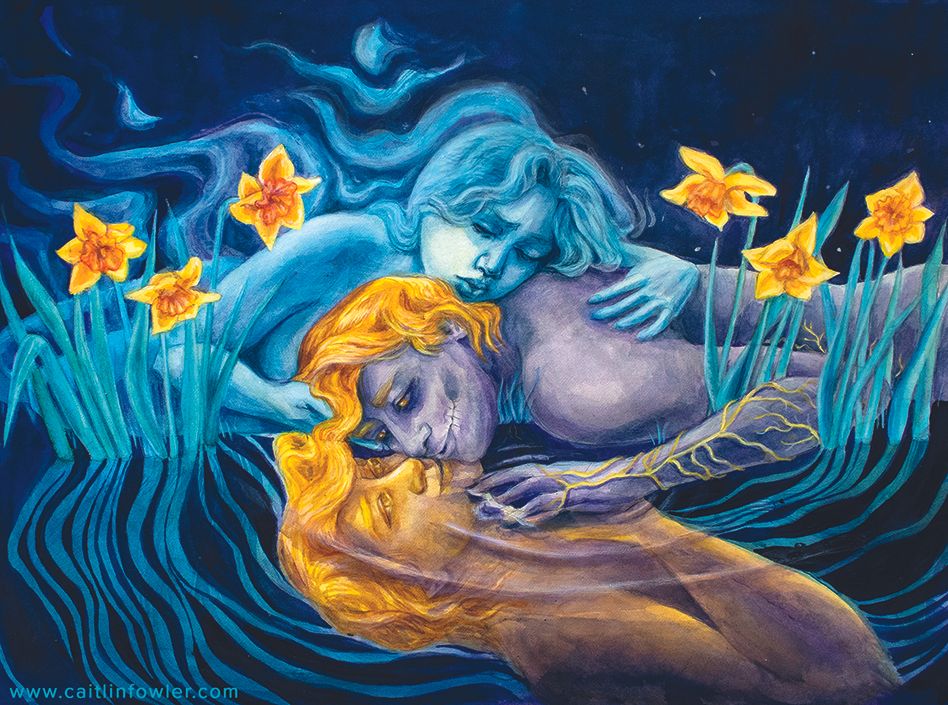
Fantasy artist Caitlin Fowler found herself “a bit lost” when she completed her degree in studio art 10 years ago, and sought ways to expand her horizons. “After graduating, I continued my education through mentorship programs at SmArt School, and that allowed me to experiment while building up my professional portfolio,” she says.
Through that, Caitlin discovered a new passion for making fantasy art that was infused with symbolism and mythology. Over the next few years she began experimenting with other mediums, learned about cold calling, looked for gallery opportunities, and spent a lot of time submitting her work to different projects that she found on social media. And it has paid off.

By casting a wider net, Caitlin has found a broad range of applications for her art. Today she’s exhibiting her work in galleries, taking on personal commissions, and creating concept art, album art and book covers.
Caitlin tells us: “As time has gone on, I’ve found opportunities that I hadn’t initially considered, including artwork for wine bottle labels, tarot card art, and cover art for magazines. Lately, I’ve started pursuing more freelance work in game art, which is something I had never thought about in the past.
“Over the past 10 years, I’ve learned that there’s no one-size fits-all definition for what it means to be an artist, and to keep myself open to different opportunities.”
Family matters

For many artists, the biggest change they’ve had to face over the past decade has been the career disruption that comes with parenthood. Helge C. Balzer says his working life was changed dramatically by the birth of his first son just under 10 years ago, which required him to reduce his hours by half. Put to the test, he found ways to adapt and combine fatherhood with his art career.
“I’d already been quite successful as an illustrator and concept artist back then, but now it was all going to happen within 50 per cent of my original working hours,” he recalls. “I worked very hard on my craft to become faster and more effective, and in the process I was also able to become extremely organised.

In a similar way to Andrew, Helge came to realise that finding what works for you is better than pursuing fame and glory. “An important change in my perspective was the realisation that commercial success is completely different from popularity,” he says.
“I’ve never liked being the centre of attention. And with this realisation, I was able to make more confident decisions to turn down any requests and offers that would have made me uncomfortable.”

Looking back 10 years, fantasy artist Erika Taguchi wanted to be a full-time illustrator, but had to let go of that goal when she became a mother. “My ‘day job’ as a web developer proved to be far more lucrative and manageable while caring for a child,” she says.
“I used to think art and development work were completely separate, and that I had to choose one or the other, but I’ve come to accept that I can do both. One can actually support the other in ways I didn’t expect.”


On reflection, she would tell her younger self “to stop working so hard to keep different parts of myself in separate boxes”.
She explains: “Yes, I do web development and I make images, but those are just things I do – they’re not who I am. What actually matters are the qualities that drive everything: creativity, curiosity and tenacity. I don’t have to be defined by what I accomplish or produce. My identity is much larger than any project or career path.
The importance of self-care for artists

After 10 years on the job, our artists have learned more than a thing or two about the creative life, and there’s one piece of advice that keeps being repeated: look after your body and your mind. “Seriously, it’s vitally important to give your working hand a rest,” says illustrator and concept artist Nodens.
“And you need to protect your eyes and your back, and make sure that you get enough sleep too. We don’t notice these things until they become critical.”


Johanna adds: “There can be a lot of pressure to push yourself past your limits, both physically and mentally. Spending time with family, friends and enjoying your hobbies, eating healthily and resting your drawing arm are all just as important as working hard on your art, and will make you a better artist in turn.”
Moving past the grind
Nataša’s artwork is focused on mythology, nature and history. She has published her own art book and oracle deck. “My artistic vision has become clearer,” she says about how he work has changed over the past 10 years.
“My pace has slowed. My priorities have shifted. I’ve come to understand that the grind culture simply isn’t compatible with a sustainable self-expression through art. That led me to being more careful with the work I take, and prioritising my own projects.
What would she recommend to her younger self? “If there’s one thing I regret, it’s not standing up for myself as much as I should have. It’s not an easy thing to do when you’re green, and full of imposter syndrome in a world that likes to take advantage of that. My advice is to treat your time as the precious resource it is.”


“If you find yourself wasting energy chasing numbers and big names, refocus on your art,” she recommends. “Really delve deep into your story, your voice, what makes your art unique. Don’t let your art sit i drawers or on Instagram – turn it into books, games, collections, things that people will treasure.
“Find other artists that have similar affinities and be your own little gang of weirdos. Our job can be lonely; it’s nice to have someone to chat to over a virtual cup of tea when things are tough.
“And finally, rest, stretch and exercise your muscles. Having chronic pain due to overworking yourself in your 20s and 30s isn’t worth that deadline you’re trying to meet, trust me.”
This article originally appeared in ImagineFX. Subscribe to ImagineFX to never miss an issue. Print and digital subscriptions available.