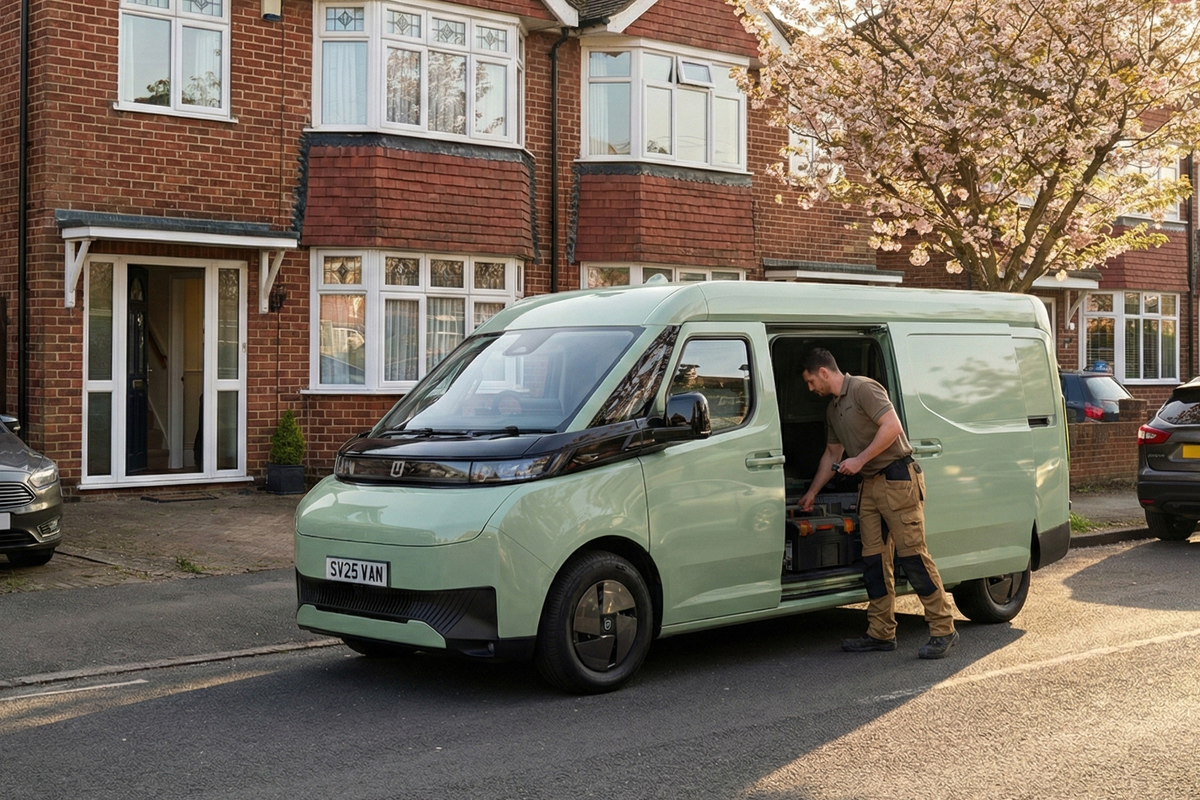
Britain’s sparkies, brickies and gardeners could be among the drivers giving electric vans their next big push, with new research suggesting far more tradespeople are open to making the switch than current sales figures might suggest.
A survey commissioned by Chinese electric van maker Farizon found that 71 per cent of tradespeople would consider choosing an electric van as their next work vehicle. That’s well ahead of the 13.9 per cent share of new electric vans, classed as Light Commercial Vehicles (LCVs), that were sold in July 2026.

The survey, carried out in June among 1,000 van drivers and 200 members of the public, also found a clear age split. Among younger tradespeople aged 18 to 24, a whopping 85 per cent said they would consider going electric, compared with just a third of those aged 65 and over.
There was a difference between trades, too. Half of the electricians, builders and gardeners questioned said they would “definitely consider” switching to an electric van, while only 20 per cent of plumbers and 18 per cent of carpenters were thinking of an EV.
Calum James, Country General Manager at Farizon Auto UK, said: “This survey is really encouraging. Interest in electric vans among tradespeople is strong, even more so than among the wider public.
“With electric van sales not matching the levels of interest, it suggests a huge, untapped opportunity is there for the taking. We know that our born-electric model line-up is more than a match for traditional diesel vans in terms of capability and versatility and beats them hands down for total cost of ownership. It’s clear purchasing behaviour is shifting.”
The wider public was a little less enthusiastic in the same survey, with 55 per cent saying they were considering switching to electric. By comparison, battery-electric cars accounted for 27.5 per cent of new passenger car sales in July.
Where tradespeople live and work also appears to play a part in the desire to shift to an EV. The research says Wales recorded the highest level of interest in electric vans at 67 per cent, followed by London at 52 per cent, while none of the respondents in Northern Ireland said they’d consider making the switch.
The company points to public charging as one possible factor: Department for Transport data shows Northern Ireland had just 39 public EV chargers per 100,000 people, compared with 122 in Wales and 301 in London.
Public charging won’t necessarily be the main option for every van driver, with many tradespeople able to charge at home or at a depot. Farizon says its latest electric vans can offer enough range for a day or two of work, although how far any electric van travels between charges will depend on load, weather and the type of driving being done.
The potential to lower fuel bills and tailpipe emissions are likely a key factor among tradespeople considering an electric van, but an EV’s ability to run power tools from onboard electrical sockets could also be enough to convince some trades to make the switch.
Farizon is the commercial vehicle arm of Chinese giant Geely, which now sells its own Geely cars in the UK, while also owning Volvo, Polestar, Lotus and LEVC, which not only makes London’s hybrid cabs, but also sells a van version of that vehicle.
Farizon currently sells two electric vans in the UK: the V7E medium van starts at £28,000, while the larger SV starts at £39,000, both before VAT, delivery and other charges. The company says its vans can offer payloads of up to 1.3 tonnes, cargo space of up to 13 cubic metres and a maximum claimed range of 247 miles.
While diesel vans still dominate Britain’s building sites, driveways and Screw-Fix car parks, Farizon’s research suggests plenty of the people driving them are at least thinking about plugging in next time.