A shampoo for hair loss can't necessarily reverse all types of thinning like a magic wand, but the right formula can support a healthier scalp and help tackle underlying issues that may be contributing to excess shedding.
As certified trichologist Izabella Bordignon explains, ”Hair loss is far more complex than simply choosing the right shampoo. There are many different causes of hair loss, including genetics, hormonal changes, nutritional deficiencies and scalp conditions." Then again, shampoo is still one of the hair products you’ll use most frequently. So, as much as tackling hair loss often requires more than a change of products, choosing the right shampoo and conditioner duo for your concerns will support a healthier scalp environment and complement your wider treatment plan.

To help narrow down the options, I asked Bordignon to recommend the formulas she looks to as a professional – from pharmacy favourites to salon brands. These are the ones she suggested.
Read more: Best hair oils, tested
The best anti hair loss shampoos for 2026 are:
- Best overall – Nizoral anti-dandruff treatment shampoo: £6.38, Amazon.co.uk
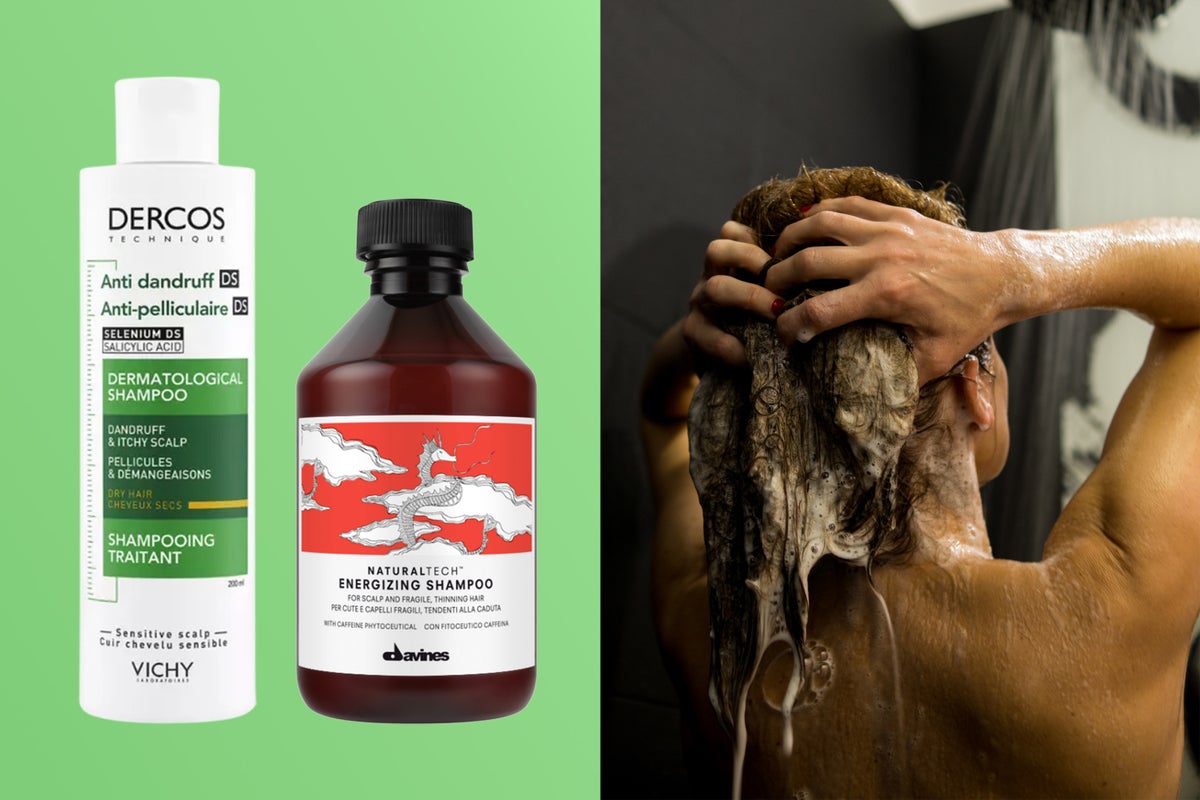
- Best for hair loss from dandruff – Vichy dercos anti-dandruff and anti-itch dermatological shampoo: £16.50, Boots.com
- Best for hair loss from stress – Davines energizing shampoo: £25.75, Cultbeauty.co.uk
- Best psoriasis-safe formula – Polytar scalp shampoo: £8.99, Boots.com
- Best for fine hair – Philip Kingsley density thickening shampoo: £32, Boots.com
Meet the expert
- Izabella Bordignon is a certified trichologist, cosmetologist and London salon founder with more than eight years experience working in the field. She specialises in hair thinning, scalp pain, inflammation and itchiness, dandruff and dry scalps, and hair texture changes.
Read more: Best hair bonding treatments, tested
Nizoral anti-dandruff treatment shampoo with ketoconazole
Rating: 5/5
Best: shampoo for hair loss overall
Why we love it
- Ketoconazole has supportive evidence for scalp health
Take note
- Can be drying if overused
Nizoral’s anti-dandruff shampoo earned a full five stars from Bordignon, who describes the formula as “particularly beneficial for individuals with seborrhoeic dermatitis, itching or persistent flaking alongside increased shedding.”
She tells me, “Nizoral stands out because ketoconazole has been investigated not only for dandruff control but also for its potential supportive role in androgenetic alopecia.
“While it shouldn't replace established hair-loss treatments such as minoxidil or finasteride, research suggests ketoconazole may help reduce scalp inflammation and create a healthier follicular environment.”
Key specifications:
Buy now £6.38, Amazon.co.uk
Vichy dercos anti-dandruff and anti-itch dermatological shampoo with salicylic acid
Rating: 4.5/5
Best: shampoo for hair loss from dandruff
Why we love it
- Effectively controls flakes while calming the scalp
Take note
- May feel drying on the hair for some users
According to Bordignon, “Vichy dercos anti-dandruff shampoo is an excellent option for people experiencing hair shedding linked to scalp inflammation or seborrhoeic dermatitis.” She praises its combination of selenium disulphide and salicylic acid, and informs me that this “helps eliminate flakes, reduce itching and restore a healthier scalp environment, an important foundation for healthy hair growth.”
While caveating that “it isn't a treatment for androgenetic alopecia,” she finds that “improving scalp health can help minimise inflammation-related shedding and support overall hair quality.”
Key specifications:
Buy now £16.5, Boots.com
Davines energizing shampoo
Rating: 4/5
Best: shampoo for hair loss from stress
Why we love it
- Gentle formula with antioxidant-rich botanical extracts
Take note
- Premium price point
Bordignon describes Davines’s energizing shampoo as “an excellent maintenance shampoo for those looking to support scalp health and improve the cosmetic appearance of thinning hair.” Speaking to its plant-led ingredients, she understands “the evidence for many plant extracts remains limited compared with pharmaceutical ingredients,” but reassures me that the energizing shampoo’s “well-balanced formulation makes it a good option for people experiencing temporary shedding linked to stress or seasonal changes.”
“The shampoo cleanses effectively without disrupting the scalp barrier and leaves hair looking fuller and healthier,” she summarises.
Key specifications:
Buy now £25.75, Cultbeauty.co.uk
Polytar scalp shampoo
Rating: 4/5
Best: psoriasis-safe shampoo for hair loss
Why we love it
- Highly effective for inflammatory scalp conditions
Take note
- Strong medicinal scent
“Polytar isn't marketed as a hair-loss shampoo, but it deserves recognition for its ability to manage inflammatory scalp conditions such as psoriasis and severe seborrhoeic dermatitis,” Bordignon claims.
This is because, she elaborates, “Persistent inflammation can contribute to increased hair shedding, and controlling these scalp disorders is often the first step in restoring a healthier environment for the hair follicle.”
She lists its benefits as reductions in scaling, itching and irritation and dubs the formula “particularly valuable for individuals whose hair loss is secondary to chronic scalp disease rather than androgenetic alopecia.”
Key specifications:
Buy now £8.99, Boots.com
Philip Kingsley density thickening shampoo
Rating: 4/5
Best: shampoo for hair loss in fine hair
Why we love it
- Adds noticeable body without weighing hair down
Take note
- Premium price compared with pharmacy shampoos
Philip Kingsley’s density thickening shampoo won’t reverse hair loss, but rather, “focuses on improving the appearance and resilience of fine, thinning hair while supporting overall scalp health,” clarifies Bordignon. “It helps optimise the scalp environment and leaves hair looking fuller, softer and more manageable,” she adds.
She runs me through how it works – “the sulphate-free formula cleanses gently without disrupting the scalp barrier” – and suggests people use the shampoo as a complementary product alongside an “evidence-based hair loss treatment.”
“Particularly for those seeking improved volume alongside healthier-looking hair,” she advises.
Key specifications:
Buy now £32, Boots.com
Kérastase genesis nourishing and fortifying shampoo
Rating: 3/5
Best: shampoo to disguise hair loss
Why we love it
- Reduces breakage
- Improves fibre strength
Take note
- Doesn't directly treat hair-loss disorders
- Pricey compared to others
Kérastase’s genesis nourishing shampoo is Bordignon’s pick for reducing the appearance of thinning. How does it work, exactly? “Ingredients such as ginger root and edelweiss stem cells are combined with conditioning agents that improve fibre resilience and leave hair feeling stronger and smoother,” she details, adding that this formula is “particularly suitable for chemically treated or heat-damaged hair prone to snapping.”
Not to be mistaken for a shampoo that can bring back lost hair, Bordignon stresses that “one of the most common misconceptions is confusing hair breakage with hair loss.” So before you check out, she cautions that this shampoo is “specifically formulated to strengthen weakened hair fibres, reducing breakage during washing and styling.” In essence, it improves the state of what’s there, versus helping ressurect patches where strands have been lost.
Key specifications:
Buy now £30.5, Amazon.co.uk
Redken acidic grow full system densifying shampoo
Rating: 4/5
Best: shampoo for hair loss from breakage
Why we love it
- Strengthens weakened hair fibres while cleansing gently
Take note
- Primarily targets breakage rather than follicle-driven hair loss
Another pick for thinning caused by breakage, Bordignon outlines how the Redken acidic grow shampoo “combines strengthening technology with gentle cleansing to reinforce weakened hair fibres and minimise breakage during washing and styling.”
She poses that “healthier, stronger strands create the appearance of greater hair density, even though the shampoo does not directly stimulate follicle activity.” As for who should use it, she instructs, “It's particularly beneficial for colour-treated, chemically processed or heat-damaged hair, making it an excellent option for anyone whose hair appears thinner because of cumulative fibre damage.”
Key specifications:
Buy now £22.47, Amazon.co.uk
How do I stop my hair from falling out and thinning?
“Identifying the underlying cause is the first step towards effective treatment,” reveals Bordignon. This is because, she elaborates, “hair shedding and hair thinning are not always the same thing.”
She explains that thinning tends to develop gradually as part of genetic pattern hair loss, while increased shedding can be triggered by stress, illness, nutritional deficiencies or hormonal changes. Because “there is no one-size-fits-all solution,” Bordignon recommends “maintaining a balanced diet with adequate protein, staying physically active, keeping the scalp clean and seeking professional advice early if you notice persistent shedding or thinning.”
What vitamin am I lacking if my hair is falling out?
“Iron deficiency is one of the most common nutritional deficiencies we see in people experiencing increased hair shedding,” says Bordignon, though she stresses it's "far from the only explanation."
She explains that “low vitamin D, vitamin B12 and zinc levels can also play a role,” while “thyroid disorders are another common cause that can affect the hair growth cycle.” Before reaching for supplements, Bordignon advises that “it's always best to consult a professional and identify the underlying cause through a clinical assessment, so that treatment can be tailored to target the root cause driving hair loss.”
How do I stop my hair from falling out when I shampoo it?
According to Bordignon, “many people worry that washing their hair is causing it to fall out, but this is actually a common misconception.” She explains that “shampooing doesn't make your hair shed more, it simply washes away hairs that have already reached the shedding phase of the normal hair growth cycle.”
If you notice more hair coming out on wash day, Bordignon says this may simply be because “you wash your hair less frequently,” rather than because you're losing more hair overall. Instead, “illness, significant stress, nutritional deficiencies and hormonal changes can temporarily push more hairs into the resting (telogen) phase, leading to increased shedding.” Her advice is to “wash your hair as often as your scalp needs it,” because “keeping the scalp clean helps maintain a healthy scalp environment, which supports healthy hair growth.”
What are the ‘big three’ for thinning hair?
Bordignon's ‘big three’ for managing thinning hair are “minoxidil, DHT blockers and the right shampoo.”
She explains that “minoxidil [a topical hair loss medication] helps prolong the hair growth cycle, while DHT blockers [a hormone blocker medication] target one of the underlying causes of pattern hair loss.” As for shampoo, she says it should “support a healthy scalp environment." While "shampoos do not treat hair loss on their own”, they “help control excess oil, support a balanced scalp microbiome and reduce inflammation where present, creating the ideal environment for healthy hair growth.”
What can a salon do for thinning hair?
While a salon can't diagnose or treat hair loss, Bordignon says hairdressers “are often among the first to notice subtle changes in hair density or scalp condition because they see their clients regularly.”
Although salons “can't diagnose or treat the underlying cause of hair loss,” they “play an important role in maintaining the condition of the hair fibre.” She explains that “appropriate hair care, gentle colouring techniques and treatments that minimise breakage can help improve the hair's overall appearance and resilience while any underlying cause is being investigated and, where necessary, treated.”
Can hair grow back after thinning?
Whether hair grows back after thinning “depends entirely on the underlying cause of the thinning,” explains Bordignon.
She says female pattern hair loss “is a progressive condition” and, while “it cannot currently be cured, early diagnosis and appropriate treatment can significantly slow its progression and, in many cases, improve hair density.”
If follicles are no longer active, “regrowth is unlikely, and hair transplantation may be the only restorative option.” It's why, Bordignon says, “early assessment is so important” because, as she tells her patients, “Time is hair.”
Read more: Best hair masks for every budget, tested