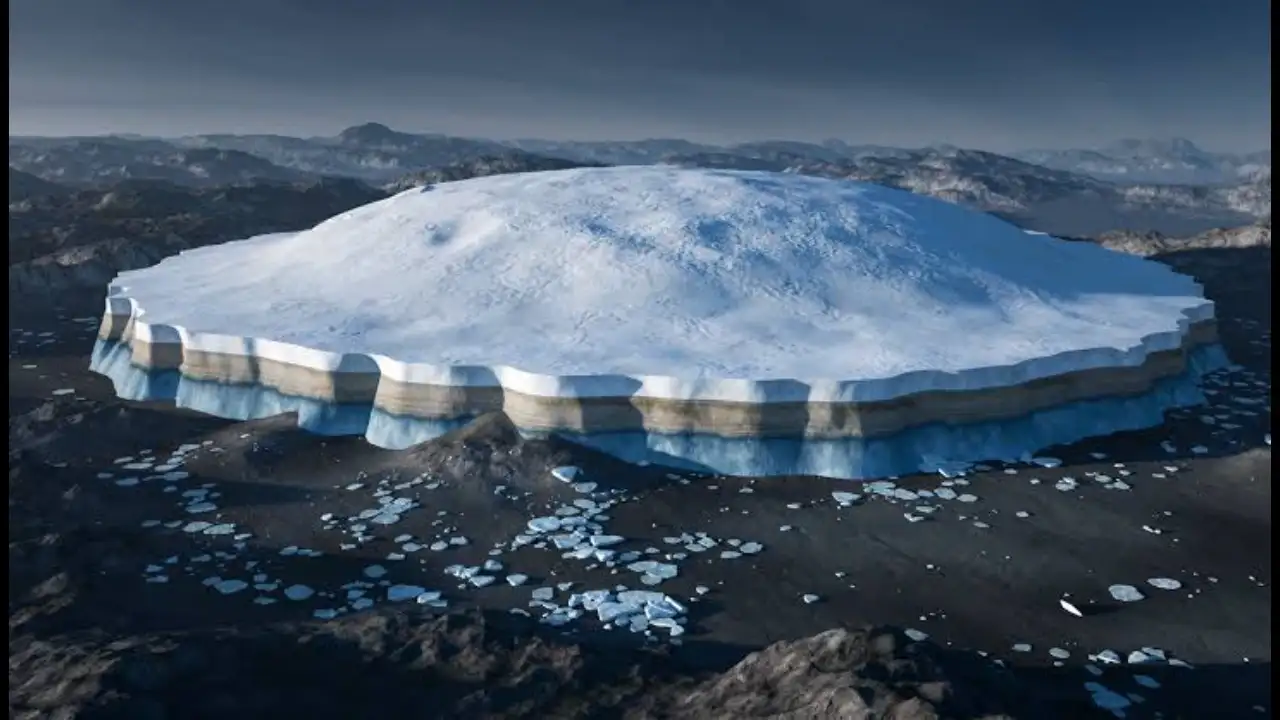
There is something unsettling about standing on top of a 1,600-foot-thick wall of ice and knowing that the same ground beneath your feet was once completely exposed. That is what researchers have now established at Prudhoe Dome in northwestern Greenland. About 7,000 years ago, this frozen landscape disappeared, leaving sediment at the surface before the ice eventually returned.
The discovery matters because the temperatures associated with that ancient melt were not impossibly different from conditions scientists expect later this century. Researchers estimate that summer temperatures around Prudhoe Dome were roughly 3 to 5 degrees Celsius warmer than today when the ice dome disappeared. Some projections indicate similar warming could occur there by 2100.