Get all your news in one place.
100's of premium titles.
One app.
Start reading
The Conversation
The Conversation
Pamela McElwee, Professor of Human Ecology, Rutgers University

50 years later, Vietnam’s environment still bears the scars of war – and signals a dark future for Gaza and Ukraine

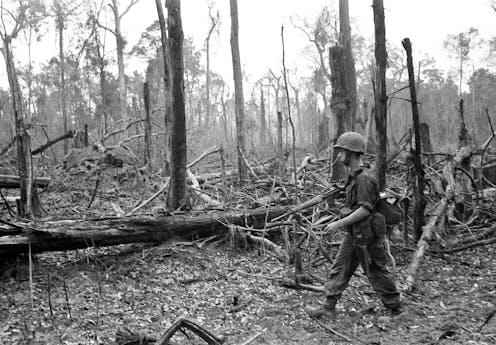
During the Vietnam War, the U.S. bombed and defoliated vast areas of forest and protective mangroves. AP Photo

When the Vietnam War finally ended on April 30, 1975, it left behind a landscape scarred with environmental damage. Vast stretches of coastal mangroves, once housing rich stocks of fish and birds, lay in ruins. Forests that had boasted hundreds of species were reduced to dried-out fragments, overgrown with invasive grasses.

The term “ecocide” had been coined in the late 1960s to describe the U.S. military’s use of herbicides like Agent Orange and incendiary weapons like napalm to battle guerrilla forces that used jungles and marshes for cover.

Sign up to read this article
Read news from 100's of titles, curated specifically for you.
Already a member? Sign in here
Related Stories
Top stories on inkl right now
One subscription that gives you access to news from hundreds of sites
Already a member? Sign in here
Our Picks
Fourteen days free
Download the app
One app. One membership.
100+ trusted global sources.