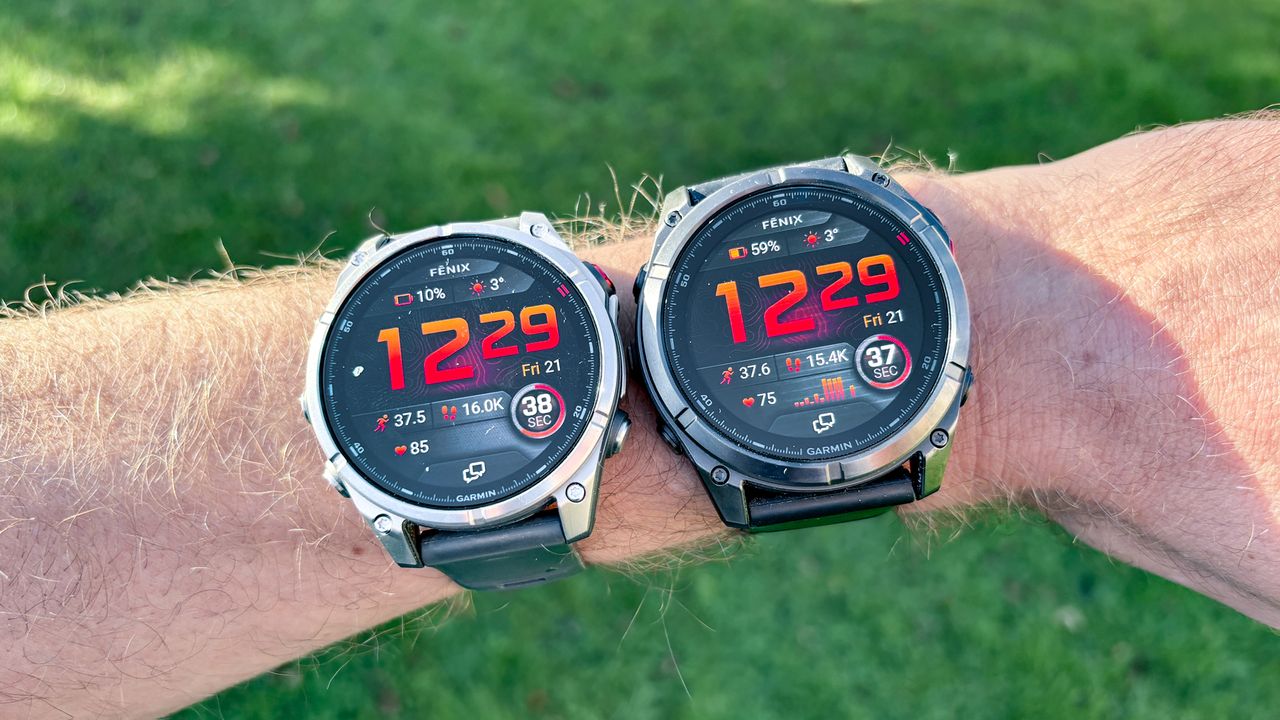
While most of the best Garmin watches aren’t updated every year, the Fenix does seem to have entered a yearly update cycle since the launch of the Fenix 7 in 2022.
Since then we’ve seen the Garmin Fenix 7 Pro, Garmin Fenix 8 and Garmin Fenix 8 Pro launch, pointing to the arrival of the Garmin Fenix 9 at some point in 2026.

The Garmin Fenix 8 Pro was a substantial update for the line, introducing LTE and satellite connectivity to the watch, along with the first MicroLED display ever seen on a smartwatch.
I’ve tested the last five Garmin Fenix models going back to the Fenix 6 Pro, and have high hopes for the Fenix 9.
Here are five things I hope to see on the new watch, ranging from the eminently achievable — a smaller watch option — to moonshots like blood glucose monitoring.
A choice of MIP, AMOLED and MicroLED displays
The Fenix 8 Pro introduced MicroLED tech to Garmin’s line-up, but was also the first Fenix to not offer a memory-in-pixel display option.
I prefer AMOLED watches, and it seems clear that the majority of sports watch and smartwatch users do too, but MIP is a great option for an adventure watch like the Fenix because it allows for longer battery life, and is very clear to read when outdoors in the sun.
As for MicroLED, I was surprised at how good the Garmin Fenix 8 Pro MicroLED’s display is when I tested it, but it needs to cost less — both in terms of dollars and battery life — before becoming standard on the Fenix.
That means I hope to see three different display options available in the Fenix 9 line-up, or Garmin could instead release a more feature-packed Enduro 4 as the MIP alternative to the Fenix 9.
The return of smaller sizes

The Garmin Fenix 8 Pro did not offer the smaller 43mm size that has been standard with the Fenix line-up, and I’m hoping that was a one-off and the Fenix 9 will have the smaller option available.
Since the Garmin Fenix is the brand’s flagship watch and has technology you can’t get on other devices, like LTE and satellite connectivity, it should be available to people with smaller wrist sizes as well as those who love larger watches.
Free SOS alerts
Google and Apple also launched watches with satellite connectivity in 2025, but one big difference between them and the Fenix 8 Pro was that they offered SOS alerts that were free for two years.
Garmin has a range of subscription options for the Fenix 8 Pro, but SOS alerts require a paid plan, which is a shame for an adventure watch. While every other LTE and satellite service can be paid for, it would be good so see SOS alerts available for free on the Fenix 9.
A faster processor

The Fenix 8 Pro responds pretty quickly when you’re navigating the menus and loading maps, but it could definitely be snappier, and a faster processor would make the process of panning around Garmin’s impressive maps easier.
Smartwatches on a yearly update cycle almost always include a processor upgrade as part of a new model, and this is becoming more common on sports watches too. I’d like to see it get more of a focus with Garmin’s flagship.
Blood glucose monitoring
Non-invasive blood glucose monitoring is something all smartwatch makers seem to be investigating right now, but I admit it’s unlikely to appear on the Garmin Fenix 9.
If watches were able to monitor your blood glucose levels through lights and sensors it would most importantly be a potential life-saver for diabetics, but also handy for endurance athletes tracking their fueling and trying to avoid bonking during long training sessions and races.
While we wait for that to happen, you can use some Dexcom blood glucose monitoring devices with Garmin watches. Download the Dexcom app for Garmin watches and you can link it to a sensor to see your levels.

Follow Tom's Guide on Google News and add us as a preferred source to get our up-to-date news, analysis, and reviews in your feeds.