
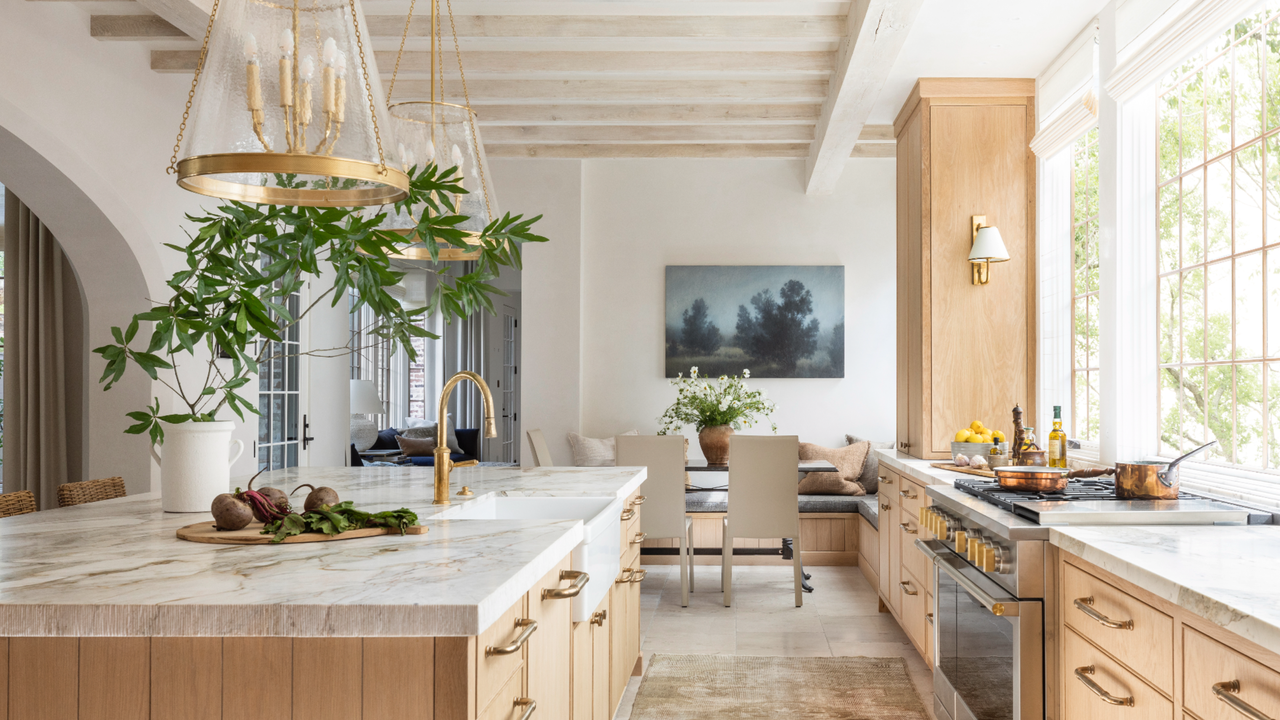
Creating a welcoming, comfortable atmosphere is the foundation of what makes a house a home, and in no room is this more important than in the kitchen. The idea of the kitchen as the heart of the home is nothing short of an accepted, universal truth nowadays; it's the central hub of activity.
As HOLTE co-founder, Fiona Ginett puts it, "Kitchens are no longer just for cooking; they are for working, socializing, and relaxing." This, in turn, means the way we design kitchens now has to change, too. They can't be created as purely functional spaces anymore; modern kitchens have to place an equal importance on these other, social functions as well, and if they don't, you're at risk of a kitchen that feels unwelcoming.

This isn't the only mistake that can impact how comfortable your kitchen feels, though. In fact, it's just one of the many. So I turned to the experts to help right our wrongs, and lay out all the biggest kitchen design mistakes we're making that are stopping us from achieving the cozy, welcoming space we all deserve.
1. Sterile Finishes

There's a surprising discrepancy between the materials that are deemed particularly on-trend and what materials actually make your kitchen feel like an inviting, comfortable space to be in.
A prime example of this is the uber-popular stainless steel kitchen trend. As Fiona explains, "A kitchen can feel unwelcoming if it’s too stark, overly bright, or dominated by cold materials," she continues, "Hard surfaces and very minimalist cabinetry without any texture can make a space feel more clinical than comfortable."
While part of the appeal of a stainless steel kitchen countertop or cabinet comes from this minimalist sleekness, when this isn't balanced by other softer, warmer materials, your whole kitchen can end up feeling sterile and unwelcoming.
And it's not just materials that can create this effect, as Fiona says, "Even a bold color like cobalt blue can feel harsh if it isn’t balanced with warmer accents or softer, tactile surfaces."
Luckily, though, this can be easily remedied. By bringing in just a few softer, warmer finishes, you can easily counteract the harshness of these cooler materials.
Warm up your steel countertops with textural accessories like this large mango wood chopping board from H&M. For even more of an impact, pair it with some other, smaller boards in varying tones.
Brushed gold cabinet pulls can bring some much needed texture and warmth to a more sterile kitchen, while also adding to the functionality of the space.
This gorgeous utensil pot and spice pincher combo is an easy way to bring some texture and warmth to your kitchen design — they can live out on your counters and are just as useful as they are stylish.
2. All Form, No Function

One of the most common kitchen design mistakes comes from prioritizing looks over usability, an understandable error, of course, but also one that can ultimately result in a space that feels far less inviting than you may have anticipated.
It's a problem that Katerina Tchevytchalova, director at K'Arte Design, is all too familiar with: "I often see kitchens that look beautiful on paper but don’t feel particularly nice to spend time in," she says.
This can come down to many different factors, but the overarching theme is the general disinterest in how the space will actually be used, with more emphasis placed instead on how it will look, leaving you with a kitchen that feels awkward to be in.
These issues arise, Katerina says, "When there’s no consideration for how people actually use the space day to day, such as where they pause, chat, or gather."
Spending time assessing your priorities for the space — whether they might be socializing, dining, or cooking — and designing your space with this in mind, ensuring you have the right surfaces, kitchen seating, and space to bring these priorities to life, is what will save you from this mistake.
3. Overhead Lighting

Your kitchen lighting can be a major make-or-break when it comes to the overall atmosphere of your space. You'll need to find the right balance of enough brightness for it to be a functional working space, and enough warmth for it to still feel welcoming — and the balance can be harder to achieve than you may expect.
The biggest suspect in an unwelcoming home lighting scheme is the dreaded overhead downlight. As Rhian Barker, from Accouter, says, "Relying solely on downlights can often create harsh shadows and a flat, uninviting mood, particularly in London homes where natural light may already be limited."
These types of lights have long been favored for their functional benefits, often working as effective task lighting, allowing you to comfortably move through prep tasks with ease. However, "if everything is coming from overhead spots, the room can feel flat and shadowy rather than relaxed," notes Katerina. The key is in using a combination of layered lights, balancing out the harshness of overhead fittings with softer, low lighting, too.
The color temperature of your fittings will also effect your space, too, so it's always worth looking through our guide to understanding light bulbs before planning your kitchen lighting scheme.
A small, rechargeable table lamp is one of the easiest ways to bring some more depth and warmth to your kitchen design, and this chrome number from M&S is an absolute winner.
These flexible, LED strip lights are the perfect addition for underneath your cabinets to provide a subtle, atmospheric glow to your kitchen design.
This lovely four-bulb pendant would make a striking statement over your kitchen island, providing a warm, even glow.
4. Storage Over Space

"One of the most common design mistakes that makes a kitchen feel less welcoming is prioritizing storage over social space," shares Mike Biddulph, founder of Goldfinch Furniture.
Maximizing your kitchen storage is a goal for many when designing a new kitchen, and an understandable one, too. A generous amount of storage space is seen as the ultimate luxury in kitchen design, saving you from the endless struggle of organizing your drawers to try to squeeze every last pot and pan in. But when you make this your top priority, you can end up sacrificing space that otherwise could have been used for socializing and living in.
What you'll end up with is plenty of space to store every kitchen tool and gadget your heart could desire, but nowhere to actually sit and appreciate it. "It’s tempting to fill every bit of space you have with cabinets and storage, but when a kitchen doesn’t allow room for people to comfortably gather, guests either hover awkwardly or leave the room altogether," explains Mike.
Creating space for guests and family members to exist in your space, even if they aren't cooking, is the key to a welcoming, comfortable kitchen environment. It needs to feel like a space you can hang out in, not just a glorified storage cupboard with a hob. "If you want people to feel welcome in your kitchen, they need a designated place to sit or pause," says Mike.
Integrating the goal of your kitchen as a gathering place into your design will guarantee you a more welcoming room. "Even in a small kitchen, it’s usually possible to zone a simple seating area, whether it’s a bar stool at the end of a countertop or a surface that isn’t dedicated to food preparation," explains Mike.
It's all about intention, and showing your guests that you've spent time considering how they'll feel in your space is exactly what will make them feel more comfortable in your home.
5. Cluttered Counters

As much as an unwelcoming kitchen atmosphere can be created through a stark, minimalist sterility, so too can it be formed by the opposite. Cluttered, overwhelming spaces have an equally negative impact on the overall feel of your space, and in the kitchen, it can be surprisingly easy to slip into this mistake.
Knowing how to decorate your kitchen counters without the clutter is one of the best things you can do for your space. And this isn't just for organizational reasons; uncluttered counters can also help your space feel calmer and more relaxing to be in. As interior designer Kimberly Oxford explains, "When every kitchen appliance and surface is on display, the kitchen can quickly feel stressful rather than calm."
This doesn't mean your counters should be entirely clear, of course, but if you try to hide away some of your bulkier kitchen appliances in smart storage solutions — like an appliance garage or a pocket-door breakfast bar — you can leave space for some more decorative accessories, instead.
If you're looking for more ways to bring a calming atmosphere to your kitchen, designers explain how the 'soft kitchen' trend can do just that.