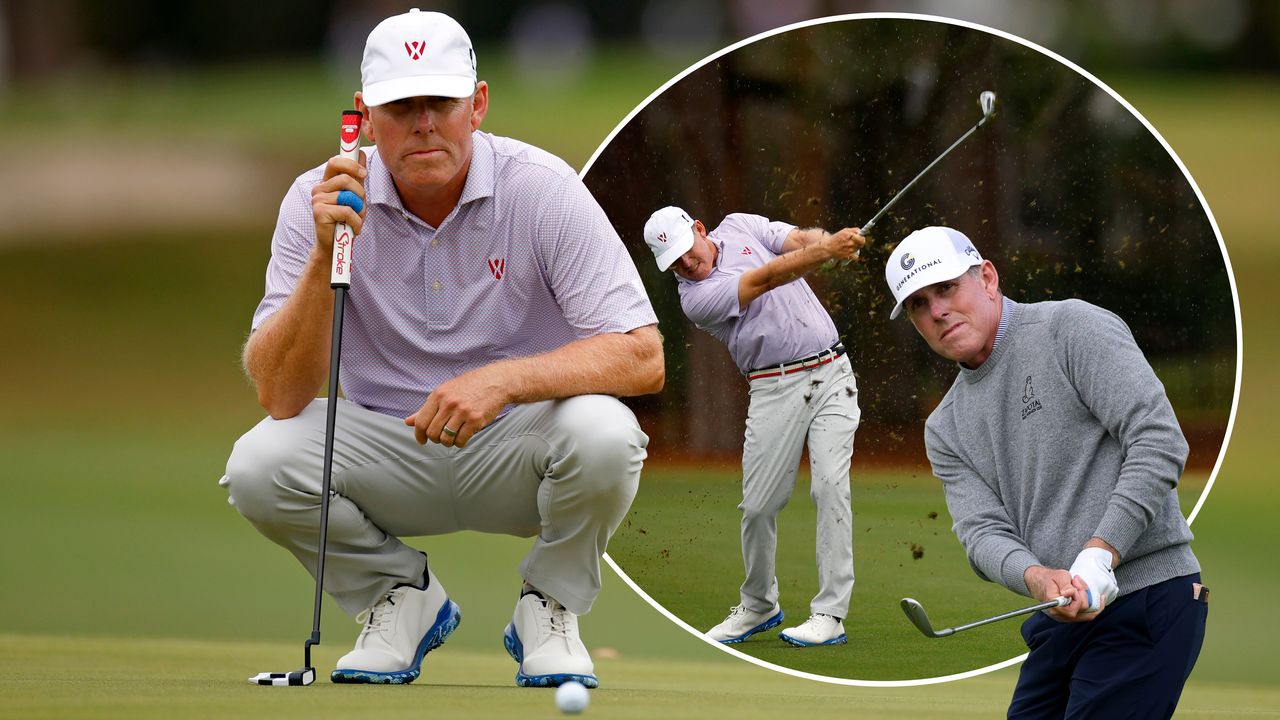
Some golfers make a hugely successful career out of strategically outmanoeuvring the golf course, picking it apart hole-by-hole with expert precision, and legend of the game Justin Leonard certainly fits that mould.
There is plenty of room for boosting clubhead speed and hitting the gym with the 5 fitness exercises that make you a better golfer, but playing the 'Justin Leonard' way means you don't have to be the longest or fastest to play your best golf in 2026.

When winning the 1997 Open Championship, Justin Leonard opted for precision over raw power to navigate his way to a victorious 12-under-par score at Royal Troon.
By focusing on his 5 expert tips, you can transform the way you think on the course, tidying up key techniques and focusing your brain with a clear plan that will help you to avoid 7 things you should never do at the driving range when practicing.
Speaking with renowned golf reporter and presenter Garrett Johnston, Justin Leonard explains how he approaches key pillars of the game and how you can shoot lower scores in 2026...
5 Things A Major Champion Does (That You Probably Don't)
Key Takeaways
For those short on time or looking to head straight out to the range and practice Justin Leonard's expert tips, here is a quick list of key takeaways to get you started in a flash.
- Distance Control - Study how far your shots travel in the air and practice hitting those numbers.
- Putting - work on stroke and alignment, focusing on drills inside 20ft where the goal is holing out... to build confidence.
- Wedges - groove a shallower angle of attack and work on flighting the ball down to control distance.
- Chipping - Read the lie first, then focus on landing zone.
- Bunker Shots - Keep your weight on the lead side and create a steeper angle of attack.
IRON SHOTS
My old coach, Randy Smith, always imparts great advice, and none better than when he tells me to go out and create shots with my irons.
A lot of it is responding to pin positions and dialling in my distance control. If I’m trying to take a little bit off a shot, then I will hit a straighter ball or cut the shot a little bit. It’s not always about, “Hey, this is a right pin, I have to cut it.”

You also have to ask yourself, does the number allow me to do that? So much of playing high-level golf is precise distance control and I think Scottie Scheffler is probably the best at that – knowing how far the ball is going to go in the air and being able to hit his numbers.
So that’s a lot of what I work on when I’m on the range. I also work on it when I’m at home and when I’m at tournaments early in the week and certainly in pro-ams.
PUTTING
I spend time working on stroke and alignment, and I’ve got some putting plates that I use daily to just calibrate.
I make sure my face is lined up squarely to where I want to start the ball. I also use drills like the gate drill where you’ve got to hit the ball between two tees. If I’m able to do that, I know I’m hitting my start line and I know I’m lining up correctly.
When it comes to results, if you’re outside 20 feet then getting it close is fine. I practise mostly inside 20 feet, because you want to get used to seeing the ball go in the hole.
Golf is a game of mental pictures and it’s critical to have fresh images of holing out in your mind as you go through your round.
CHIPPING
You’ve got to be able to read the lie, first and foremost – whether you’re into the grain or down grain.
Then you need to understand where you want to land the ball depending on how much spin you put on your chips, what kind of golf ball you use and how fresh your grooves are.
There are so many variables that factor in to being a good chipper. It’s hard to nail down one or two thoughts to get better right away.

I use the bounce on the club with my chips. I see a lot of guys grab their most-lofted wedge, but I would recommend trying to open up the face and using a less-lofted wedge, especially off Bermuda grass, because the bounce will help you cut through better.
WEDGE SHOTS
I feel like most of the really good wedge players come from a shallower angle of attack.
I see amateurs getting really steep with their wedges, and that becomes so hard to control because the ball goes high up in the air with a lot of spin on it.
I think the wedge players that I admire, like Zach Johnson, Steve Stricker and Scottie Scheffler, are all pretty shallow coming into the ball and they’re able to take spin off when they need to.
They’re able to flight the ball down and I think that’s vital for controlling the distance with wedge shots.
These shots are usually from inside 150 yards and you need to be deadly from that range.
So, to that point, you must know for certain how far the ball is going to go and it’s hard to do that when it’s spinning too much and going straight up in the air. It’s so important to flight the ball down low with your wedges.
BUNKER SHOTS
I think it’s important for me to get my weight forward and set into my left side. That helps me get steeper and make contact closer to the ball. Doing this produces a crisper strike and a lot more control out of the bunker.

I have a tendency to let the club shallow out too much and I can catch them heavy and produce low shots, so I’m trying to make closer contact with the ball by leaning into my left side.