Get all your news in one place.
100's of premium titles.
One app.
Start reading
Homes & Gardens
Homes & Gardens
Tenielle Jordison

5 Secrets to Compact Growing – I'm Short on Space But Still Harvest Homegrown Vegetables All Year Round

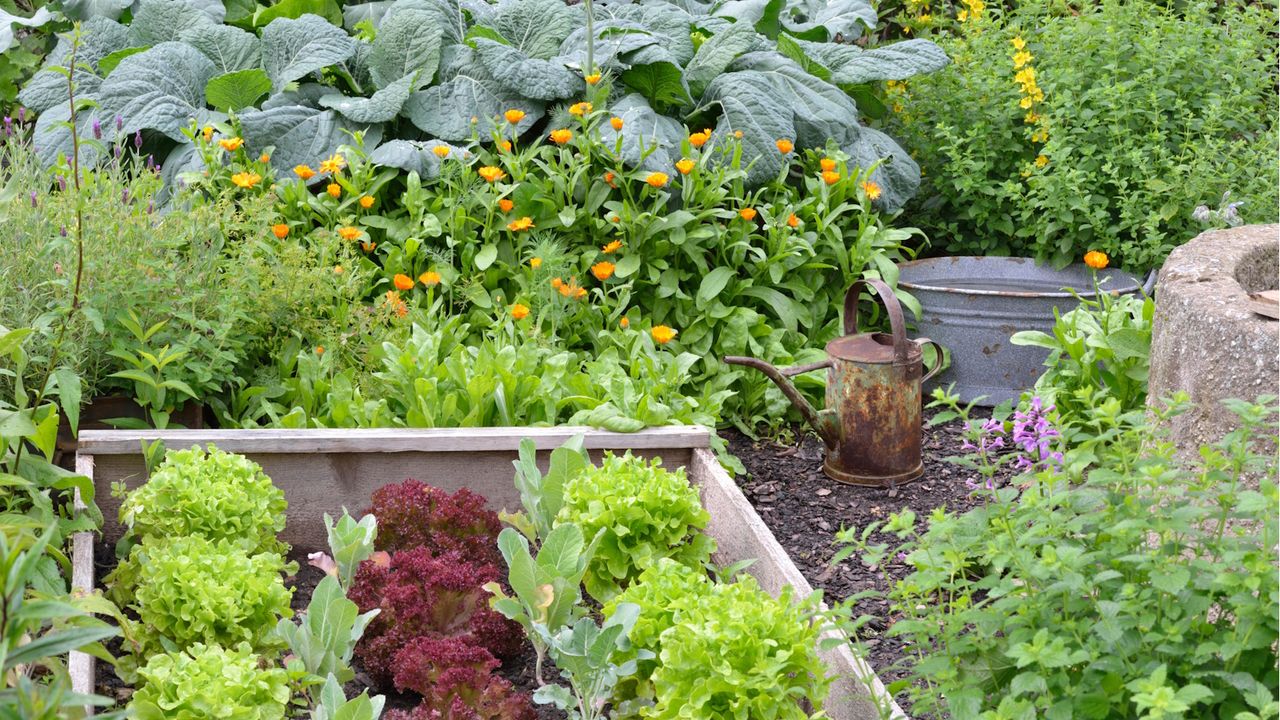
Vegetable garden full of leafy greens.

Over the last year I've been experimenting with growing more vegetables and the main limitation I've faced is being short on space. But, I've now tried and tested a wide range of space-saving ways to grow vegetables and have found several reliable techniques that actually work.

The truth is you don't need a sweeping kitchen garden to have an abundant harvest of GYO crops. While there are plenty of vegetables to grow in pots, space-saving methods are so much more than having a few containers. Think walls covered in cascading tomato vines, buckets of potatoes lining your balcony, and low-effort high-reward salad crops providing a supply for months on end.

So, if you've already written off the idea of growing veg in your small outdoor space, let me convince you otherwise. Here are five ideas that I have personally tried – trust me, they're all really easy to do.

1. Use String to Train Tomatoes

You can use string as an alternative to a plant stake (Image credit: Tenielle Jordison/Future)

While you might assume you have to stick to determinate, bushy tomato varieties for space-saving, it is possible to grow indeterminate varieties of tomatoes in pots.

To create a vertical garden, I tried the tomato string method last year and it worked excellently.

With a hoop stake (like these from Amazon) or even using the roof of a greenhouse, you can tie a piece of garden twine (from Walmart) to the top and the other end buried in your tomato plant's pot. You then wrap the stem around the twine as it grows.

Not only does it help train your tomato plant, it keeps it neat, improves airflow, and reduces issues like tomato leaf curl.

'When choosing tomatoes, look for indeterminate varieties that can be grown closer together, trained to grow up instead of out, and pruned to a single vine,' suggests Anna Sakawsky of The House and Homestead.

'Likewise, choose pole beans instead of bush beans as pole beans can be grown up a trellis and will produce much more food in a smaller footprint,' she adds.

This method can also work well for growing peas, or use trellis ideas to make use of wall space – this lattice trellis from Wayfair exudes a cottage garden-feel.

2. Choose Compact Varieties for Pots

Strawberries are one of the easiest fruits to grow in pots (Image credit: Getty/DigiPub)

Perhaps the most reliable of space-saving ways to grow vegetables is simply opting for compact varieties.

Nearly all types of vegetables have compact varieties you can grow in pots, or even use for growing vegetables using the square foot gardening method.

For example, you can purchase Hamberg Lettuce Seeds from Burpee which are fit for pots. Likewise, you can find Blue Bantam Dwarf Pea Seeds at Burpee.

You can even grow cucumbers vertically to keep things compact.

'When space is at a minimum, choosing what you eat the most and passing on things you don't can save a lot of space,' adds Lindsey Chastain, homesteader and founder at The Waddle and Cluck.

Things like this tiered terracotta strawberry tower from Amazon can double your space by layering plants, all while enhancing the look of your container garden.

3. Grow Potatoes in a Bucket

As your potatoes grow, keep adding compost on top – this is known as 'hilling up' and encourages a higher yield (Image credit: Shutterstock/Graham Corney)

There's a never-ending list of ways to grow potatoes. While it is a popular idea to grow them in trenches in a plot of a kitchen garden or a large raised bed, you can also opt for growing potatoes in a bucket.

This is my preferred method for many reasons. Not only is it space-saving, but it also stops unexpected potatoes cropping up after you think you've cleared the harvest, and it keeps them safe from pests.

Plus, growing potatoes in a bucket is usually fairly quick (typically harvesting within 10-12 weeks) because there's plenty of drainage (I drilled some drainage holes in the bottom of my bucket), you can move the bucket to optimize sunlight exposure, and the bucket retains more warmth.

'I like to use tyres,' says gardening expert Matt Tutt.

'The idea is that you put some cardboard down and lay a tyre over this, and fill with soil. Place your potatoes here and cover with a bit more soil.

'As they grow, you should add more soil, and another tyre on top. Eventually your tomatoes will grow in this tyre-tower,' he explains.

You can also grow potatoes in a bag using specific potato grow bags (from Amazon). It works pretty much the same as a bucket, providing a lightweight solution for balcony gardeners with even more drainage than a bucket.

4. Practice Companion Planting

There's a wide range of lettuce companion plants to try, including alliums (Image credit: Aitor Diago / Moment / Getty Images)

You can maximize your growing space by practicing companion planting.

'Companion planting and intercropping can also save space. Instead of letting the soil beneath your tomato plants go to waste, plant carrots, basil, or nasturtiums underneath,' says Anna.

'Or, sow some early spring radishes between rows of carrots or beets. The radishes will mature early and will be ready for harvest just as the root crops are starting to grow in,' she explains.

'Two plants can often share and benefit from being in the same spot. There are also plants you can put in a pot that just had a harvest,' Lindsey adds.

'You should also look at varieties that can be grown in different seasons. Carrots can be grown in the spring or fall as an example. Rotating crops to different seasons can maximize the space you have,' she adds.

5. Grow High Value Crops

You can keep many herbs productive in winter by growing them indoors (Image credit: sanddebeautheil / iStock / Getty Images Plus / Getty Images)

'Some vegetables and herbs have better return on investment when it comes to real estate in a small space garden,' says gardening expert Rachael Carter.

'For homeowners that are growing in containers, a single bed, or otherwise limited on space choosing veggies and herbs that are harvestable throughout many seasons rather than just one can make a huge difference in garden to table success,' she explains.

'The three I recommend to beginners are kale, parsley, and green onions. A few of each of these in a small space could easily replace the grocery store for many families (depending on how much you use!),' Rachel adds.

There are also many cut-and-come-again vegetables and herbs you can plant once and have a repeat harvest from spring to fall.

Arugula seeds from Burpee and rosemary seeds from Burpee are good choices.

Likewise, you can grow herbs indoors on a windowsill that are cut-and-come-again for use in the kitchen throughout the year.

What to Shop

FAQs

What Crops Can I Grow in My Hanging Baskets?

Some of the best crops to grow in hanging baskets include strawberries, which create a beautiful cascading display. You can also grow lots of vegetables in hanging baskets, for example lettuce, spinach, tomatoes, and even peppers.

If you're new to GYO, then our guide to the easiest vegetables to grow might inspire you. There are also plenty of vegetables you can grow indoors, so you really don't need loads of outdoor space to enjoy homegrown harvests.

Love inspiring garden ideas, outdoor advice, and the latest news? Sign up for our newsletter and get the latest features delivered straight to your inbox.

Sign up to read this article
Read news from 100's of titles, curated specifically for you.
Already a member? Sign in here
Related Stories
Top stories on inkl right now
One subscription that gives you access to news from hundreds of sites
Already a member? Sign in here
Our Picks
Fourteen days free
Download the app
One app. One membership.
100+ trusted global sources.