
Get all your news in one place.
100's of premium titles.
One app.
Start reading
Homes & Gardens
Homes & Gardens
Rachel Bull

5 Perennials You Can Plant Once and Ignore – Hardy, No-Fuss Picks for All Types of Yard

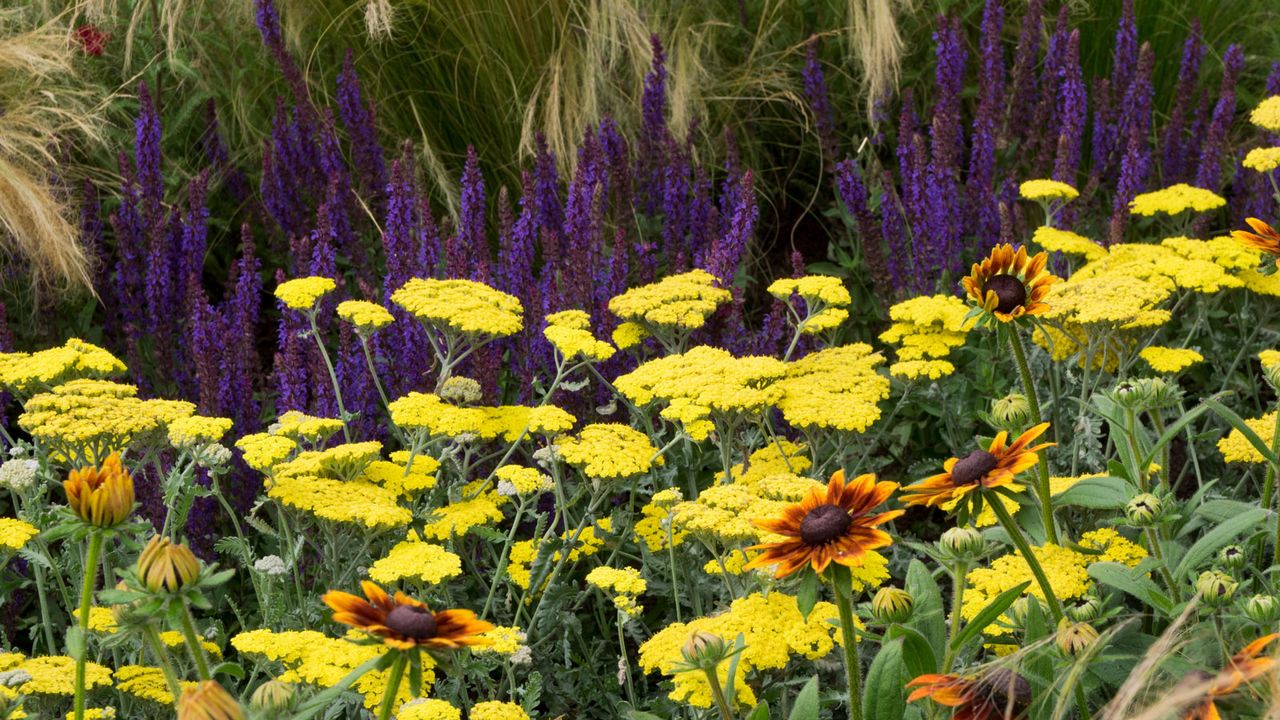
Yellow achillea, purple hyssop, red helenium and ornamental grasses in loose planting scheme.

If you want reliable color and impact without the upkeep, and as a time-poor gardener I know I do, these low-maintenance perennials are some of the easiest plants you can grow. Chosen for their resilience and ability to thrive with little to no attention, they are ideal for busy homeowners or anyone who prefers a gentler approach, delivering year-after-year color and beauty.

Not all gardens need constant deadheading, staking, and pruning. Some of the most effective planting schemes rely on tough, adaptable species that quietly get on with the job, whether in formal borders or more relaxed, drought-prone settings. These dependable perennials often go overlooked, yet they are among the most useful plants you can grow.
If you are looking for fuss-free options that can handle a bit of neglect and still perform, the following picks are hard to beat. These are five of the most reliable, easy-care perennials for effortless color and structure.

1. Persicaria

(Image credit: Sarah Cuttle/RHS)

Persicaria (knotweed) are among the longest-flowering perennials, often providing colour from mid-spring until the first frost.

Reliable and unfussy, most species are hardy in zones 4–8 and will grow in sun or shade, tolerating a wide range of soil conditions.

One standout example is Persicaria virginiana, a North American species. It draws attention for its distinctive lime-green foliage marked with dark chevrons, followed by airy pink flower spikes from midsummer onwards.

These delicate, upright blooms work well in both borders and containers, adding movement and texture without demanding much care. Persicaria is widely regarded as one of the most reliable perennials that thrive on neglect.

You can find Persicaria tinctoria seeds at Amazon, with a distinctive magenta flower that is often used in natural dyes.

However, many species can self-seed freely and, outside their native range, may become overly vigorous and invasive. While this has not been a major issue in managed gardens, occasional thinning and deadheading is recommended to keep growth in check.

2. Sedums

(Image credit: Future)

Sedums (or stonecrops) are drought-tolerant, succulent perennials that provide reliable structure and late-season colour with very little maintenance. Upright forms produce tall pink-red flower heads in summer and early autumn, adding height and interest to sunny, free-draining borders.

This is a plant with proven resilience, thanks to its fleshy leaves that store water and help it withstand long, dry spells in mid-summer.

Hardy down to zone 4, stonecrops perform best in full sun and are particularly well suited to south-facing sites with sharp drainage. They should be avoided in heavy or waterlogged soils, where root rot can become an issue.

You can find the most striking 'Back in Black' sedum from Burpee.

For maintenance, a light cutback in early spring is usually sufficient and encourages compact, bushy growth through April and May. Beyond that, sedums are among the most dependable, low-effort perennials for time-poor gardeners.

3. Aster

(Image credit: Future)

If you are looking for fall-blooming native plants that are low-maintenance but high-impact, then learning how to grow and care for asters is a good idea.

It varies between different aster varieties, but many are cold hardy down to zone 3, requiring little care even in chilly northern regions.

Most asters do best in part-shade, with a few hours of sunshine each day, although some can tolerate full-shade, too. For example, the white wood aster, Eurybia divaricata, is one species that can handle darker settings.

For a purple-flowering option, try the 'Grape Crush' New England aster, with live plants available from Nature Hills. These native plants are a great option if you enjoy colorful, vibrant pots and borders.

4. Yarrow

(Image credit: Richard Becker/Alamy Stock Photo)

Yarrow is a hardy, frost-hardy perennial grown in zones 3–9, valued for its finely cut, feathery foliage and flat-topped flower clusters in shades of white, yellow, pink, and red.

It performs reliably in both formal borders and naturalistic planting, and is notably low-maintenance once established. In most cases, it thrives without supplemental water or feeding. Provided it has a sunny position, yarrow will grow well in sandy, loamy, or even clay soils.

It is also a strong pollinator plant, attracting bees and butterflies throughout its long flowering season, making it a useful addition to wildlife-friendly gardens.

Maintenance is minimal, with the main task being deadheading in summer to encourage repeat flowering later in the season.

One standout variety is Achillea ‘Credo’, a soft pale lemon form that combines well with white, yellow, and purple planting schemes. In Italy, it proved particularly attractive to butterflies when in bloom.

For a more vivid option, try this 'Strawberry Seduction' yarrow, available from Nature Hills.

5. Sisyrinchium

(Image credit: Getty Images/IsabelleMorand )

Sisyrinchium striatum, commonly known as the yellow Mexican satin flower, is another self-seeding flower that thrives with little input needed.

With attractive spiked foliage that looks similar to that of an iris, this tall perennial is perfect for adding height to cottage garden borders.

These low-maintenance plants grow best in zone 5 plus, with a preference for a sunny spot and free-draining soil.

Delicate yellow flowers will bloom in late spring and should self-seed freely across your borders. Regular deadheading will help to limit its spread and can help to encourage a few late-season flower spikes, too.

There are other species of Sisyrinchium to try, such as the blue-flowering Sisyrinchium angustifolium, available to order online at Walmart, which would work well in cool-colored yards.

What to Shop

Some of the toughest perennials that thrive on neglect are native to North America. For an unusual option, one of my favorites from North America is Sanguisorba canadensis, also known as white burnet.

Hardy down to zone 4, this clump-forming perennial can be grown in a range of soil and light conditions, and will produce masses of lofty blooms that move in the breeze.

For more low-effort and high-impact native plant inspiration, see our guide on the best shrubs that thrive on neglect, and populate your borders with even more easy-to-grow species this year.

If you love inspiring garden ideas, outdoor advice, and the latest news, sign up for our newsletter and get the latest features delivered straight to your inbox.

Sign up to read this article
Read news from 100's of titles, curated specifically for you.
Already a member? Sign in here
Related Stories
Top stories on inkl right now
One subscription that gives you access to news from hundreds of sites
Already a member? Sign in here
Our Picks
Fourteen days free
Download the app
One app. One membership.
100+ trusted global sources.