
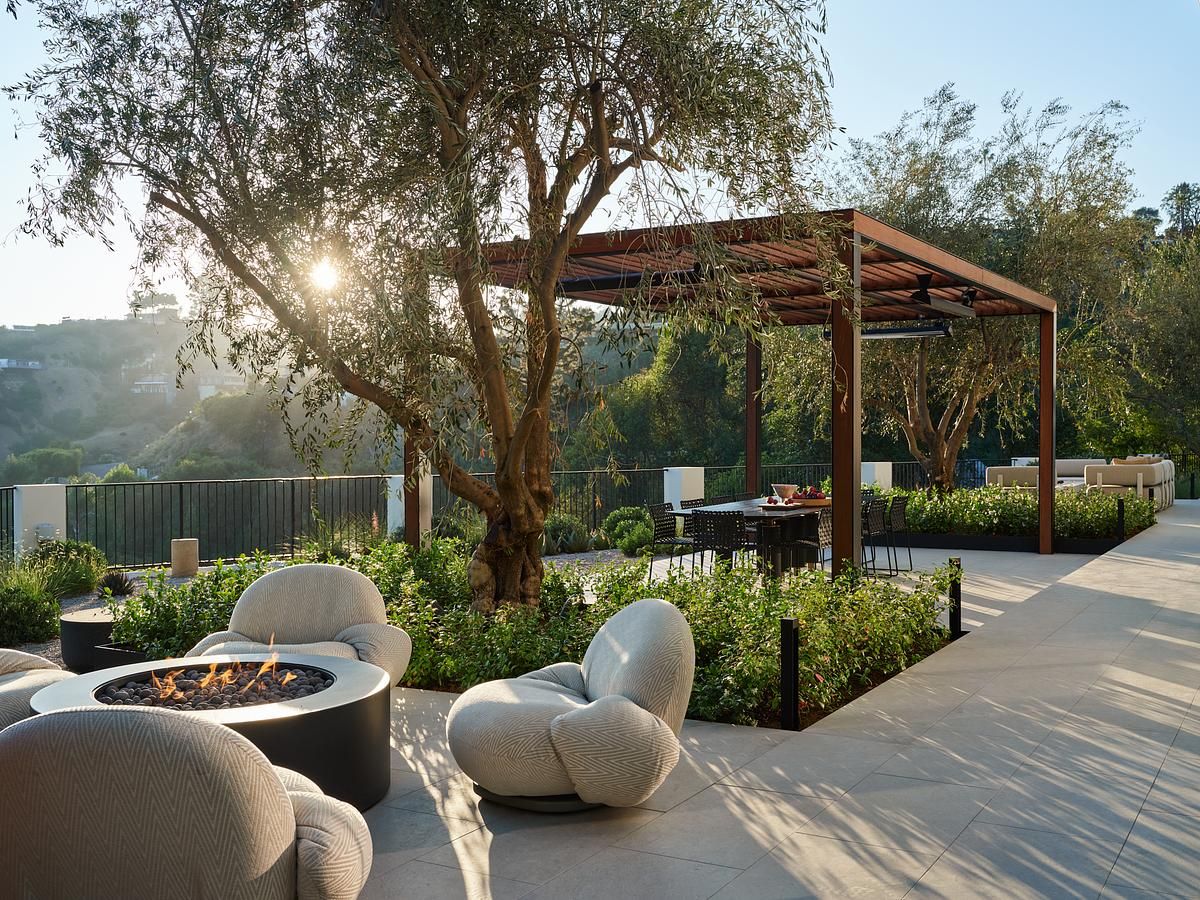
With the promise of sunnier days ahead, we're officially at the time of year when we all start to think about how to get our gardens in top shape. There are countless aspects to this task, from finding the right lighting to selecting the most luscious greenery. But, to help you narrow it down, we've started by outlining all the trends we don't want to see popping up in your garden this year.
While it's certainly true that our outdoor areas are less affected by the trend cycle than our interiors, this doesn't mean they are entirely impervious to it, either. It's important to note, though, that when we talk about garden trends, we're not only referring to the visual appeal of these styles. As we all become increasingly aware of the impact our gardens have on the wider ecosystem, many of the trends we consider the most outdated are those that cause more harm than good. Our idea of what a garden should be, and how it should look, is ever-shifting, and that's reflected in the trends we favor today.
So, to ensure we don't get stuck in the past, I asked the experts which trends they would rather leave behind, and what they're keen to see more of instead in 2026.
1. Artificial Turf

Across interior design trends, we're seeing a general shift towards more organic, natural finishes. In a rejection of the artificiality that's become practically inescapable, we've become increasingly keen to incorporate materials and designs that feel real, even if that means they're more high-maintenance.
And that is certainly the case with this trend. Once favored for its convenience and ease, you'd now be hard-pressed to find a landscape designer who'd so much as consider using astroturf in one of their designs. In fact, Gina Taylor, from East London Garden Design, goes as far as to say, "This has to be one of the most outdated garden trends at this point — and arguably one that should never have taken off in the first place."
With its fluorescent neon look, it's hardly a shock that astroturf is not considered a particularly luxurious choice, but even as more realistic options enter the market, the designers still warn against this material.
In large part, this comes down to its inability to support local ecosystems. Nick Woodhouse, creative director at Woodhouse & Law, explains that, because astroturf is an inherently impenetrable surface, it "removes food sources and habitats for insects and soil-dwelling creatures."
In the past, astroturf was marketed as a more eco-friendly choice, as it doesn't require the additional upkeep and water a real grass lawn does. And while this may be technically true, it's in no way the full story. As Nick explains, "It may remove the need for water-intensive lawn care and chemical fertilizers, but it also contributes to our ever-rising urban temperatures and — made from petroleum-based plastics — doesn't biodegrade, eventually ending up in landfill once its relatively short lifespan has been met."
Plus, it's not as low-maintenance as many may think. Gina notes the finish is susceptible to "developing unpleasant odors (especially if you have pets)," and that it "requires more maintenance than people expect to keep it looking presentable."
2. Forced Fits

Similarly reflective of our move towards more free-flowing, organic forms, the experts are beginning to move away from planting styles that feel too obviously solution-based, opting instead for a more holistic, 'wild gardening' look.
One example of this type of problem-solving planting is the 'gap-filler' approach. As Nick explains, "Clients are often tempted to buy the one plant to fill a particular gap within a bed or border — one that is perhaps looking particularly colorful or impactful in that very season."
While this may seem like a perfectly reasonable design decision, in the long run, this disjointed approach can create a less cohesive-looking garden. Instead of creating a beautiful, fairytale garden rich with colorful blooms and evergreens, your garden may end up looking like a mismatched mess, with random plants dotted around the place.
Forcing plants to fit where, naturally, they wouldn't, is what will make your garden feel awkward and less natural.
Another way this can often present itself is through the tight, regimented borders you so often see lining a garden. Explaining this trend, Nick says, "Planting areas have become significantly compromised in size over recent years, in favor of a larger lawn or more generous entertaining spaces. As a result, borders are often pushed very tightly towards a garden’s boundaries, with very little distance from that very boundary to the front of the bed."
In an attempt to maximize outdoor entertaining areas, planting space is often placed on a back burner, forced into tight, narrow spots, without the proper space needed to flourish and grow. "This makes a natural, varied planting scheme particularly difficult to achieve — plants are forced into regimented rows that are less pleasing on the eye," explains Nick.
3. Bright, White Landscaping

The desire to turn your outdoor area into a holiday-inspired escape is understandable — who wouldn't want to feel as though they're on a Greek island when they step outside? However, there's a reason the Mediterranean garden style works best in the Mediterranean.
No matter how gorgeous it may be in your imagination, or on your Pinterest board, when put to practice, many of these Mediterranean-inspired design choices can look slightly incongruous in the context of your urban garden.
A perfect example of this is the white rendered, raised beds that rose in popularity through the 2010s. As Gina explains, "These can look striking in theory, but in reality they rarely age well in the UK."
That lovely, white-washed look works perfectly against the sunny backdrop of the Mediterranean coast, but in the city, where blue skies are a rare occurrence, this style is unlikely to meet your expectations.
"The combination of damp weather, algae growth, and general winter gloom makes bright white finishes feel stark and quickly grubby (not to mention muddy fox prints if you’re in London!)," explains Gina.
4. Forced Formality

"Rigid lines and formal layouts have become outdated in the garden. In their place, curved designs and relaxed dining set-ups are proving popular," argues Magdalena Gierasinska, from Barker and Stonehouse.
While this move towards softer, more organic forms and finishes has resulted in a more relaxed approach to our gardening, with a rise in wild, natural planting, it can equally be observed in our approach to garden furniture, too.
Instead of the sharp lines and hard materials we once valued in our outdoor dining setups and seating areas, we are now searching for curved forms and soft, organic materials. In our interiors, curved furniture has become one of the most popular styles, and this has translated into our outdoor furniture, too. It's a natural fit as well, as Magdalena comments, "Curved outdoor furniture echoes the flow and rhythm of the natural world. It softens spaces and creates a more harmonious relationship between man-made objects and their environment, helping pieces to blend more seamlessly into their surroundings."
No longer just a decision of convenience, we are now placing as much importance on our outdoor furniture as the furniture in our homes. We want our outdoor living rooms to feel as comfortable and welcoming as our interior spaces, and the furniture you choose is essential to achieving this. "It’s this careful thought and attention to creating spaces that feel welcoming and inviting — the same care given to the rest of the home — that we expect to see influence gardens throughout 2026," says Magdalena.
5. Fixed Furniture

Although a hallmark of luxury gardens of the past, nowadays, we're moving away from built-in, permanent furniture fixtures, opting instead for more flexible outdoor seating styles.
Part of this shift comes from our changing attitude towards our outdoor spaces. As Jonny Brierley, managing director of NUMA, says, "Fixed or built-in pieces that feel bulky and imposing no longer reflect how people want to live outdoors." The permanence and unmoving nature of these fixtures can easily dominate your outdoor area, removing any possibility for your space to change and progress with you, something we're increasingly placing more value on in our homes.
But this change is two-fold. Not only does our rejection of built-in furniture have an aesthetic basis behind it, but a practical one, too. Part of the issue with these types of built-in designs is that they are fundamentally ill-suited to the British climate. "While they can work in dry, Mediterranean environments, here they tend to trap moisture, leading to condensation, mold, and even fungus inside — not ideal. They’re also often expensive to build relative to how well they perform long term," explains Gina.
Fixed furniture forces your garden to fulfil one function, and one function only. It removes the possibility for it to evolve over time, in a way that modular garden sofas and similar do not.
Even the smallest of gardens can make space for a dedicated dining area. This bistro set takes up hardly any space, but still feels stylish and elevated.
With its curved form and modular design, this garden sofa set is checking all of our expert's boxes.
Search for pieces that look as luxurious and stylish as the furniture you'd put in your home, like this cool swivel chair, which has a striking, low-slung design.
The best garden design is the one that is most well-suited to your surroundings, helping support your local ecosystem with a thoughtful use of climate-appropriate plants and trees. Now more than ever, climate-resilient gardening should form the foundation of your design. And that doesn't mean you'll have to make any sacrifices on style — combine your climate-sensitive plants with this year's hottest outdoor furniture trends.
And If you want to stay on top of all the latest trends and design ideas, subscribe to our newsletter, and never miss a beat.


