
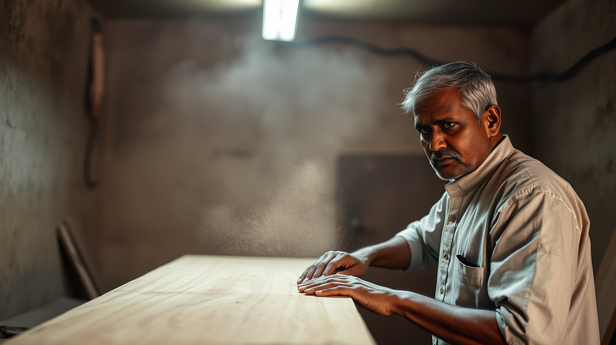
Silicosis: The Stone Cutter's Sentence
Silicosis is the most severe and irreversible lung condition found among Indian stone cutters, sandstone miners, and construction workers who grind or chisel silica-bearing rock. Fine crystalline silica particles, when inhaled repeatedly, lodge in the alveoli and trigger a fibrotic response: the lung tissue hardens around the particles, progressively losing its elasticity and gas-exchange capacity. A 2019 study published in the Indian Journal of Occupational and Environmental Medicine found silicosis prevalence as high as 54% among sandstone quarry workers in Rajasthan's Karauli district. Workers in their thirties were presenting with radiological changes typically seen in much older patients. Acute silicosis can develop within months of heavy exposure. Chronic silicosis takes ten to thirty years to show symptoms, by which point the damage is already extensive. Cough, breathlessness on exertion, and chest tightness are the first signs, but they are easy to dismiss as seasonal or minor. Silicosis also dramatically increases the risk of tuberculosis, because the fibrotic lung creates conditions where Mycobacterium tuberculosis thrives.