
I have always hugely admired Japanese design — the curated calm, the effortless elegance, the intentionality. Along with a distinct connection to nature, balance is key to the aesthetic — balance in space, rather than symmetry — with 'empty' space just as vital to the overall design as the pieces within it. And with every corner carefully considered, each space becomes its own work of art.
Japanese design principles are centered on so much more than just minimalism — it's about finding ways to live more harmoniously, more efficiently, and to do that, spaces need to be multi-functional. To honor the creativity of a plethora of stunning Japanese homes, gestalten has just released a new book, A House in Japan: Lessons in Living, which showcases all the unique ways that interior designers and architects have designed homes that epitomize self-expression.

These homes — from compact urban spaces to vast sites in the mountains — are an exercise in problem-solving. They teach us the importance of experiences, in how a space makes you feel, over material objects, and that the spirit of the Japanese home can be applied to your own home, no matter where you live. Below are excerpts from the book, which I was utterly fascinated by — each entirely unique, and just the tip of the iceberg of a collection of breathtaking dwellings.
Showcasing a vast array of breathtaking homes by interior designers and architects across Japan, these dwellings are a masterclass in embracing restraint and self-expression.
1. Where Handmade Craft Meets Modern Living
APARTMENT KAIROU — KOOO ARCHITECTS AND ICHIJO-TOMA — MINATO, TOKYO

Here, serenity greets you at the entry, where araidashi, a kind of plaster embedded with natural pebbles, quietly announces a home crafted by human hands. This thoughtful materiality continues throughout — from the warm wood underfoot to the intricate shoji screen that wraps around the living, dining, and kitchen area.
2. Finding Stillness in Cedar and Light
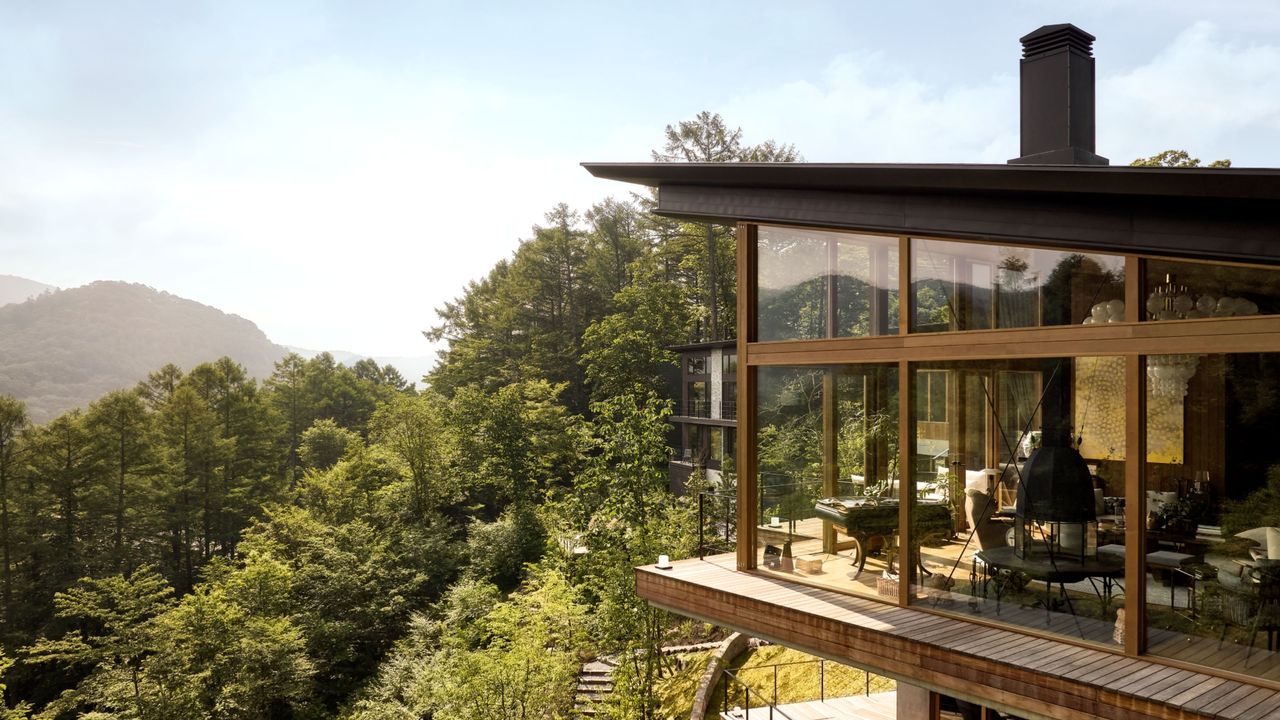
TSUSHOSHA — ED NG AND TERENCE NGAN, AB CONCEPT — KARUIZAWA, NAGANO

Itsu Sho Sha takes the form of a small village, consisting of a main living area, a studio, a study room, and a guest pavilion. This “village” typology gave the duo [Ed Ng and Terence Ngan] more creative freedom and allowed them to fashion spaces that function both as a personal sanctuary and a design laboratory. Nestled gently into the surrounding forest, the home reflects — and honors — its verdant surroundings.
3. Finding Space and Style in a Narrow Frame
SHOEI HOUSE — HEARTH ARCHITECTS — KOKA, SHIGA

Inside, the architecture celebrates restraint. Exposed wooden beams line the ceiling, their texture warming the otherwise minimalist interior. Horizontal slatted blinds filter sunlight into shifting bands that glide across the walls throughout the day, adding a graphic touch to the pared-back space.
In the absence of a traditional garden, pockets of greenery were introduced indoors. Small courtyards feature aesthetically arranged plants and rocks; in the double-height volumes, skylights create a vertical “skyspace,” allowing the trees to grow freely.
4. Finding Concrete Joy on Every Single Level
BUILDING FRAME OF THE HOUSE — IGARCHITECTS — TOKYO

Designed for a couple whose lives flow seamlessly between work and leisure, the house rejects the notion of fixed boundaries. Instead of compartmentalizing functions through walls, IGArchitects designed floors that stagger and float, allowing the inhabitants to feel each other’s presence, even from opposite ends of the space.
5. A Kaleidoscope of Color and Creativity
KOLORU HOUSE — RAMDANE TOUHAMI — SHINJUKUM TOKYO

Every detail in Koloru House is a reflection of the couple’s shared sensibility: a deep respect for craft, an openness to impermanence, and an instinct for beauty that transcends borders. Streamlined yet incredibly expressive, it captures the family’s ongoing exploration of home — not through permanence, but through making a space your very own, no matter how long you stay.
Bring the Aesthetic Home
Japanese 'Noren' curtains are great for adding a softer sense of separation, particularly in smaller spaces and this green hue is wonderfully sophisticated.
Paper is a key material in Japanese-style decor, from shoji screens to rice paper lamps, and this style brings gentle curves with a diffused light for a cozy space.
Another common decorative feature of Japanese homes is the shoji screen — in place of the traditional translucent screen, this room divider would give a similar effect.
As A House in Japan proves, embracing restraint can lead to endless possibilities, and a home should always reflect its inhabitants for harmonious living. These five homes are just a taste of the amazing homes showcased in this book — to see all the wondrous creativity featured, order your own copy of A House in Japan: Lessons in Living by gestalten on Amazon or directly at gestalten.
If you're feeling inspired to bring the spirit of the Japanese home to your own, these are the things you'll find in Japanese homes that make spaces calmer and 'move better'.
And for more design inspiration, subscribe to the Livingetc newsletter, and all the latest will be delivered straight to your inbox.