
I sound like a broken record at this point, but I’m here to say it again – the UK has been insanely hot this summer. Currently, instead of blaring hot sun beating down on us, the humidity is climbing, so while it might not look particularly sunny, the temperatures are almost as intense.
According to BBC Weather, humidity levels are very high this week, with most days being 65% - 78% in humidity, and some places rising past 85% at night. Despite loving the heat, the humidity is what really gets to me, especially when I’m trying to sleep, so I’ve found five handy appliances that you can use to lower the humidity in your home.

1. A dehumidifier
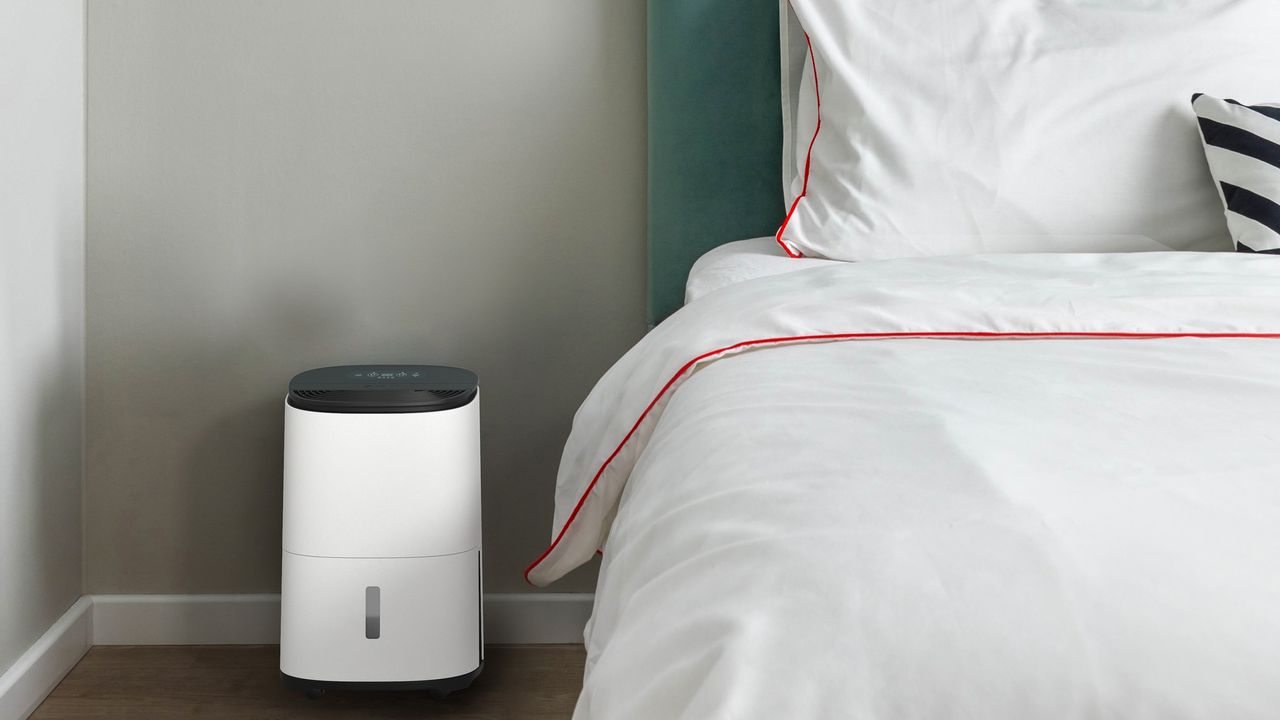
Starting off strong, we have the trusty dehumidifier. Clue is in the name here – a dehumidifier is an electrical appliance that draws water vapor from the air to lower the humidity in your home to leave your space feeling cooler and more comfortable.
Running a dehumidifier can actively cool your home down, while also preventing damp and condensation. They’re fairly inexpensive and they don’t cost too much to run either, so if you’re looking to beat the humidity, a dehumidifier should be top of your list.
For more tips, check out 5 ways to use your dehumidifier to tackle the humidity.
2. An air conditioner
As the past few months have been intensely hot, more people in the UK are looking to install air conditioning units or upgrade to a portable air conditioner. Aside from expelling a cool breeze, an air conditioner is especially handy for humidity.
Part of its cooling cycle, an air conditioner pulls humid air across its internal coils or refrigeration system. This action removes the humidity by chilling it and turning it into water vapor which is either dispensed into a collection tray or a drain pipe, depending on the type and model air conditioner you have.
3. A moisture absorber
If you’d rather use a non-electrical device or you’re on a tight budget, you can remove the humidity in your home using a moisture absorber. A moisture absorber uses salts or crystals rather than plugs or batteries to pull water out of the air.
The crystals within the moisture absorber attracts water vapour and collects it into a tray. Aside from removing the humidity, it also reduces mould and odours, and it does so in a cost-effective way. Moisture absorbers can start as little as £1.50 and there aren’t many ongoing costs unlike electrical products. You may have to replace the crystals every three months, but these replacements are very cheap.
4. Bathroom or kitchen extractor fans
A gadget that likely comes integrated in your home already, a bathroom or kitchen extractor fan is a must for making your home less humid. In the bathroom, the exhaust fan removes steam and water vapour after baths and showers, which also prevents mildew build-up. Keeping it on while you shower and for a few minutes after can help with humidity.
Similarly in the kitchen, steam and smoke from your cooking can contribute to your home’s overall heat and humidity. Make sure you always have your extraction on while you’re cooking, and to naturally reduce this humidity, use lids over your pots and pans to reduce steam from boiling or steaming food.
5. A vented dryer
During the summer, I’d always encourage you to use a clothes horse or outdoor line to dry your clothes rather than use your dryer. Tumble dryers get hot – as well as costly – and using one can add excess heat and humidity to your home.
However, if (like me) you don’t have an outdoor drying line, a vented dryer can dry your clothes and limit your humidity. A vented dryer works by pulling in air from the room it’s in, heats it and runs it through your wet clothes. The dryer removes this hot air outside through its exhaust hose or duct which is installed through a window or outside wall.
While the installation might sound like a faff, a vented dryer is less expensive than a condenser dryer. It also dries clothes quickly and by removing humid air from your home, it brings the heat down.