
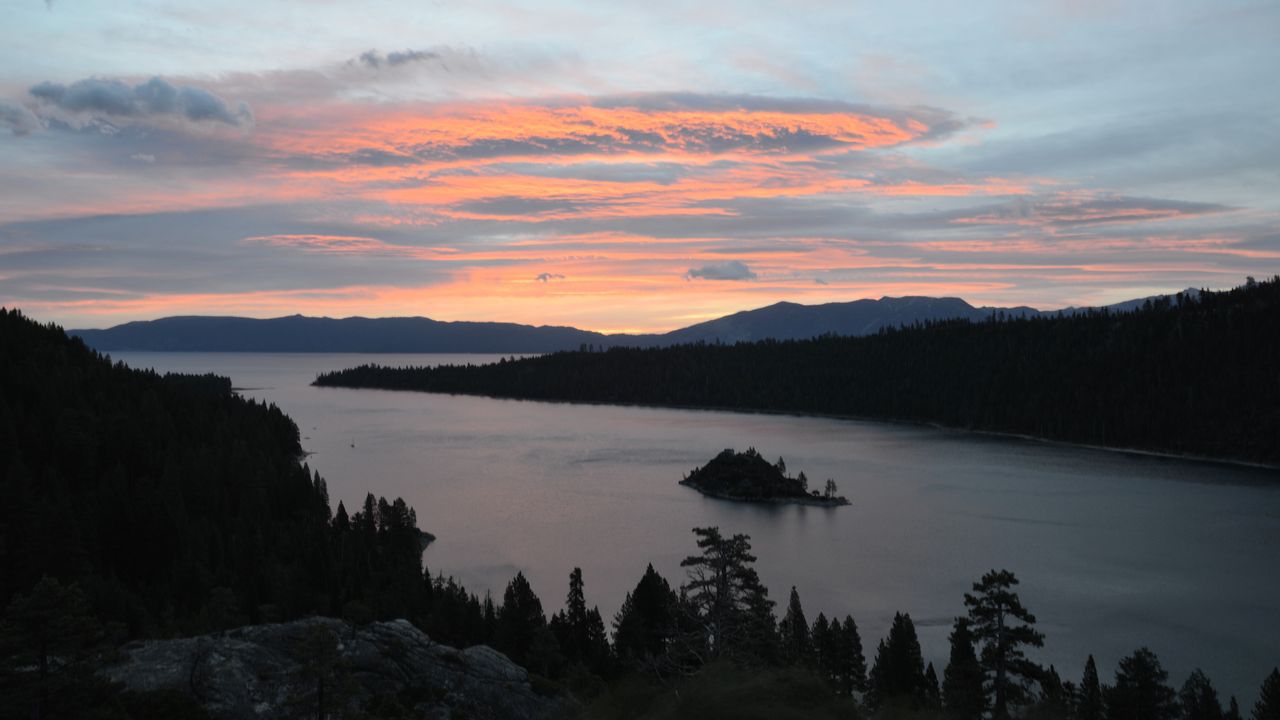
Data center power demand is straining power grids and generation worldwide, and California and North Dakota are no exception. You might be wondering, though, what happens if you live in a specific region that straddles those two states, has unorthodox geography, and gets its power from the state next door? Around 49,000 Lake Tahoe residents are finding out in the worst way that they might become literally powerless come May 2027, as provider NV Energy is poised to redirect the spice flow elsewhere, according to an article on Fortune.
The quick-and-easy answer to how that could happen is "because of AI," and while that is true as a kernel, this story is far more complicated. North Nevada has become one of the fastest-growing data center hubs in the country, thanks to tax incentives, large tracts of available land, and being close to Silicon Valley. Most of the region's data center computers sit in the Tahoe Reno Industrial Center, and they're owned by the likes of Google, Microsoft, and Apple.
It's not surprising, then, to hear that regional utility operator NV Energy is experiencing "unprecedented" demand, a story all too familiar most everywhere else in the world. Fortune says that 12 data center projects in the region could pull 5,900 MW at peak, all by themselves, far beyond the region's current usage. Back in 2024, datacenters reportedly drank 22% of the state's power, a slice that could increase to 35% by 2030. The projected datacenter load growth in 2024 was 25,590 GWh, over half of Nevada's net generation.
This is all well and "good," but the reason this affects Lake Tahoe in particular is the fact that its local utility, Liberty Utilities, gets 75% of its power from NV Energy, and its territory sits inside the grid operator's balancing zone. There's no direct connection from the Lake to the Californian grid, a venture that would beget a new line over the Sierra, costing at least hundreds of millions of dollars and impacting the landscape. This makes Lake Tahoe effectively landlocked in electricity flow.
The problem is that the situation isn't strictly new for Liberty, and has been dragging for the better part of two decades. Per the Fortune report, Liberty was supposed to have started buying power from other sellers as far back as 2009, when NV Energy sold Liberty its California assets. A temporary agreement was set in place so the situation could be resolved, but that was extended repeatedly in 2015, 2020, and 2025, a fact that Fortune says it verified via regulatory documents.
Danielle Hughes, a local resident and CEO of the nonprofit Tahoe Spark, also points out that at only 49,000 strong, even if the area could get a good short-term deal on power coming from the west side, it wouldn't be able to find affordable long-term pricing competing with giants. Understandably, Spark and another local interest group want the California Public Utilities Commission to fully oversee Liberty's procurement process, except that the entity has no actual power over NV Energy.
For its part, NV Energy is building out its Greenlink West 525 kV line and intends to transition Lake Tahoe to this pipe, but watts are only expected to flow on it come May 2027, making for the closest of shaves. The operator says that the transition was set "well before data center load growth was a consideration," and "not a reaction to recent developments," but at the same time, there's no telling if the schedule could slip.
Making matters worse, Lake Tahoe's location makes for a cross-hatch of state, regional, and local frameworks, with Fortune going as far as stating that "no single body owns the whole problem." Adding electrons to the arc, while the Lake is seen as a rich area thanks to its ski resorts and casinos, it's actually fairly modest, and the high power demand around the tourist-heavy Christmas season needs to be paid for during the rest of the year. Whichever way this goes, it's a mess and a half to sort out.


