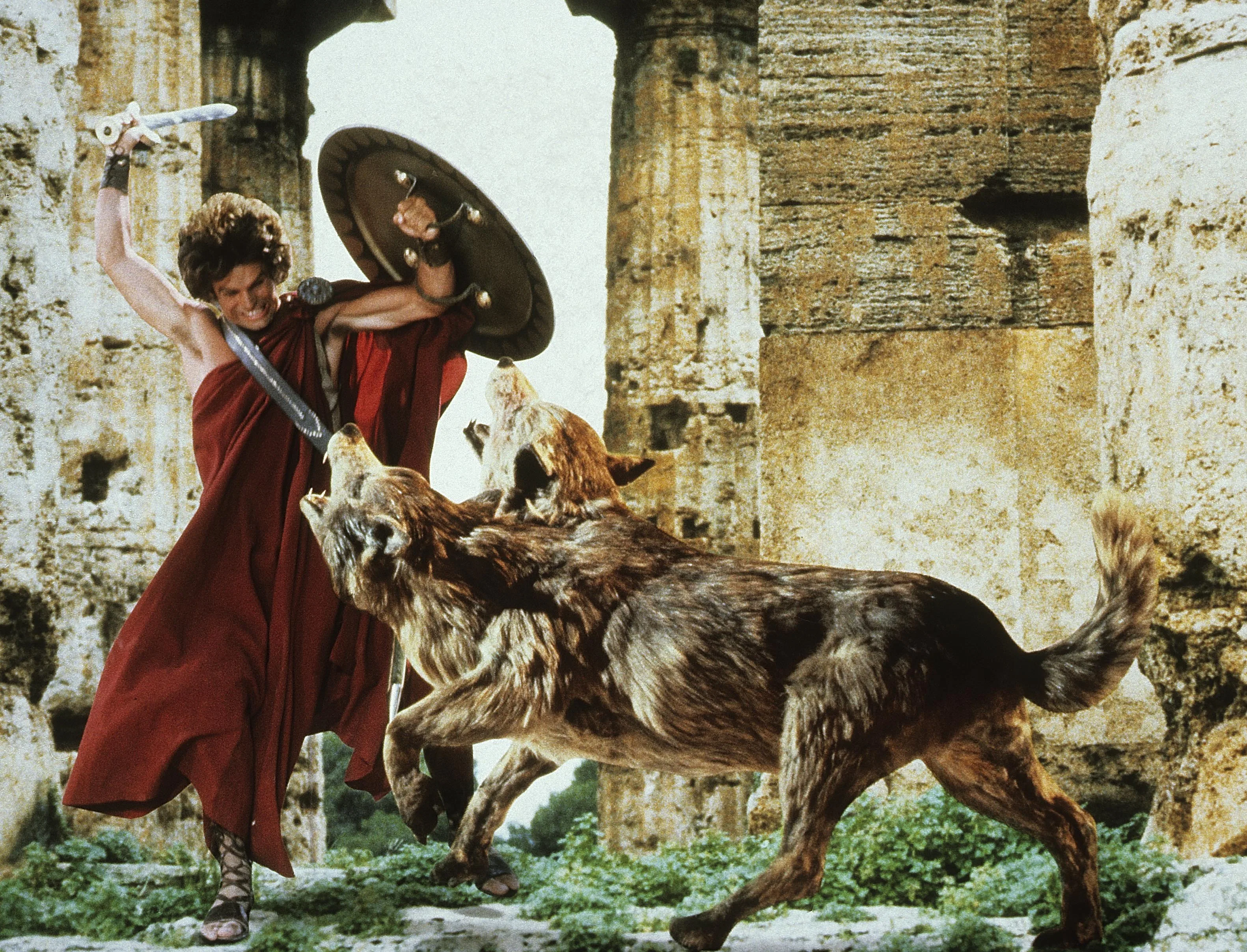
The 1981 film Clash of the Titans marked the final on-screen work of stop-motion visual effects legend Ray Harryhausen. Launching his career in 1949 on the giant ape movie Mighty Joe Young, under the tutelage of pioneering model animator Willis O’Brien (King Kong), the Los Angeles-born Harryhausen forged a career that made him one of the most influential visual effects artists of all time. His efforts brought an array of fantastical creatures to life in sci-fi and fantasy classics like The Beast from 20,000 Fathoms, Earth vs. the Flying Saucers, The 7th Voyage of Sinbad, and Jason and the Argonauts (arguably his masterpiece).
Clash of the Titans, which premiered on June 12, 1981, was meant to be Harryhausen’s magnum opus. His longtime producing partner Charles H. Schneer secured a reported budget of $10-15 million (a large sum for the time) for the adaptation of the Greek myth of Perseus, as well as acclaimed British actors like Laurence Olivier, Maggie Smith, and Claire Bloom to portray the deities Zeus, Thetis, and Hera respectively. The relatively unknown Harry Hamlin was cast as Perseus, while Harryhausen’s stop-motion creations for the film included the winged horse Pegasus, the man-turned-monster Calibos (also played in heavy prosthetics by Neil McCarthy), a two-headed dog, a pair of oversized scorpions, Medusa the Gorgon, and the gigantic Kraken.