
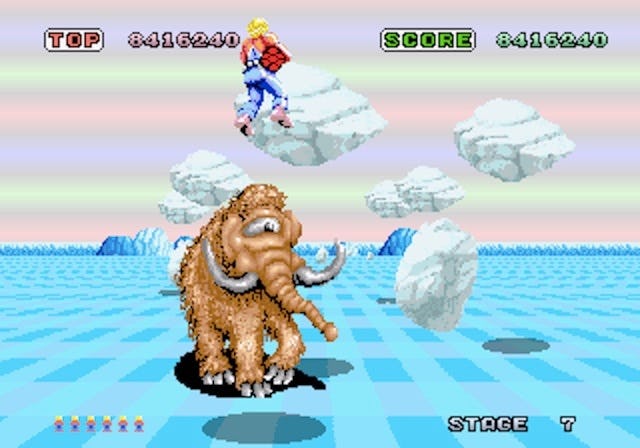
The history of arcade games might seem clunky and strange, but without certain key innovations, it's hard to imagine modern gaming at all. When gamers today think of rail shooters, they might think of players furiously smashing buttons, but they may not remember that one of the earliest and most innovative rail shooters of all time was also a flying game about a guy whose primary weapon was also his mode of transportation. The game was Space Harrier, a Sega Arcade Game designed by developer Yu Suzuki. It was released initially on October 2, 1985, and in the next few years would become one of the most important arcade games of all time. Why? There are a few reasons, but the overriding reason Space Harrier remains a classic is that it was just weird enough to be artistically compelling and just simple enough to be playable.
Years after the success of the game, in 2010, Suzuki revealed that market research of the time suggested that 3D shooters simply “didn’t succeed,” signaling that he “shouldn’t make the game.” He pressed ahead anyway because Suzuki realized the problem with previous arcade shooters of this kind is that the target was too small, meaning the goal of Space Harrier was to make the targets small at first, but then, larger as they got closer to the player. Sounds simple, right? It seems that way now, but this gradual size change of advancing targets was a pretty big innovation for video games at the time, and it’s largely thanks to Space Harrier.














