
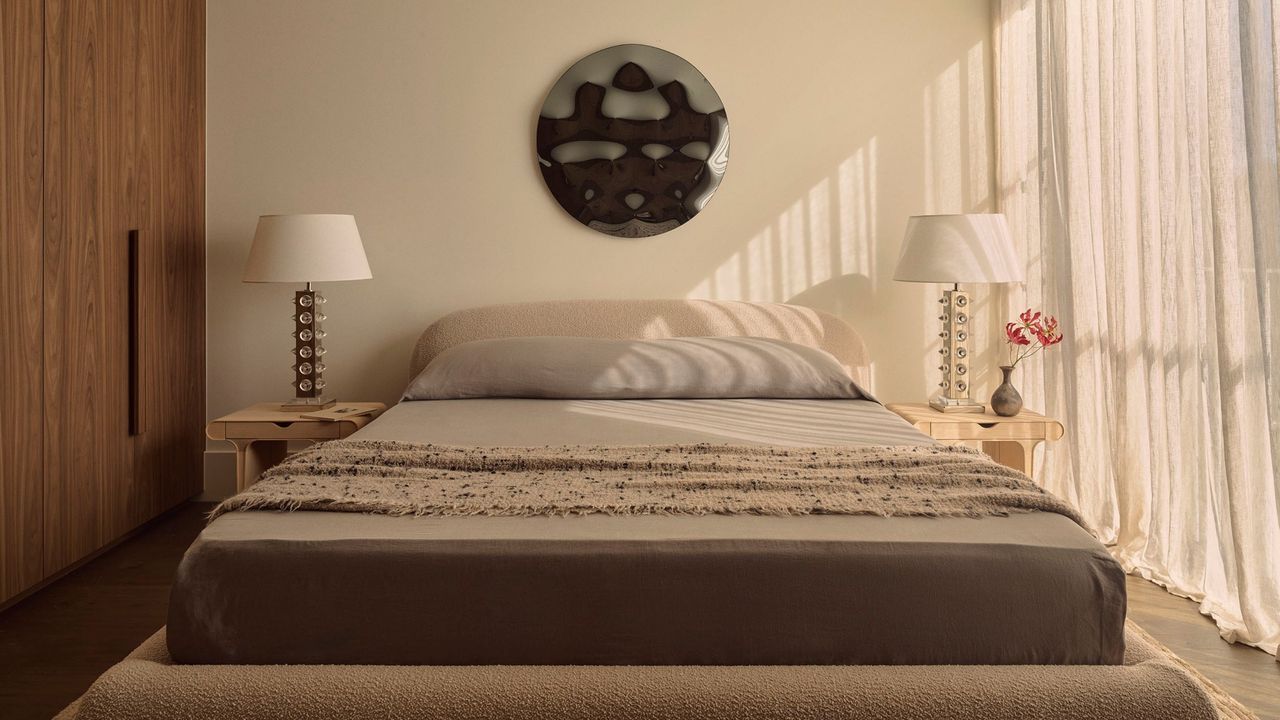
The bedroom should be one of the most serene rooms in the home. In theory, a bedroom is a personalized haven where you begin your days and lay your head to rest at night, and your design should reflect that peacefulness. However, we are only human, and curating that sacred serenity is often easier said than done. Clothes pile up, random lamps are added, sometimes we invest in the wrong bedding choices... and suddenly things feel more overstimulating than they should.
Is your cozy bedroom idea not feeling so cozy these days? As we design our bedroom and live within it, we make design choices that don't always translate well to this specific space. Maybe that oversized headboard in a bold pattern is reading as way too much, or the bedside pendant light you fell in love with is actually too bright. A bedroom design is nuanced — a curated casual, if you will. And if you're having trouble sleeping through the night, it may very well be because you've accidentally designed a few overstimulating elements into your space.

So, to get your sleeping space back to the peaceful retreat it deserves to be, I asked interior designers to identify the biggest offenders. Below are the top four overstimulating things that you might have styled into your room and could be distracting from your design.
1. Personal Clutter
We can probably all agree that personal clutter builds up quickly; be it on the bedside table, the dresser, or the shelves, that accumulation of 'stuff' is an unavoidable part of daily life. However, in a bedroom, this can be a major disruption to your design. As minimalist and wellness-focused interior designer Louisa Grey explains, "Our brains continue to process everything within our field of vision, making it harder for the nervous system to fully relax."
So, "The small accumulations of daily life with nowhere to go — and nowhere to be found when you need them — are a source of stress," adds Interior designer and founder of Vellum Studio, Ronit Lee, who creates calm, considered spaces with a relaxing minimalist style. What you have on your nightstand says a lot about you, and if it's cluttered, you're inviting a more overstimulating environment.
That's not to say you need to swing the opposite direction and wipe the room of personal belongings entirely. A well-designed bedroom will be balanced. There's a spot for everything (clever bedroom storage is essential), so that when a few pieces are left out, they don't overwhelm the entire room. Design your surfaces with enough restraint to leave room for grace on more hectic mornings.
"A letter holder for mail, a generous basket for throws, a dedicated surface for your laptop or books to place your things. When everything has a spot, the room exhales and so do you," says Ronnit. This 'every has a place' attitude is the best way to restyle your nightstand and cultivate a better sleeping atmosphere.


2. An Overly Designed Aesthetic
Which leads us to our next overstimulating bedroom design mistake — an overly styled bedroom. We all get carried away with beautiful Pinterest ideas, but interior designer Georgina Wilson says, "the highly curated, too-nice-to-touch bedroom is beginning to feel overdone. What once felt luxurious can now come across as overly designed." And when your bedroom feels too curated and perfect, relaxation becomes harder to achieve, creating a more stressful environment.
Georgina highlights specific design choices such as a fully upholstered feature wall behind the bed. "People are gravitating towards bedrooms that feel more relaxed and authentic, with texture introduced through layers of furniture, textiles, and materials rather than one oversized statement installation," she says. So, while something like a patterned, extended headboard may read as chic in a five-star hotel, it can overstimulate a small bedroom design.
But, as usual, it's all in how you do it. A good guide for choosing elements to include starts with soft, tactile elements first. As Ronnit says, "Soften everything." A well-placed bedroom rug defines the room and gives your feet an inviting place to land. If space allows, a soft seating area to sink into that's not the bed can help you unwind. And a throw and a few pillows are always comforting. "Textiles and texture are what make a space feel welcoming rather than just decorated," adds Ronnit.


3. Pendant Lights Next to the Bed
Pendant lights hanging over either nightstand in place of table lamps are a trend I have been loving. The look is so elevated, but unfortunately it can be quite an overstimulating feature to include in your sleep space. It's one of those design versus practicality debates.
As Georgina explains, "While they can look beautiful in photos, they're often impractical." The reason centers around bedroom feng shui mistakes — pendant lights swing, can be awkward to use, and "more than a few people have hit their heads on them," adds Georgina.
So while a layered lighting scheme is practically essential to a relaxing bedroom design, you might want to rethink the pendant light over the nightstand look. The good news? There are plenty of other beautiful bedroom lighting ideas to incorporate instead.


4. Too Many Electronics
As the world continues to fight against the oversaturation of screens and introduce more analogue routines, a tech-free bedroom is a must for keeping those electronics at bay. Louisa explains, "Electronic items are such an energy drain and a distraction in the bedroom; from televisions, unconsidered lighting plans, charging cables, and multiple electronic devices."
"All of these contribute to visual and cognitive stimulation," adds Louisa. Even when switched off, they focus us on brain work, communication, and the outside world. Instead, design a sleeping space that has moments of stillness — even creating a digital-detox corner dedicated to reading or a calming hobby, is a fabulous place to start.
Ask yourself, 'How do I want to feel when I wake up? How do I want to feel before I fall asleep?' "Let those answers guide your decisions. When a bedroom supports the senses through natural materials, considered lighting, mood-stabilizing colors, and meaningful simplicity, beauty becomes a by-product of wellbeing rather than the objective itself," says Louisa.


No one wants their bedroom to feel empty or overstimulating, so filling it with design choices that cater directly to your ideal sleeping and relaxation environment is the best way in. Bring character without overly designed elements, and personality without 'stuff'.
And for more inspiration like this, be sure to subscribe to the Livingetc newsletter.