
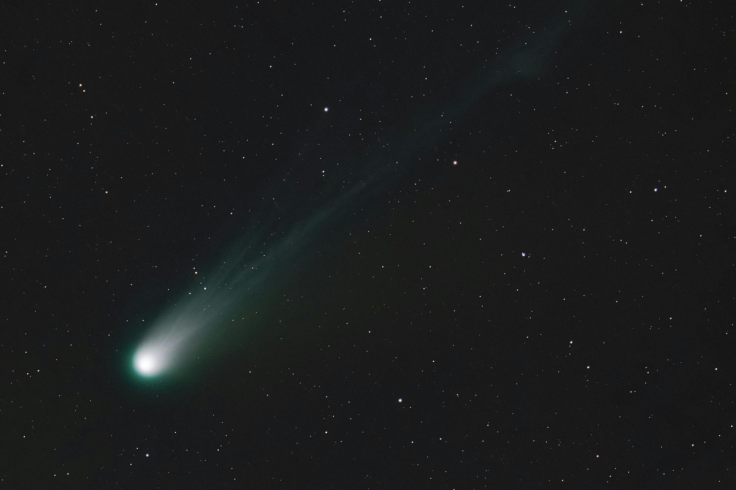
What if an object hurtling through our solar system, one already confirmed as an interstellar wanderer, started to pulse? Not slowly, but with the steady, predictable rhythm of a clock. Since its discovery, the light signature of the interstellar object 3I/ATLAS has displayed just such a phenomenon: a rhythmic variability with a period of 16.16 hours. This cosmic 'heartbeat' immediately presents a profound paradox, challenging standard explanations of cometary physics and forcing scientists to ask whether this object is simply an icy rock or something far more unusual.
Analysing the data requires rigorous, careful work, ensuring that we do not mistakenly attribute complex behaviour to a simple spin. This analysis is spearheaded by Avi Loeb, the Frank B. Baird, Jr., Professor of Science at Harvard University and former Chair of the Astronomy Department, who has consistently questioned whether unusual interstellar objects like this one might represent technological artefacts rather than natural comets.














