
Star Trek has never been shy about remaking the sci-fi that influenced it, with Strange New Worlds alone offering clear riffs on Aliens, Enemy Mine, and "The Ones Who Walk Away from Omelas.” But 35 years ago, during the week of April 29, 1991, Star Trek: The Next Generation looked to a different genre and gave us The Crucible in space.
“The Drumhead” opens with the discovery that a Klingon exchange officer is really a spy, but what looks like it’s going to be an espionage story soon shifts gears as J’Dan’s (Henry Woronicz) guilt is quickly determined, and the angry alien is shuffled off-screen and out of the episode. Starfleet is worried that J’Dan couldn’t have smuggled his findings off the Enterprise and sabotaged the ship’s engine without help, so retired rear admiral Norah Satie (Jean Simmons) is brought aboard to help sniff out the conspirators.

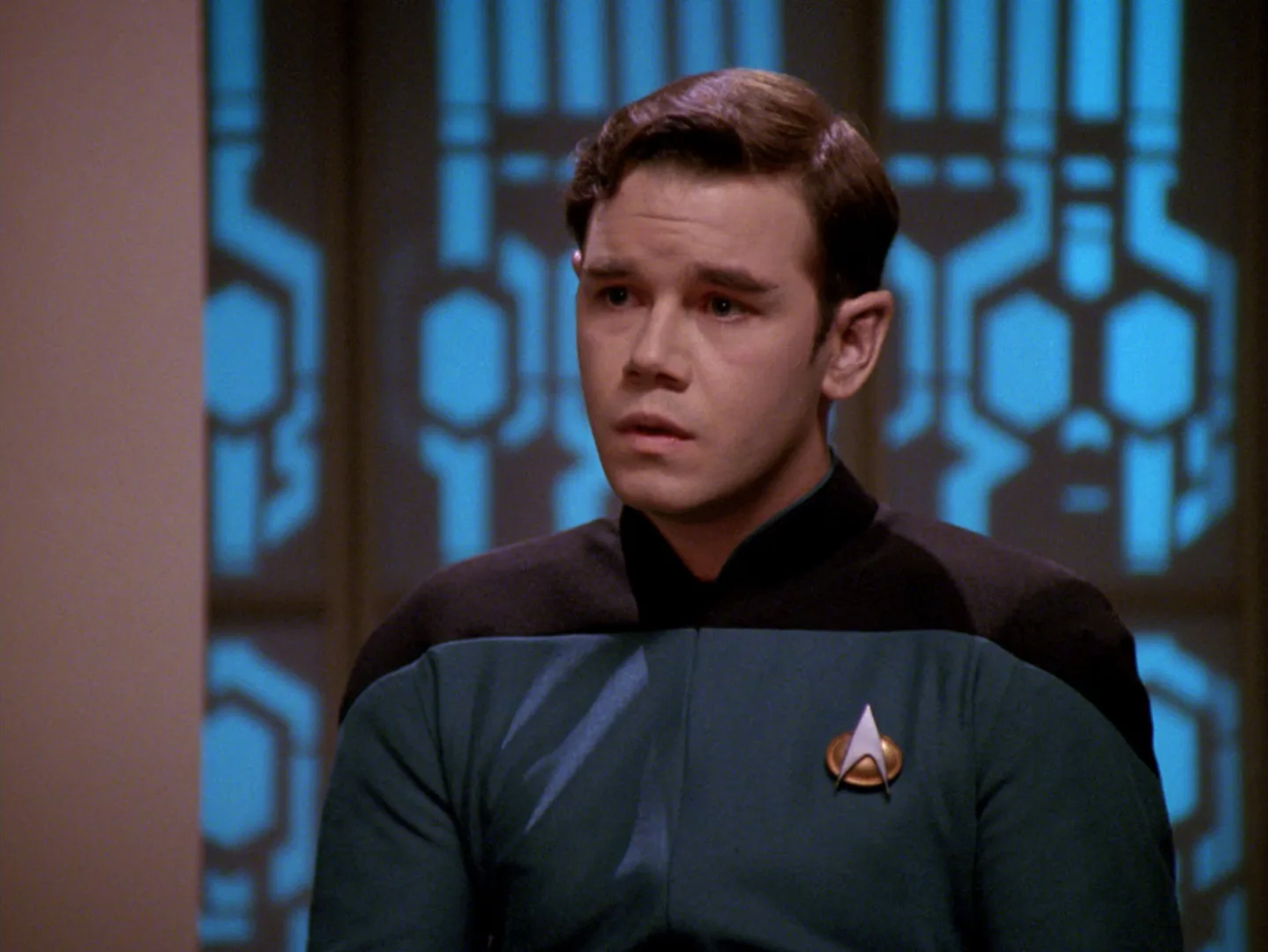
Star Trek also loves a courtroom episode, Next Gen really loved a meddling admiral episode, and “The Drumhead” rolls all that into one memorable package. Satie is initially courteous, treating the Enterprise crew with respect and Picard as her investigatory equal. But as she and her underlings fixate on the comings and goings of low-level medical tech Simon Tarses (Spencer Garrett, more recently seen on For All Mankind’s first two seasons as new anchor Roger Scott), the atmosphere becomes authoritarian.
Tarses becomes the star of a grand Klingon-Romulan conspiracy operating with ruthless efficiency in the boundless confines of Satie’s mind. Circumstantial evidence and a white lie — Tarses claimed that a Romulan grandfather was a Vulcan, a less politically sensitive species, on his Starfleet application — are inflated to titanic proportions, as Satie, an experienced investigator, believes she’s found yet another threat to her beloved Federation.
Smartly, Satie isn’t all wrong; it’s concluded that J’Dan, who was working with the Romulans, probably did have help getting aboard the Enterprise, and his unseen allies get away scot-free. Starfleet would continue to contend with Romulan spies across the decades, and their alarming degree of access would inform Picard Season 1. But this McCarthyism-in-miniature episode sees Satie put her fears, biases, and substantial ego ahead of an investigation that soon devolves into baseless political theater.

Picard, of course, remains our moral compass throughout, gently chiding Worf for getting caught in the fervor before using the words of Satie’s father, a legendary judge, against her when he finds himself in the hot seat. “The Drumhead” is a standout Picard episode, as Patrick Stewart’s presence and authority, as it so often did, elevated the moments where the show had to talk about dilithium chambers and trick hyposprays. The late Simmons, for her part, is a memorable guest star — put on the map for an Oscar-nominated turn as Ophelia all the way back in 1948, she and Stewart carry the bulk of an episode so tangential to sci-fi that there’s barely any need for it to take place on a starship.
Much has already been said about how “The Drumhead’s” argument remains timeless, and it certainly never hurts to be reminded that zealots will forever argue that the only way to defend a cherished society is to surrender the very rights that make it so remarkable in the first place. But while Satie’s patriotism is ill-aimed, what the episode also highlights, as Satie admits to Picard, is that the life of an inquisitor is a lonely one.
The admiral should be enjoying her retirement, but has instead spent years living out of suitcases as she ferrets out evildoer after evildoer across the Federation’s vast array of ships and stations. Again, she’s not entirely in the wrong — the episode retroactively gives Satie credit for disarming the alien conspiracy that threatened the entire Federation back in Season 1, only to be quietly erased from the series as the aliens’ connection to the incoming Borg was rewritten.

But when all you have is a hammer, all you’ll see are nails lurking in the shadows, and Satie’s exhaustion and isolation look painfully familiar now that the internet is full of countless conspiracy theorists forever weaving their own incomprehensible webs. Strip away her rank, and she’s just one more raving loon insistent that anything and anyone that doesn’t prove her right is part of the plot, friends and family included. One has to wonder how many isolated people are ranting online about evil aliens in the background of all our favorite Trek adventures.
“The Drumhead” would, fittingly enough, reverberate throughout Star Trek, both within the universe and beyond it. The franchise referenced it just this year, when Starfleet Academy quoted Picard quoting Satie’s father. In our world, it still routinely ranks as a top episode, and that ranking is well deserved.
The breezy 43-minute runtime sometimes threatens to burst at the thematic seams, and the civilian fashion of TNG looks a bit more ridiculous with each passing year [editor’s note: best uniforms ever!], but it remains Trek at its philosophical best: serious but not dull, moral but not preachy, and firm but not simplistic. Thirty-five years later, it’s a touchstone for the franchise in both storytelling efficacy and ethical clarity.