
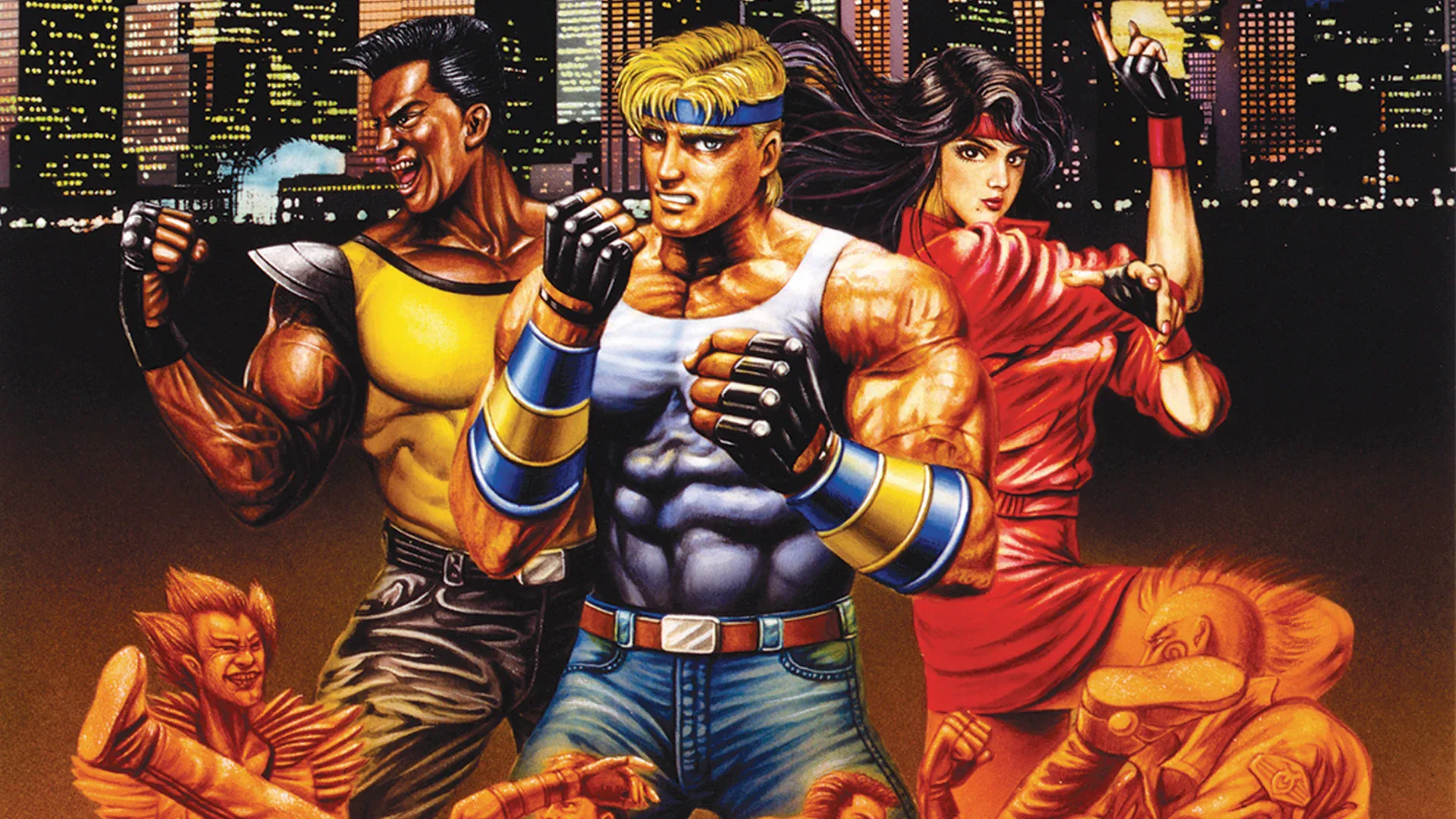
In the mid-to-late 1980s, any frequent visitors to their local arcade would be greeted by a few examples of a specific type of game: the side-scrolling beat-em-up. First introduced by 1984’s Kung-Fu Master, it was a subgenre of arcade action game iconic for its playstyle, which featured a two-dimensional horizontally-moving plane that either one or two players would navigate (exclusively from left-to-right or vertically as well in the belt-scroll variety) while engaging in hand-to-hand combat with various enemy combatants. That initial debut was inspired by Hong Kong martial arts cinema (particularly Meals on Wheels and Game of Death, starring Jackie Chan and Bruce Lee respectively), as were many of the earlier examples, including the incredibly influential 1987 game Double Dragon (which itself owes a debt to Enter the Dragon and the Mad Max series).
While the genre’s origins in East Asia meant that it drew significantly from films and manga coming out of the region, as the beat-em-up grew in popularity in the West, developers started to imbue new games with different cultural touchstones. Classics like Golden Axe received a heavy coat of fantasy painting and laid the foundation for what would become the hack-and-slash genre in the modern day, while releases such as the X-Men and Teenage Mutant Ninja Turtles arcade games drew obvious inspiration from comic books and cartoons. But another popular beat-em-up aesthetic was the urban, borderline apocalyptic crime setting, and perhaps the best known example of this style was the Streets of Rage series. And now, almost as if closing a loop of cinematic influence, those games are officially getting their own film adaptation.