
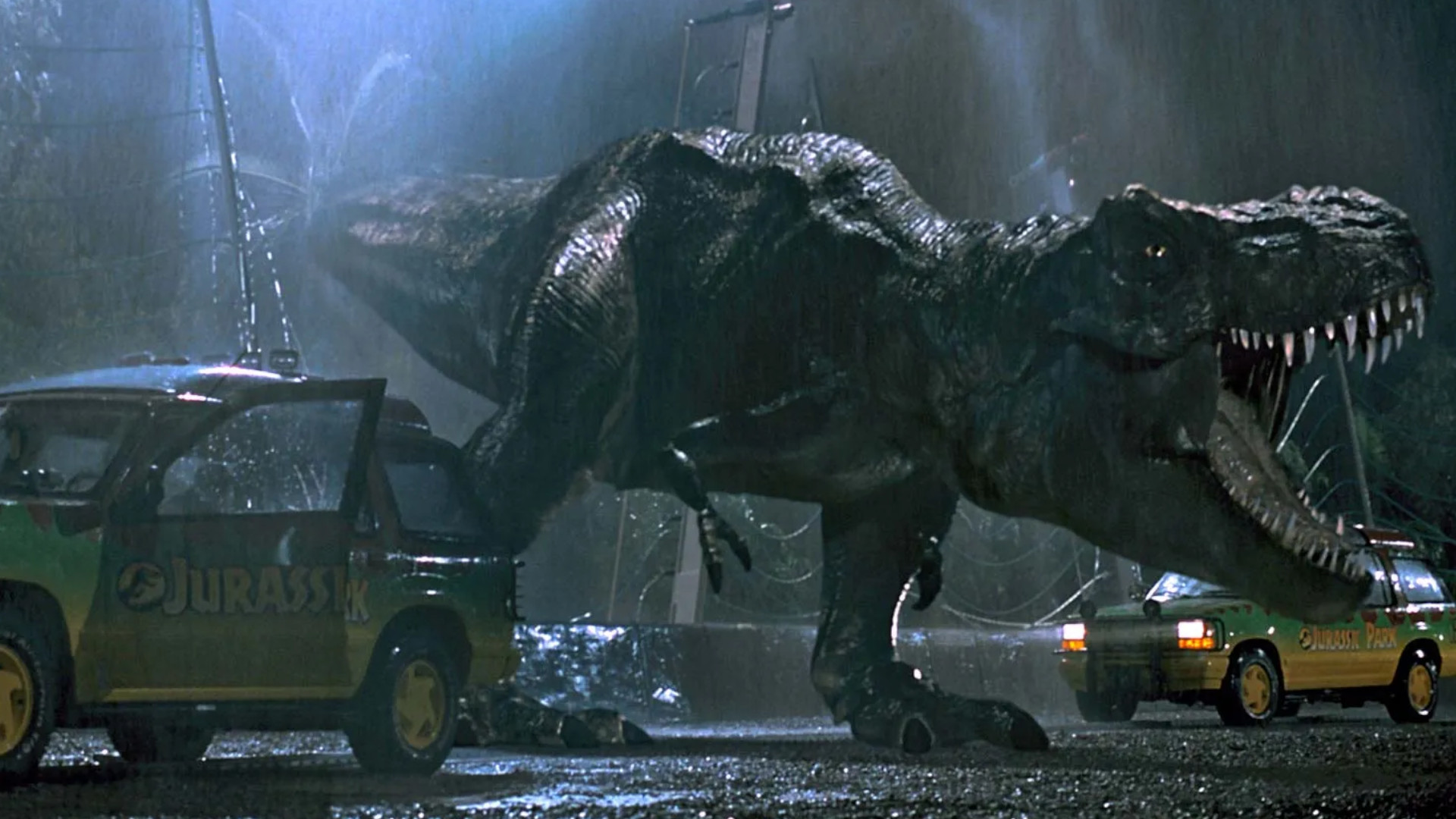
If there’s one franchise that exemplifies the modern blockbuster, it’s Jurassic Park/World. At its best, it’s not only driven by top-notch special effects but by a meditation on mankind’s relationship to nature and how hubris affects that. At its worst, it’s a hollow dinosaur smash ‘em up that barely feels scripted. But like the asteroid that swiftly ended the reign of the dinosaurs sixty-six million years ago, the original Jurassic Park has left a massive impact. And that legacy is arguably much more important than any line of sequels could be – Jurassic Park affected an entire cultural view of dinosaurs.
The Michael Crichton novel and the Steven Spielberg-directed film didn’t arise in a vacuum. Beginning a few decades before the film’s 1993 release, we were already in the midst of a “dinosaur renaissance” of sorts. This new dino boom period was caused by a variety of factors, like the widespread acceptance of a new extinction theory that said a chance rock from space had caused the end of the Mesozoic era, and the rising interest in the idea of dinosaurs as potentially warm-blooded, fast-moving and even intelligent creatures.