
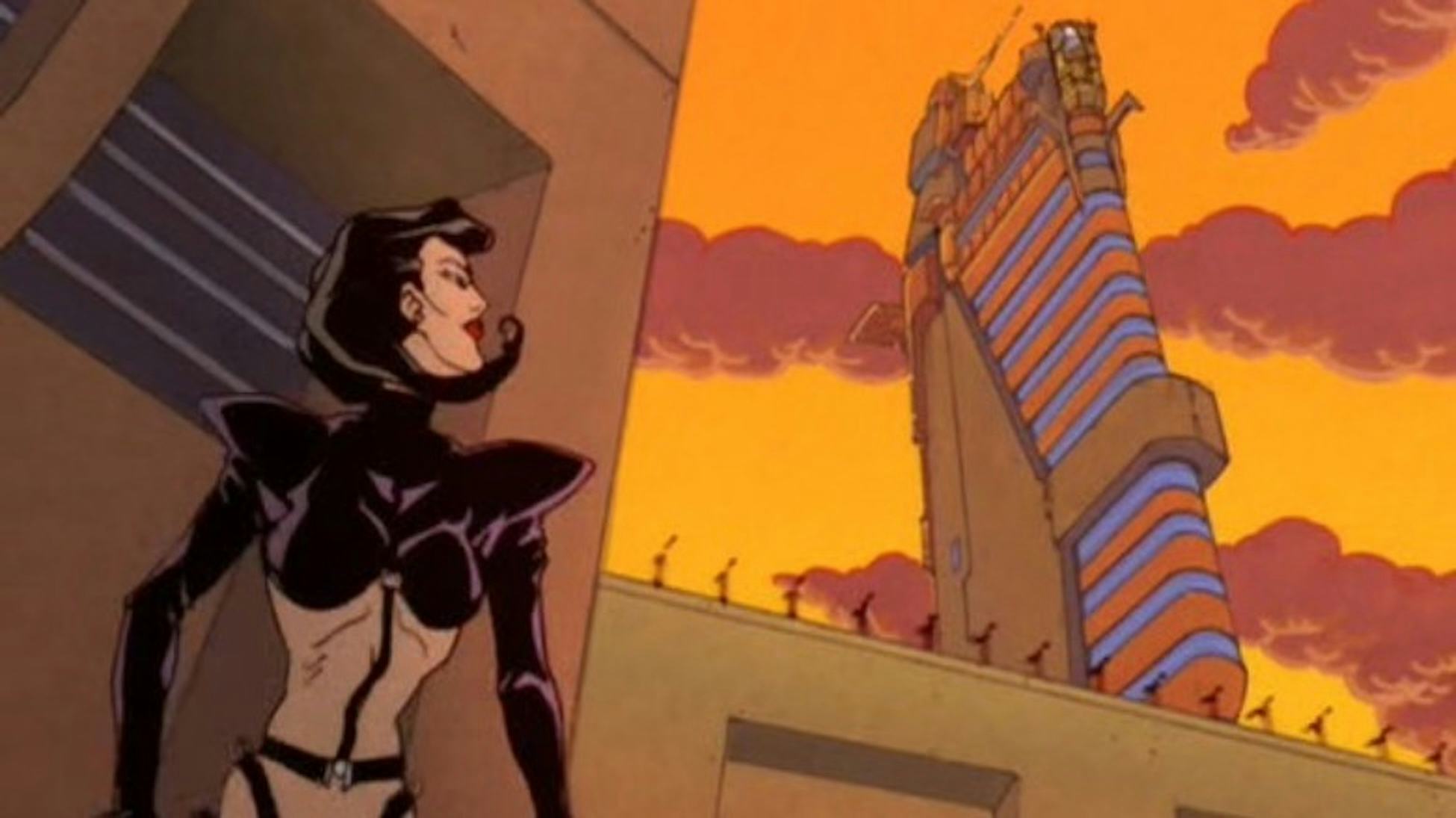
In 1991, the most innovative and groundbreaking visual sci-fi around was happening in bite-sized segments, late at night on MTV. If you were awake and you happened to catch it, you would find arresting two-minute action-packed episodes of a series called Æon Flux, which focused on the titular cyberpunkish assassin, who very often, had a bizarre demise. More like impressionistic animated sci-fi art than a true narrative show, the early Æon Flux lacked any real dialogue, and as its creator, Peter Chung, intended, didn’t really tell a unified story. But then, on August 8, 1995, that changed. Instead of abbreviated animated shorts with contradictory narratives, Æon Flux quietly rebooted itself as a full series, and in doing so, changed science fiction and television history. And 30 years later, many of the jarring themes of this series hold up better than anyone could have possibly imagined.
Seemingly drawing inspiration from the hyper-sexualized adult genre magazines like Heavy Metal, the character of Æon Flux herself comes across as a cross between a dominatrix and Trinity from The Matrix’s weirder aunt. But, for all of its sexual aesthetics, it's difficult to call the show exploitative. Its bloodshed is also graphic and unsettling, but in both cases, Æon Flux is, very clearly, making a kind of satire of the very things it depicts: a visual comic-book world that seems taken from Jean Giraud’s concept art from Alejandro Jodorowsky's unmade Dune. In other words, Æon Flux looks like anachronistic science fiction, even for the 1990s.















