
Get all your news in one place.
100’s of premium titles.
One app.
Start reading
Homes & Gardens
Homes & Gardens
Ottilie Blackhall

3 Things Sleep Experts Always Notice About Slumber-Inducing Bedrooms – And How to Include Them In Your Sanctuary

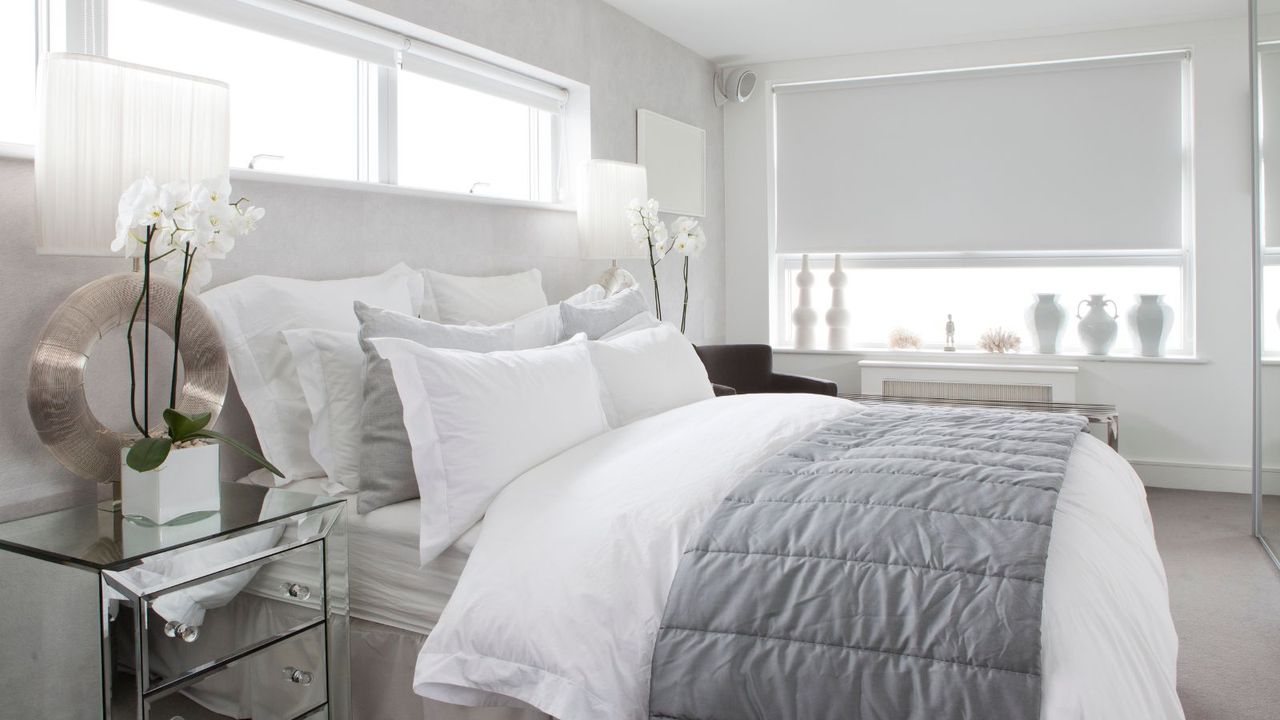
A white bedroom with large double bed with white bedding, mirrored chest of drawers, white blinds over a large window, and two long, large windows above the bed.

Not everyone is an interior designer, but there are a few well-thought-out bedroom choices that sleep experts always notice in spaces that are conducive to restorative nights.

You can seamlessly introduce them to your own sanctuary, especially as brighter, earlier spring mornings and changing circadian rhythms continue to disrupt your rest.

Here, the experts reveal the three crucial things that are vital to know when designing a bedroom for better sleep.

3 Things Sleep Experts Always Notice About Well-Appointed Bedrooms

1. How Well the Space Eliminates Light

Use curtains, shutters, or blinds to adequately darken your sleep space. (Image credit: Future / PAUL MASSEY)

Dr. Jordan Burns, sleep expert at Amerisleep, says that the first thing he notices when assessing someone's well-executed bedroom ideas is their bedroom lighting.

'In my experience, the first thing I see when looking at an effective bedroom for sleep is how well the space eliminates light,' he explains. 'Whether it is from the light of streetlamps, electronics, or even the sun rising, small amounts of ambient light can impact the body’s ability to produce melatonin, thereby disrupting the body’s natural internal clock.

'The use of blackout curtains or layered window treatments is one of the easiest ways to help maintain a dark sleeping environment, which has been scientifically linked to longer and more restorative sleep patterns.'

For example, the Mainstays Blackout Grommet Single Curtain Panel, available at Walmart, will effectively keep your space dark. Alternatively, use shutters or venetian blinds, such as the VECKLARFLY Venetian blind, available at IKEA, for a more polished look.

2. There Should Be Minimal Clutter

A tidy bedroom that's free of clutter better welcomes sleep by reducing the mental 'to-do' checklist (Image credit: Future / JON DAY PHOTOGRAPHY LTD)

Next, says Dr. Jordan, he also notices a focus on simplicity.

'Bedrooms with minimal clutter seem to allow people to get ready for bed quicker,' he advises. 'This is because our brains are constantly taking in information, and when there are too many visual stimuli present, like open storage, clothes on the floor, or bright decorations, our brains interpret this to mean that the space is still "on" or "active."

'Supportive sleep spaces typically have closed storage areas, neutral colors, and calming textures that help signal to the brain that the space is time for rest.'

That's why when organizing a bedroom for better sleep, sleep experts always recommend clearing visual clutter there.

To follow the golden rules for a clutter-free bedroom, as Dr. Jordan suggests, use closed storage as much as possible, keep floors clear, and always put clothes away or in your laundry hamper as soon as you fold them or take them off.

To make this even easier, as long as it looks good and you have the space, you could keep your laundry hamper in your bedroom. For example, the IKEA NATTGIBBA Laundry basket is chic and elegant, with a handmade willow charm.

Kenny Timper, certified sleep coach at Sleepopolis, adds, 'I've found that I sleep best when my bedroom is decluttered and less "busy." I would also strongly advise against putting a TV in your room and making your phone easily accessible at night.

'Generally, the best bedroom designs for sleep are those that are less stimulating. A neutral color palette, minimal furniture, and a freshly vacuumed floor can go a long way in decluttering your head before sleep.'

3. The Bed Should Be Ergonimic and Supportive

Your bed is where you rest and relax, so don't overlook its importance. (Image credit: Future / ONE REPRESENTS LTD (JAKE CURTIS))

Finally, adds Dr. Jordan, 'From an ergonomic standpoint, the bed itself is the central element.'

For that reason, he says he always suggests selecting the best mattress for you, which provides the right level of support to maintain the normal curvature of the spine, and pillows that are designed to match a sleeper's preferred sleeping position.

'Side sleepers typically require higher-loft pillows (medium to high) to keep their necks aligned and in the correct position, while back sleepers generally require lower-loft pillows that maintain the natural curve of the cervical spine,' he continues.

Making sure you know which sleep position best describes the way you sleep will be useful in pinpointing what type of bedding you might benefit from.

Of course, personal preference also plays a part – I'm a side sleeper, but I like my pillow to be as flat as possible. My favorite is the 'Soft support' Brooklinen Down Alternative Pillow.

'Small adjustments like these greatly reduce nighttime discomfort and morning stiffness,' adds Dr. Jordan.

What to Shop

A relaxing bedroom should be dark, serene, cozy, and comfortable. To achieve the sleep space of your dreams, I've curated some essentials to smooth the path to slumber.

All prices were correct at the time of publication.

Meet the Expert


Sleeping better is one of the most important things you can do for your health, and your needs may change from season. Delve into the best duvet inserts and comforters to help you maintain the perfect temperature overnight as we move deeper into spring and towards the warmer months.

For more sleep advice, you can sign up for our newsletter so you never miss the latest features.

Sign up to read this article
Read news from 100’s of titles, curated specifically for you.
Already a member? Sign in here
Related Stories
Top stories on inkl right now
One subscription that gives you access to news from hundreds of sites
Already a member? Sign in here
Our Picks
Fourteen days free
Download the app
One app. One membership.
100+ trusted global sources.