
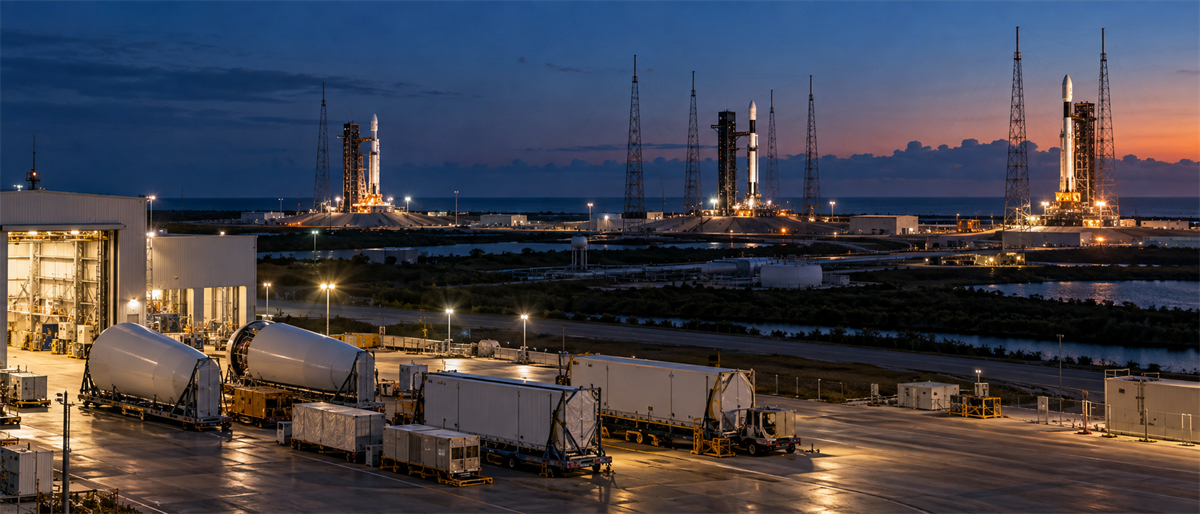
For years, the commercial space economy operated on a predictable assumption: getting hardware to orbit was getting cheaper. That calculus changed abruptly when SpaceX (NASDAQ: SPCX) indicated it will stop selling shared Falcon 9 missions beyond 2028. With its Starlink internet constellation now consuming approximately 79% of Falcon 9 capacity, SpaceX is prioritizing internal deployment over third-party logistics.
While the surface read is standard corporate consolidation, the underlying reality points to a supply shock. Orbital launch capacity is transforming from a widely available commodity into a heavily constrained asset. This structural shift creates a clear divide for investors analyzing the sector. Launch providers now hold substantial pricing power, while satellite operators who rely on buying those rides face escalating capital expenditures. The current launch landscape shows a closing window of opportunity for independent hardware builders and growing financial risk for businesses caught on the wrong side of the payload fairing.














