
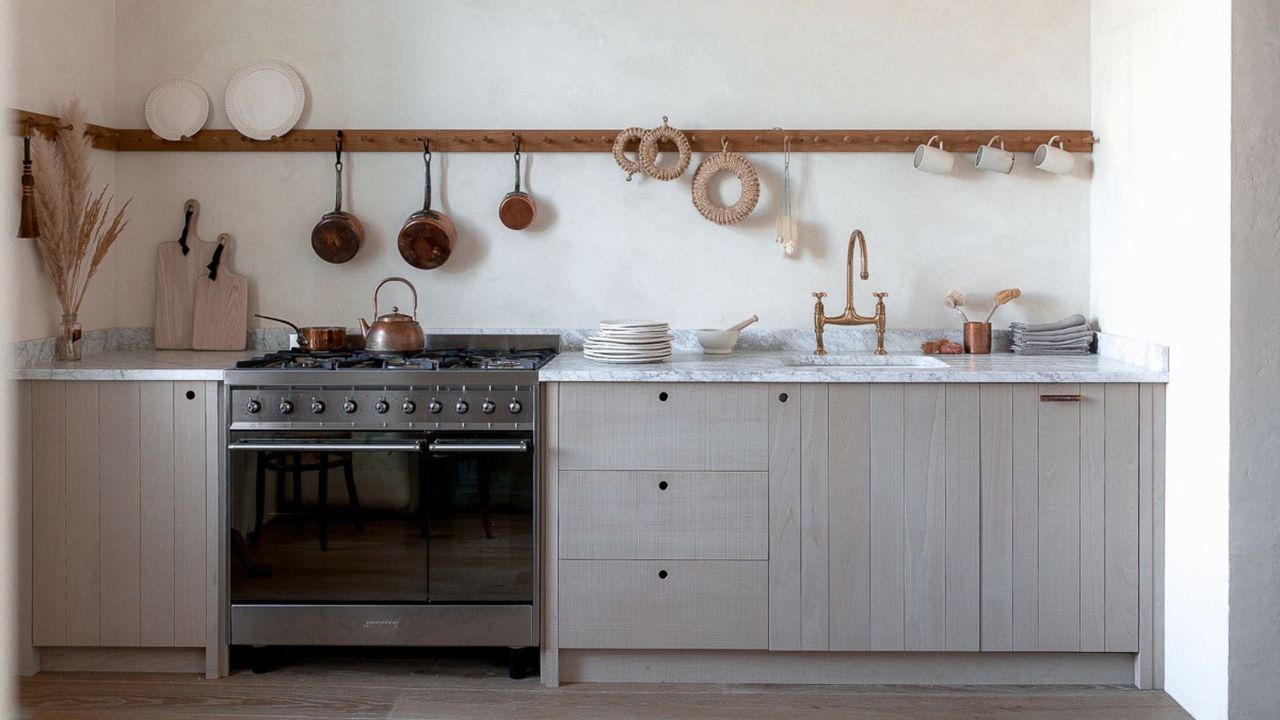
Wood is one of the most timeless materials you can introduce to your kitchen, but there's always the worry about the claustrophobia risk in smaller spaces. And according to designers, there are a few common faux pas you need to avoid.
There are always a few extra considerations when it comes to small kitchens, simply because the proportions mean design features and decor need to take size into consideration. And never is this more true than in a wooden kitchen.

There are a few small wooden kitchen mistakes that designers see all too often that end up leading to a dated and claustrophobic space. Here's what you need to avoid, and what you should try instead for a small wooden kitchen that feels utterly timeless.
1. Covering Too Many Surfaces in Wood

One of the biggest small wooden kitchen mistakes you can make is overfilling the room with wood, especially all in the same tone. It will give the room an overbearing finish that feels dated and claustrophobic.
'Too much wood in a small area can make the space look dark and claustrophobic. Natural timbers tend to absorb more light than a painted finish, and the grain can become overpowering in mass, making a space look busy and disorderly,' explains Fred Horlock, Design Director at Neptune.
And this becomes even worse with darker stains. 'One of the biggest mistakes is overloading a small kitchen with heavy, dark wood in every element, such as cabinets, flooring, and even shelving. Without contrast or light, this can quickly make the space feel boxed in,' adds interior designer Laura Stephens.
To avoid this overfilled look, be selective with where you add wood and where you opt for something softer and more pared back. 'Keep natural timber above countertop level to a minimum; use oak cabinetry at low level, and add lightly colored cabinetry or shelving above to reflect light and make the space feel more open,' suggests Fred.
'It’s all about balance and proportion,' Laura agrees. 'Mixing lighter materials, or even painting some cabinets or trim in a soft, complementary color, can instantly open up the space. Glass doors, open shelving, or thoughtful kitchen lighting help too, as they add depth and prevent the room from feeling too heavy.'
Mixing different wood tones can instantly lift a scheme. Chopping boards are perfect for bringing in a new tone and texture – this scallop edge design features a variety of tones, introducing contrast to a space.
Marble and wood are perhaps the most classic pairing you can introduce to your small kitchen. Something as simple as a marble serving stand, like this design, can add relief to a room filled with timber.
Counter stools are another way to introduce a new material to small wooden kitchens. This swivel design features a wood base, but the cream upholstery and a new, fresher finish that pairs beautifully with timber.
2. Going Too Narrow With Wooden Cabinets

There's one thing that's almost guaranteed to increase the claustrophobia risk in a small wooden kitchen, it's introducing lots of very narrow units, rather than embracing wider cabinets.
'When you have lots of small wooden cabinets and doors, the eye reads every division, which can make the room feel busy and slightly cramped. In a compact space, this visual clutter can quickly make the kitchen feel more enclosed than it actually is,' says Sophie Pringle, Founder of Pringle & Pringle.
'I recommend using slightly wider base cabinets where possible so the joinery feels calmer and more continuous. It reduces the visual interruptions across the room and helps the space feel more considered,' she explains.
'Incorporating drawers rather than lots of cabinets is also incredibly practical, as they maximize kitchen storage and make everything easier to access, which is especially important in a smaller wooden kitchen where every centimetre needs to work hard.'
3. Every Element Being Fitted and Uniform

A fully fitted wooden kitchen with no contrasting features or materials can quickly start to feel quite heavy and monotonous. In a small space, this blocky look makes the room feel smaller, darker, and lacks any interest or personality.
'A wooden kitchen can start to feel dated if it looks overly ‘fitted’ or overly uniform,' Sophie agrees. 'When every surface is cabinetry, and there’s no contrast or softness, the room can lose that sense of warmth and individuality that makes a space feel timeless.'
She continues: 'I like to soften a wooden kitchen so it feels more like part of the home rather than purely functional. Adding artwork, a rug runner, or even a table lamp on a side surface can make a huge difference. These elements break up the joinery, introduce texture and personality, and help the kitchen feel layered and lived-in rather than overly designed.'
Decor is a great way to introduce new materials and create a more lived-in look to a small wooden kitchen. This floor oil painting is a charming addition to kitchen shelving to break up the wood finishes.
To irradicate the overly uniform look, why not mix in some freestanding furniture? This dark wood hutch adds a lovely contrast to light oak kitchens, and the fabric lining adds a softer texture to the room.
Never underestimate the power of a kitchen rug. In a small wooden scheme, adding a new color or pattern, like this design with earth colors running through, instantly breaks up the continuous run of wood.
A small wooden kitchen is a lovely idea, as long as you get the design right. Be considerate about the amount of wood you fill the space with, where you choose to add it, and the furniture and decor you introduce to add contrast and a softer finish.
Love beautiful kitchen design ideas, expert advice, and inspiring decor trends? Sign up for our newsletter and get the latest features delivered straight to your inbox.