
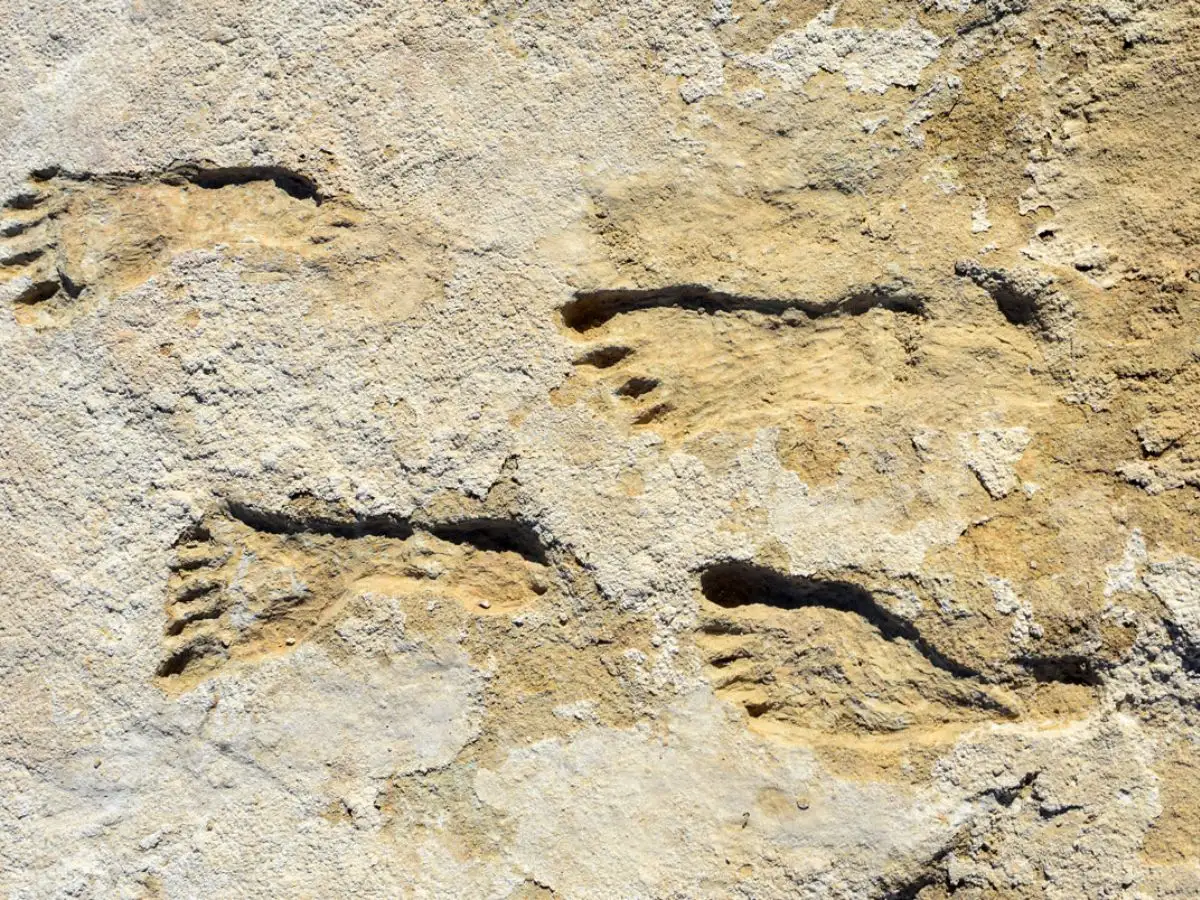
Sometime around 23,000 years ago, a person walked across a patch of damp mud in what is now New Mexico. They left footprints. Those footprints dried, hardened, and eventually turned to stone. And now, thousands of years later, they are forcing scientists to rethink one of the biggest questions in human history: when did people first arrive in the Americas?
The prints were found at White Sands National Park, preserved in layered gypsum sediment. They were first described in a study published in the journal Science in 2021, under the title "Human footprints near ice age lake suggest surprisingly early arrival in the Americas." The age assigned to them, roughly 23,000 years, sat uncomfortably against the long-accepted idea that humans only reached the Americas after the last glacial maximum began to ease, thousands of years later.














