
Get all your news in one place.
100’s of premium titles.
One app.
Start reading
Inverse
Inverse
Entertainment
Matt Donato

20 Years Ago, An Infamous Horror Movie Spawned The Worst Trilogy Ever

Boll KG Productions

Uwe Boll's career is… unprecedented. You can't talk about video game adaptations without mentioning Boll's name, but his catalog is prolific only in quantity. He's directed a staggering 10 films based on game properties, including Sega's House of the Dead and Ubisoft's Far Cry, and they're all varying levels of hot garbage. How did he keep cranking out Razzie-nominated stinkers? Boll's crafty manipulation of a German tax loophole meant he could self-finance and recoup massive costs, which allowed "Raging Boll" to stay afloat despite horrible reviews and box office results.

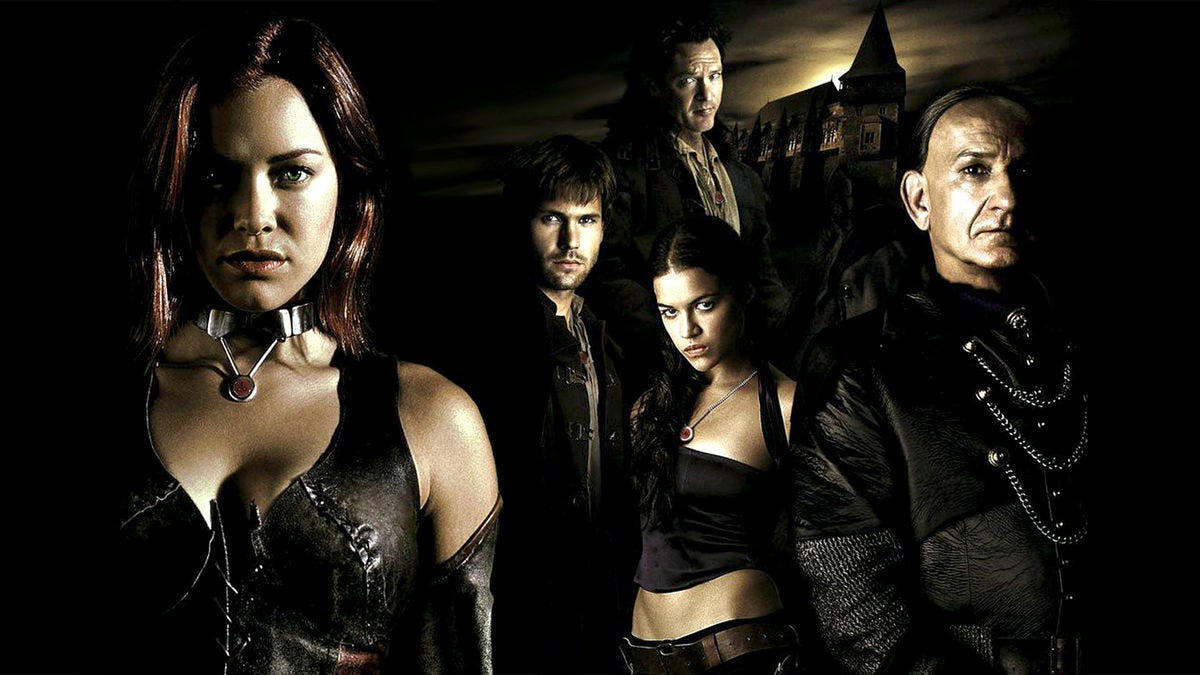
Of all Boll’s releases, it’s Bloodrayne, which hit the United States 20 years ago, that best represents his legacy. It's not his worst title released that year — take a bow, Alone in the Dark — but it ain’t much better. Boll's take on Majesco Entertainment and Terminal Reality's bloodsucking franchise is a wooden 18th-century vampire flick that unenthusiastically introduces movie audiences to Rayne, a vengeful half-human, half-vampire, aka a dhampir. Critics despised it (it sports a nauseating 4% on Rotten Tomatoes), and it grossed a catastrophic $3.7 million against a $25 million budget. You'd think that would be enough to stop any franchise hopes. Instead, BloodRayne might have been the worst horror movie to ever spawn a trilogy.

Boll's could-have-been-a-fan-film is astoundingly terrible, to the surprise of everyone who thought it couldn't get worse than House of the Dead. Model-turned-actress Kristanna Loken (T-X in Terminator 3: Rise of the Machines) stars as the vampire-slaying Rayne, giving blank-faced hero vibes with an unfortunate stiffness to her performance. She's on a mission to slay Kagan, the King of Vampires (played by the sleepwalking Ben Kingsley), her undead rapist of a father. Along the way, she encounters the Brimstone Society, where she trains under Vlad (Michael Madsen) and finds companionship in a band of mercenaries. Together, they must vanquish Kagan and free Romania from his reign, yadda yadda; it's nowhere near as energetic or creature-heavy as the games.

Boll's adaptations notoriously stray from their source material — in the games, Rayne is born in 1915 and hunts everything from vampires to demons to apex predators. But Boll thinks he knows better, and chooses his fantasy version over any fan service. That’s not to say that adaptations should pander to built-in fanbases, but Boll so frequently butchers the style and tone of his source material that you’re left wondering who they’re meant for. The BloodRayne games are gothic hack-and-slash adventures with a dominatrix-y-looking dhampir unleashing gore-heavy action, while Boll's first BloodRayne movie is like lethargic fanfic with crude period appeal.

Michelle Rodriguez arms herself with a sword rejected by Medieval Times. | Boll KG Productions

Worst of all, BloodRayne doesn't even boast that so-bad-it's-good charm. Actors drone through their old-timey lines like they've been sedated, even during the most awkward and passionless lovemaking scene to ever disgrace the screen. The prop weapons look ridiculous, with Loken and action baddie Michelle Rodriguez appearing to swordfight with oversized butter knives. Where does the budget even show? It's sure not reflected in production value, as Billy Zane's wig looks like an intern found the ill-fitting mop in a Spirit Halloween dumpster on November 1. And yet, against all odds, Boll wasn't done with BloodRayne.

In 2007, a direct-to-video sequel titled BloodRayne: Deliverance brought Rayne to Montana’s Wild West. Natassia Malthe would replace Loken as the dhampir, but she couldn’t take the budding franchise to the next level. For insane reasons, Rayne finds herself in America hunting a vampiric Billy the Kid (played by frequent Boll collaborator Zach Ward). It's got the makings of a batty midnight movie you could cackle at with buddies, but Boll once again failed to stumble his way into an entertaining genre experience. The film only has four reviews on Rotten Tomatoes, all of which are scathing. What should have been played like a campy B-movie instead tries to be a serious horror Western, which is a head-scratchingly bad time. But wait, there's more!

In 2011, Boll released BloodRayne: The Third Reich. Set in 1943 Europe, "Agent Rayne" fights Nazis with the French resistance, in a premise that at least vaguely resembled Rayne’s video game adventures. Unfortunately, it's somehow the worst picture of the bunch. Malthe returns to fumble through the goofiest of action-horror tropes, while actor Michael Paré completes a trifecta no one should brag about, appearing in every single BloodRayne as a different character. The additions of Brendan Fletcher and Clint Howard are no saving grace, since Boll can't string together a coherent or exciting combat sequence. It’s a painful experience that appears to have been made for a few pennies and some chewing gum.

BloodRayne: The Third Reich somehow dumbed things down further. | Boll KG Productions

And now we get to the strangest part of the BloodRayne saga: Blubberella.

The same year that Boll tortured the world with BloodRayne: The Third Reich, he released an unexpected companion watch. Blubberella is a shot-for-shot remake of The Third Reich with the same cast, except for — wait for it — an obese vampire-human hybrid instead of Rayne. The fatphobic exploitation comedy is the lowest form of filmmaking you can fathom. Lead actress Lindsay Hollister, who later told all about Boll’s behavior, tried her damndest to empower the film, saying, "I truly wanted to make a movie about a fat girl who could kick ass." But despite her best efforts, Boll (who also stars as a sympathetic Hitler) was never going to let his moronic satire of the MCU be anything more than the cheapest punchline imaginable.

Even by Uwe Boll's standards, the journey from BloodRayne to Blubberella is a wild one. The director was basically burning money with his productions, but they were made in the years before video game developers realized how valuable their own properties could be. There’s a get-it-down aspect to his career that’s weirdly respectable, but his maverick approach to cinema (and advantageous German tax benefits) could have given us so much better.

Sign up to read this article
Read news from 100’s of titles, curated specifically for you.
Already a member? Sign in here
Related Stories
Top stories on inkl right now
One subscription that gives you access to news from hundreds of sites
Already a member? Sign in here
Our Picks
Fourteen days free
Download the app
One app. One membership.
100+ trusted global sources.