
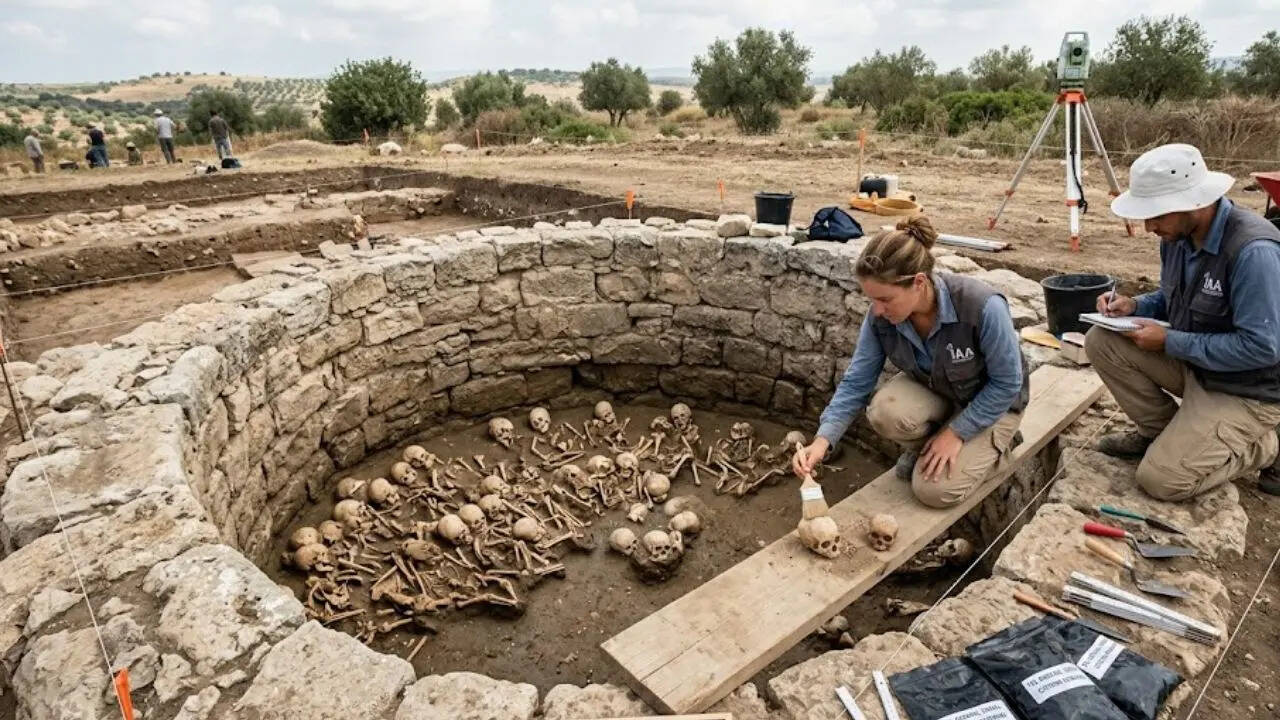
Archaeologists working at the ancient city of Tel Azekah in the Judean foothills have uncovered an extraordinary archaeological anomaly, namely a repurposed water cistern used as a mass grave for 68 to 89 infants and small children who died approximately 2,500 years ago. The results of the research were published in the Palestine Exploration Quarterly in March 2026.
Of the children, roughly 90 per cent were younger than five years old, and 70 per cent were less than two years old. This mortuary space was used as a communal burial repository for weaning children over many years throughout the early period of the Persian empire (5th century BCE). In contrast to other instances of death caused by war or disease, evidence suggests that this site has been used in an ongoing manner for burial. These unique findings challenge previous assumptions regarding infant mortality and burial customs during this complex period of ancient history.














