
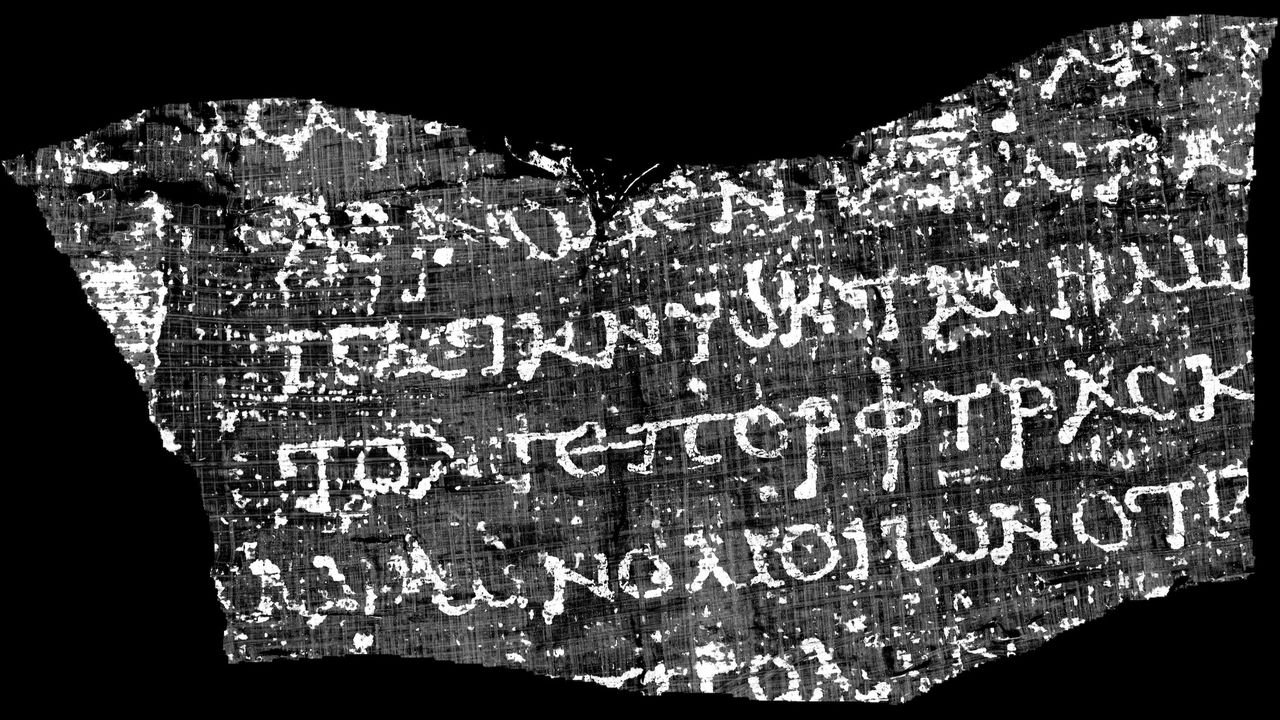
Nearly 2,000 years ago, Mount Vesuvius buried a vast collection of scrolls in ash and scorched them into solid black lumps. Now, without unrolling them, researchers have virtually read two of them — and uncovered what may be a work by a well-known Stoic philosopher.
The breakthrough comes from the Vesuvius Challenge, an international research effort to digitally read the scrolls that were preserved when Pompeii and Herculaneum were buried by ash and pumice in A.D. 79. Papyrologists, who study and preserve the ancient manuscripts, announced June 25 that they had digitally unwrapped the surviving portion of one scroll, known as PHerc. 1667, revealing roughly 5 feet (1.5 meters) of continuous Greek text across 20 columns. Researchers also recovered more than 70 columns of text from a second scroll, PHerc. 172.















