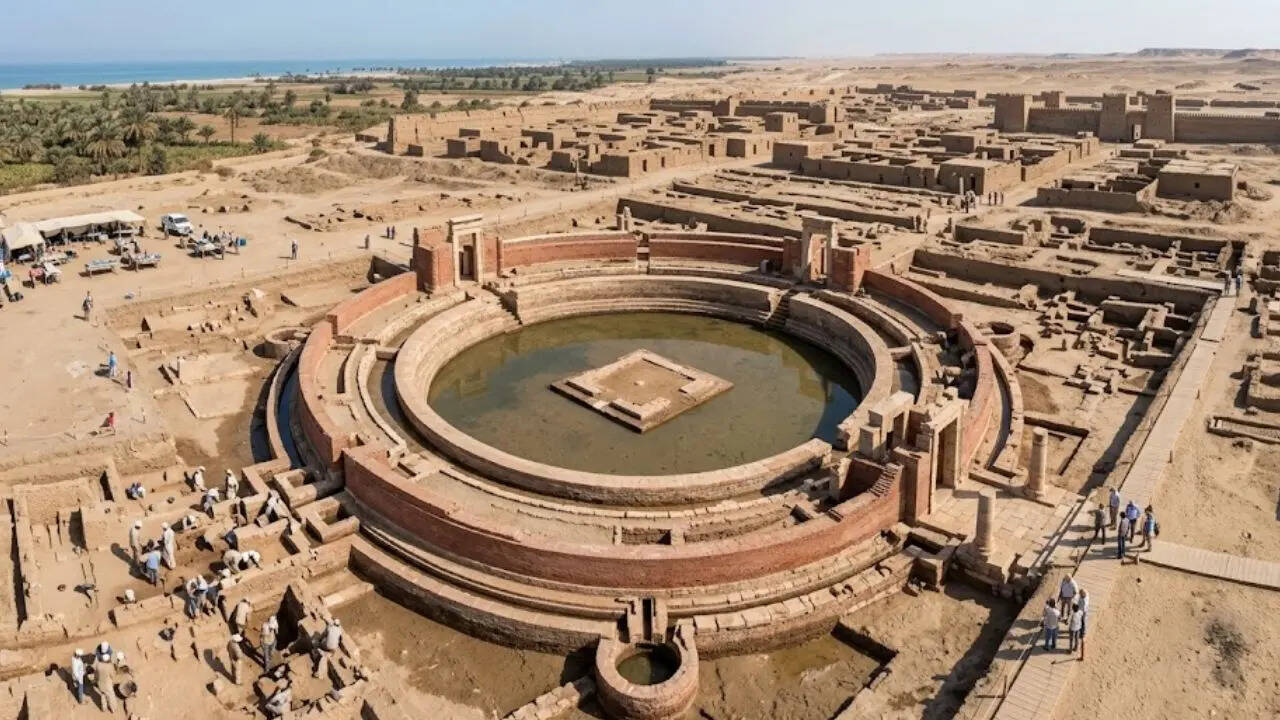
This remarkable discovery provides vital insights into regional religious practices.The excavation at the Tell el-Farama site in northern Sinai by an Egyptian archaeological team has concluded and resulted in the discovery of a rarely-seen round temple within the ruins of the ancient city of Pelusium, which also has a new identity than previously believed. According to the Biblical Archaeology Society, although this temple was thought to have been identified as a Town Hall when it was discovered in 2019, it has now been determined to have had a different purpose after archaeologists found evidence of hydraulic technology associated with the temple's use.
The round temple was built in the second century and remained in use until the sixth century AD. Its main feature was a circular basin that measured approximately sixty-five feet in diameter, where water from the Nile would have been stored for use as a source of water to irrigate the land near the temple. As a result of the research conducted on this temple and its features, the experts now believe that the temple was dedicated to the worship of the local god Pelusius, and there exists an extraordinary blend of ancient Egyptian, Greek, and Roman architectural styles in the construction of the temple and its adjacent structures. This remarkable discovery provides vital insights into regional religious practices.