
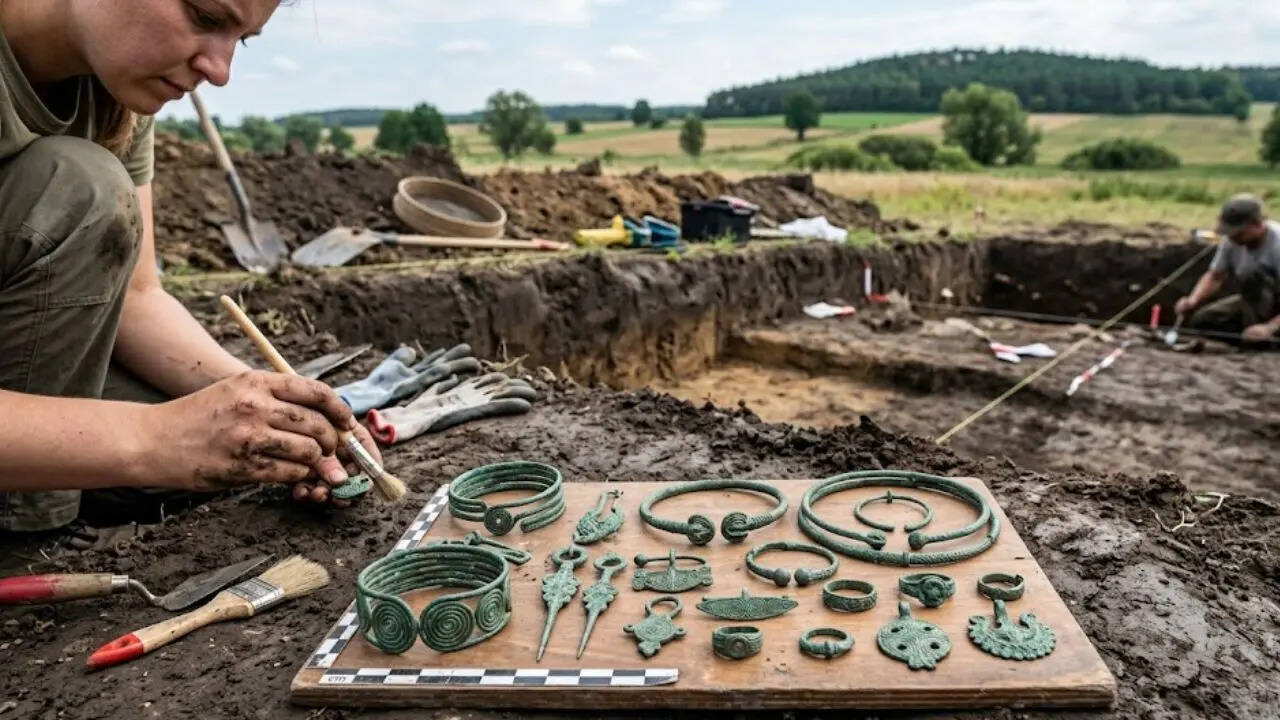
In southeastern Poland, archaeologists have discovered 18 bronze ornaments, offering a rare insight into the social dynamics of the Lusatian culture. Near the Śniatycze village, they found this collection in a small pit, which includes large spiral anklets and bracelets that together weigh about 3.6 kilograms. These items date back to the Hallstatt D period, around 550-400 BCE, and represent one of the largest decorative bronze finds in the Lublin region.
The way these beautifully made objects were buried suggests it might have been part of a ritual or perhaps hidden during times of cultural change. This discovery gives scholars important information about ancient metalworking and regional trade practices. Analysing these artefacts offers a profound understanding of prehistoric craftsmanship and the spiritual significance of treasures.















